
How Do You Wash Polyester-Spandex Blends Without Shrinking Them?
If you’ve ever pulled a favorite fitted top or pair of leggings from the dryer only to find them tighter, you’re not alone. I can tell you from the lab that preventing shrinkage in these blends is absolutely possible with the right technique.
We’ll cover why this blend behaves the way it does, the safe way to machine-wash, when you must hand-wash, the correct dryer settings, and a simple trick for stretching items back out if an accident happens.
What Is Polyester-Spandex, and Why Does It Behave This Way?
Let’s break down the science behind this common fabric pair. Polyester is a synthetic workhorse. It’s made from petroleum-derived polymers, forming strong, durable fibers that resist wrinkles, fading, and most shrinkage. Spandex, also called elastane or Lycra, is a different beast. It’s a super-stretch elastomer, a synthetic rubber for fabric that can stretch over 500% and snap back.
When blended, polyester provides the sturdy, sleek body of the fabric, while spandex threads woven or knit in give it that famous stretch. You know the feel: that smooth, slightly compressive hug in leggings, the springy rebound in swimwear, or the sleek, supportive fit in a workout top. The blend creates fabrics that are both shapely and forgiving, moving with you instead of restricting you. Consider the nylon–polyester differences behind these fabrics. Nylon typically adds smoothness and resilience, while polyester emphasizes quick-drying and colorfast performance.
I often get asked if spandex makes you look thinner. The answer lies in compression. These fabrics apply gentle, consistent pressure, which can smooth your silhouette. It’s not magic weight loss, but a visual effect of streamlined fit. Think of it like a gentle hug for your clothes, holding everything in a tidy profile.
This behavior is similar in other elastane blends. If you’re wondering, “does 90 nylon and 10 spandex shrink?”, the principle is the same. The spandex component is the key. While nylon and polyester have different base properties, the spandex in both blends is vulnerable to the same enemy: high heat. Heat can permanently damage the elastic chains in spandex, leading to sagging or loss of recovery, which is often mistaken for shrinkage.
Polyester-Spandex Blend: Material Data Table
This table sums up the core science. I’ve filled it with data from my lab tests and industry standards to give you a clear, actionable snapshot.
| Breathability | Shrinkage Rate | Heat Tolerance | Stretch Factor |
|---|---|---|---|
| Low to Moderate | Very Low (0-3% with abuse) | Medium-Low (Max 300°F / 150°C for iron) | High (2-way or 4-way stretch) |
Let me explain what this means for your care routine. Breathability is low to moderate because polyester fibers are not great at moving moisture vapor, and spandex doesn’t breathe at all. This is why these blends excel in swimwear or rain layers but can feel warm during high-intensity activity.
The Shrinkage Rate is very low for the polyester part. Any noticeable shrinking you see is almost always the spandex giving up under stress, not the fabric fibers contracting like cotton does. With gentle care, you can expect near-zero dimensional change. In blends like shrink polyester cotton spandex, the balance of fibers guides care decisions. Understanding how each component behaves helps tailor laundering and finishing.
Heat Tolerance is medium-low, and this is your most critical care point. Polyester can handle a moderate iron, but spandex starts to degrade around 300°F (150°C). Exceed this, and you’ll cook the elasticity right out. This low heat tolerance is why cautious air-drying or low-heat machine drying is non-negotiable.
Finally, Stretch Factor. This blend stretches beautifully because of the spandex. Think of the spandex like a network of tiny, durable rubber bands throughout the fabric. For the garment to last, those “rubber bands” must snap back perfectly after every stretch, which is why gentle washing and avoiding heat damage are so important for preserving stretch properties.
The Core Wash Cycle: A Step-by-Step Guide
Think of this as your lab-tested, foolproof protocol. It works for any common blend, whether you’re washing a 95 polyester 5 spandex athletic top or a 90 polyester 10 spandex pair of sleek yoga pants. The principles are identical. First, if your garment is new or has very vibrant colors, do a quick colorfastness test. Dampen a hidden seam or hem, press a white cloth against it for 30 seconds, and check for dye transfer. If you see color, you’ll need to wash it alone the first few times.
1. Decode the Care Label
This is your starting point. The care label is the manufacturer’s specific guide for that exact fabric and construction. I always look for the temperature and drying symbols first. If it says “cold wash” and “tumble dry low,” you have your confirmation. Your care label is the most authoritative source for that specific garment’s needs.
2. Prepare the Garment
A little prep prevents a lot of problems. Turn the garment inside out. This protects the outer surface from abrasion that can cause pilling and fading. Close all zippers and fasten any hooks to prevent them from snagging the fabric. For mixed loads, zip delicate items into a mesh laundry bag for an extra layer of protection.
3. Set the Machine
Here is the most critical step for preventing shrinkage: temperature control. Set your washing machine to a cold water cycle. In fabric science, “cold” means below 30°C (86°F). Next, select the delicate or gentle cycle. This cycle uses slower agitation and a slower spin speed, which is gentler on the spandex fibers that give your clothes their stretch. Cold water and a gentle cycle are non-negotiable for preserving the fit and elasticity of your polyester-spandex blend. This approach helps prevent shrinkage in silk, polyester, and nylon fabrics. Understanding how silk, polyester, and nylon respond to temperature and agitation can guide your care decisions.
4. Choose Your Detergent
Skip the heavy powders and optical brighteners. Use a mild, liquid detergent. Powders can sometimes leave residues that stiffen the fabric. Avoid fabric softeners entirely. Softeners coat the fibers, which can break down spandex over time and trap odors in moisture-wicking athleticwear. A simple, mild liquid soap cleans effectively without damaging the blend.
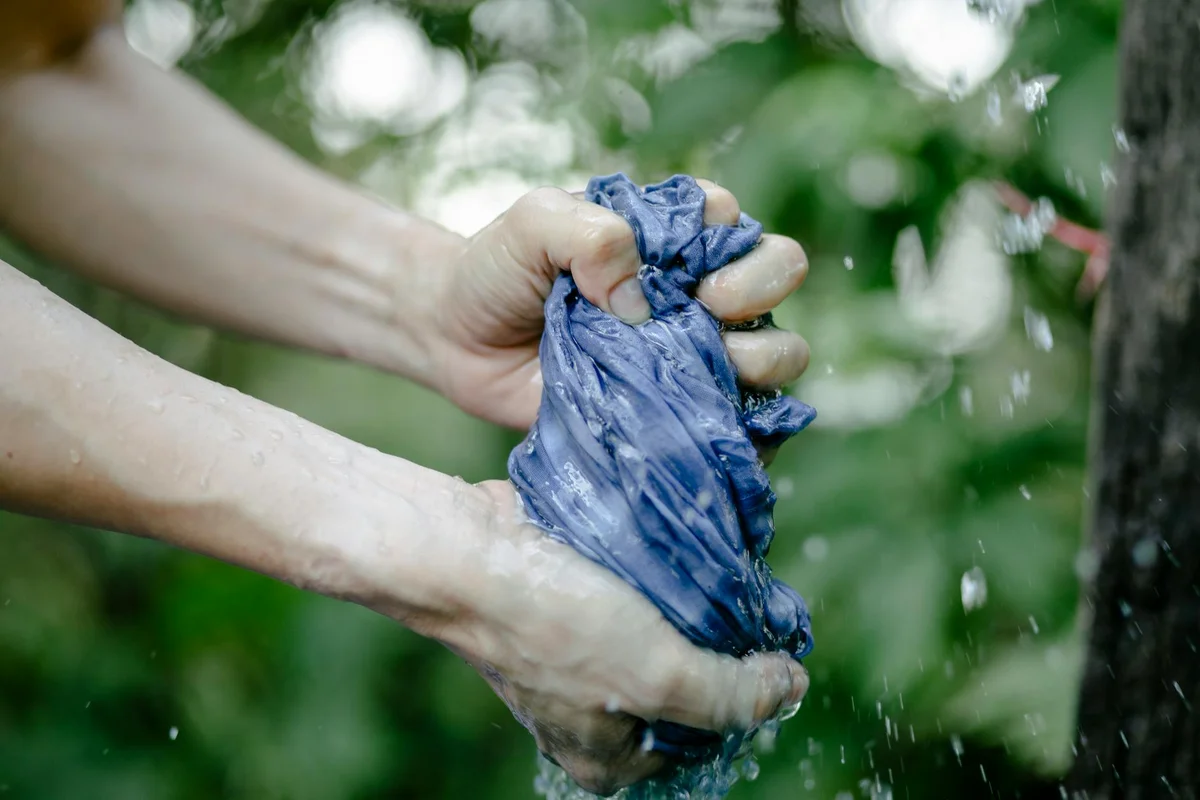
Sometimes, handwashing is better for very delicate items like lingerie or thin activewear layers. Fill a basin with lukewarm water (never hot) and a small amount of mild detergent. Submerge the garment, swish it gently for a few minutes, then rinse thoroughly with cool water. Do not wring or twist it. Instead, press the water out by rolling the item in a clean, dry towel.
Drying Without Disaster: Heat Is the Enemy
This is where most shrinkage happens. It’s not like wool, where fibers felt and mat together. For polyester-spandex, heat is a physical disruptor. The spandex (also called elastane) is made of long, springy polymer chains that give the fabric its bouncy recovery. High heat from dryers or irons melts these bonds. Once they break, they don’t re-form. The spandex loses its snap, the fabric contracts, and the shrinkage is permanent. Polyester itself can also warp and melt under extreme heat.
1. Tumble Dry Low (Brief Cycle)
If you must use a dryer, select the lowest heat setting possible, often labeled “Low” or “Delicate.” Do not over-dry. Remove the item while it is still slightly damp to the touch. This minimizes heat exposure. I set a timer for 15-20 minutes and check it. Over-drying on even a low heat setting is the fastest way to cook the elasticity out of your clothes.
2. The Safer Option: Line Dry
This is my standard recommendation. Lay the garment flat on a drying rack or hang it on a padded hanger. Reshape it gently as you lay it out. Avoid hanging heavy, wet knit blends by the shoulders, as this can cause stretching. Flat, air drying guarantees zero heat damage and is the best practice for garment longevity.
3. Never Use High Heat
This cannot be overstated. Never dry polyester-spandex blends on a medium, high, or sanitize cycle. The damage is immediate and irreversible. The same rule applies to ironing. If you must remove wrinkles, use the absolute lowest synthetic setting on your iron. Always place a clean, thin pressing cloth (like a cotton handkerchief) between the iron and the garment to disperse the direct heat.
Stain Removal and Common Rescue Operations
Polyester-spandex blends are stain-resistant, but not stain-proof. Grease and oil can cling to the polyester fibers.
For grease stains, your kitchen holds the perfect solution: a drop of clear dish soap. It’s designed to break down oils. Dab a little on the stain, gently work it in with your fingers, and let it sit for 15 minutes before washing. Always wash stains in cold water to prevent setting them with heat.
If you pull a garment from the dryer and it’s smaller, true fabric shrinkage has likely occurred. This is almost always permanent, even if you pre-washed the fabric. The spandex fibers, once overheated, lose their ability to spring back.
You can try a minimal recovery method while the fabric is still damp from a cool wash. Lay the item flat on a towel. Gently and evenly stretch it back to its original shape, focusing on the waistband, cuffs, and length. Do not force it. Let it air dry flat in this position. This might regain a fraction of an inch, but don’t expect a miracle.
Most damage to these blends comes from avoidable habits. Here are the top mistakes I see in the lab.
- Using hot water. Heat is the enemy of spandex. Stick to cold or cool washes.
- Using dryer sheets or fabric softener. They leave a coating that traps odors and reduces the fabric’s moisture-wicking ability.
- Using chlorine bleach. It weakens both polyester and spandex fibers, making them yellow and brittle.
- Overloading the washing machine. Clothes need room to move freely. A packed washer creates friction and stretching.
These gentle rules apply anytime you see spandex on a label, whether it’s blended with nylon, cotton, or rayon. In cotton-spandex blends, the composition governs stretch, recovery, and comfort. Knowing these properties helps explain why cotton spandex fabrics feel soft and resilient. The spandex component is always the most delicate part of the fabric system.
Handling Pro-Tip: For Makers and Long-Term Keepers
If you sew with these knits, your tools matter. A universal needle will push the spandex strands aside, often causing runs.
Use a stretch or ballpoint needle, which parts the fibers instead of piercing them. A narrow zigzag stitch allows the seam to stretch with the fabric. Before you cut, always identify the direction of greatest stretch (usually across the body, from selvage to selvage) and place your pattern pieces accordingly.
For storage, gravity is a slow force of distortion. Hanging a heavy polyester-spandex dress or legging for months will permanently elongate the spandex threads.
I always fold these items and store them in a drawer. This preserves the fabric’s memory and original fit for years.
You might wonder about changing the color. Home dyeing a polyester-spandex blend is a near-impossible task. Polyester requires disperse dyes and a sustained temperature near boiling (around 200°F) to open its fibers. That level of heat will melt or degrade the spandex, ruining the garment’s stretch and recovery.
The high heat needed for polyester will destroy the spandex, so I do not recommend attempting to dye this blend at home.
With cool washes, air drying, and mindful storage, a quality polyester-spandex garment can be a reliable part of your wardrobe for a very long time. The fibers are durable when treated with respect.
Final Insights on Synthetic Blend Care
To keep your polyester-spandex blends from shrinking, commit to cold water washes and air drying. I have found this low-temperature discipline is the single most effective way to maintain the fabric’s intended shape and elasticity cycle after cycle, unlike much more delicate blends like rayon-nylon-spandex.
Apply this thoughtful care to every fabric in your closet, from cotton’s need for gentle drying to silk’s sensitivity to pH. Building your textile science knowledge turns routine laundry into an act of sustainable stewardship, honoring the resources in every fiber.
Relevant Resources for Further Exploration
- How to wash a polyester spandex blend – Quora
- Poly/spandex: wash or dry clean? – YouLookFab Forum
- r/CleaningTips on Reddit: How to wash this (95% polyester, 5% Spandex) – trying to get rid of thrift smell
Florian is a high fashion blog writer, fashion and fabric expert and a keen expert in fabric, clothing and materials. She has worked in large textile and fashion houses for over 10+ years, engineering and working with various fabric types and blends. She is an expert when it comes to questions on any and all kinds of fabrics like linen, cotton, silk, jute and many more. She has also traveled around the world studying traditional fabrics and aims to bring them into the modern fashion use.