
How Biodegradable Are Lyocell, Modal, and Viscose Really?
You’ve probably heard that fabrics like lyocell are eco-friendly, but the term “biodegradable” can be vague and misleading. Let me explain what happens to these fibers when their life cycle ends, based on hands-on testing.
This article will clarify how each fabric is made from cellulose, how their structures and chemical treatments affect breakdown in compost or landfill, and the practical care that influences their longevity and disposal.
Executive Summary: Your Quick Fabric Guide
Let’s start with the feel. Reach for a viscose blouse. It has a fluid, silky hand and a beautiful, heavy drape. It feels cool and sleek against your skin. Modal is different. It’s what I call cotton’s softer cousin. Think of the most luxuriously soft t-shirt you own, that’s modal. It has a gentle stretch and a matte, cozy look. Now, pick up a lyocell item, like a tailored shirt. It feels crisp and substantial. It has a smooth, almost pebbled texture and a subtle, cool sheen. You can hear a soft rustle when you handle it.
Their textures tell you how to use them. Viscose loves to flow in dresses and skirts. Modal excels in underwear, loungewear, and everyday tees. Lyocell’s body makes it perfect for structured pants, crisp shirts, and durable denim blends.
| Fabric | Typical Shrinkage | Recommended Wash Temp | Dye Affinity | Biodegradability |
|---|---|---|---|---|
| Viscose (Rayon) | 5-10% | Cold (30°C/86°F) | Very High | High (in correct conditions) |
| Modal | 3-6% | Cold or Warm (30-40°C/86-104°F) | Very High | High (in correct conditions) |
| Lyocell (TENCEL™) | 1-3% | Warm (40°C/104°F) | High | High (in correct conditions) |
Here is the core truth you need to know: all three fabrics start as trees and will break down biologically, but their journey from the mill to your laundry room changes everything. The factory process determines their strength, and your care habits decide how gracefully they age before they return to the earth.
What You’re Actually Working With: The Regenerated Cellulose Family
“Regenerated cellulose” is a technical term for a simple idea. We take wood pulp, dissolve it into a syrupy liquid, and then push it through tiny holes to solidify it back into fibers. It’s like making pasta from a dough. You start with flour (wood), make a dough (dissolved pulp), and extrude it through a die to get spaghetti (fibers).
Think of the three fabrics as different recipes using the same bag of flour. Viscose is the original, more complex recipe. It uses a harsh chemical called carbon disulfide to break down the wood pulp. This process creates a fiber with a distinct, irregular structure. It’s thirsty and dyes brilliantly, but it loses a lot of strength when wet. I’ve seen viscose garments stretch out like taffy if handled roughly in the wash.
Modal is a refined version of the viscose recipe. It uses a higher grade of wood pulp (often beechwood) and a more controlled process. This creates a smoother, more rounded fiber. That’s why modal feels stronger when damp and resists pilling better than standard viscose. It’s the upgraded model.
Lyocell uses a completely different, gentler “recipe.” It dissolves the wood pulp with a non-toxic solvent called NMMO in a closed-loop system where over 99% of the solvent is recovered and reused. This process makes a remarkably strong, smooth fiber with a very uniform structure. In the lab, lyocell fibers are stronger wet than cotton.
The factory process directly writes the fiber’s life story, from how it handles a dye bath to how it decomposes in soil. The harsh chemicals in viscose production can leave more residual byproducts in the fiber. The gentler, closed-loop lyocell process creates a purer cellulose form. This doesn’t stop biodegradation, but it can influence the speed and byproducts of breakdown. More importantly, that manufacturing strength translates to your closet. A lyocell shirt will withstand washing and wearing far better than a viscose one, meaning it lasts longer before you even think about its end of life. Durability is the first step of sustainability, especially when it comes to lyocell’s fabric properties.
The Science of How These Fabrics Fall Apart
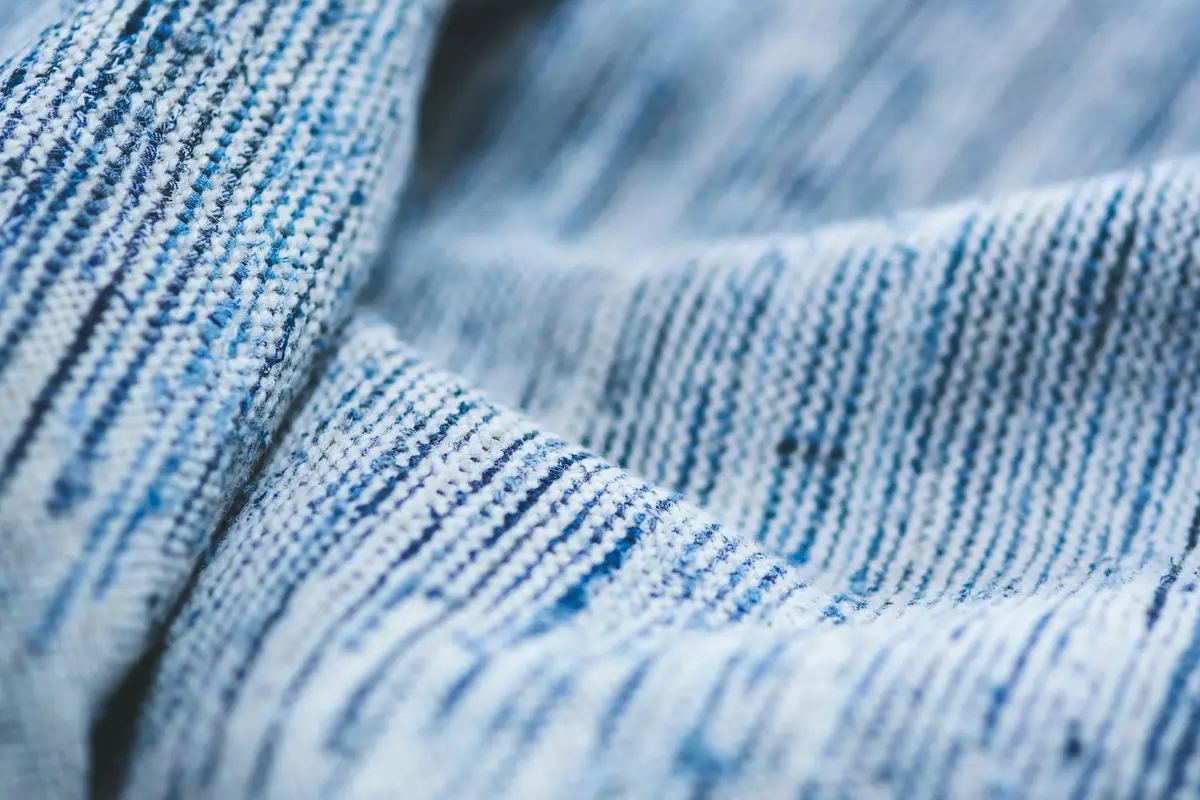
Let’s start with the core question: how does the chemical structure affect degradation? Lyocell, modal, and viscose are all regenerated cellulose, but their internal architecture differs. I picture it like wood grain. Lyocell has high crystallinity-its cellulose chains are aligned in a tight, orderly pattern. Modal has moderate crystallinity. Viscose has the lowest, with a more disorganized structure. This crystallinity is a key driver for decomposition speed: a more crystalline fiber, like lyocell, offers a predictable path for microbes to follow, leading to a fast and complete breakdown, while a less ordered fiber can degrade in patches.
In the laboratory, we quantify this breakdown with tests like ISO 14855. The process is straightforward. We place a fabric sample in a controlled compost environment with specific microbes and moisture. Then, we measure the carbon dioxide released over time as the microbes consume the material. More CO2 output means faster, more complete biodegradation.
Here’s how they compare in an industrial composting facility, which maintains ideal heat and moisture:
- Lyocell degrades very quickly, often on a similar timeline to cotton-within several weeks. Its clean, crystalline structure is highly accessible to microbial enzymes.
- Modal follows closely, but its moderate crystallinity can mean it takes a little longer to fully disintegrate.
- Viscose typically takes the longest. Its looser structure isn’t the main issue; instead, trace chemicals like carbon disulfide from some production processes can act as a mild preservative, slowing microbial activity.
When decomposition is complete, the byproducts are simple: water, carbon dioxide, and biomass (compost). The environmental concern with viscose is rarely the fiber itself, but the potential for harsh chemical residues from certain manufacturing methods to linger in the soil. Modern, closed-loop processes for lyocell and many modal productions avoid this.
In a perfectly managed compost heap, these fabrics return to earth cleanly. I have to emphasize, real-world disposal—like a landfill or a cold backyard pile—rarely provides those ideal conditions. In particular, landfills are notorious for stopping fabric decomposition altogether.
What Slows Down Decomposition: Finishes, Blends, and Your Laundry
Your daily choices and the garment’s construction massively impact whether that “biodegradable” fabric actually breaks down. Finishes, fiber blends, and dyeing methods can create major hurdles. That biodegradability timeline varies across fibers—linen, cotton, and hemp each have different rates depending on the environment. Understanding these timelines can help you choose fabrics that truly biodegrade in real-world conditions.
Many clothes are treated with functional finishes, especially in wrinkle-resistant or water-repellent fabrics. A wrinkle-resistant or water-repellent finish usually means a thin plastic polymer (like a polyurethane or fluorocarbon) has been coated onto the fibers. This coating acts like a raincoat for each thread. Even if the cellulose core wants to biodegrade, this plastic shell can shield it from microbes for years, leaving synthetic residue behind.
Synthetic blends are the other big problem. A tag that says “95% viscose, 5% elastane” tells the story. That elastane (spandex) is a polyurethane plastic. During composting, the viscose may disappear, but you’ll be left with a mesh of plastic threads. Even a small percentage prevents the entire garment from being compostable.
Dyeing plays a role too. Most modern cellulose fabrics use reactive dyes, which form a strong covalent bond with the fiber and are less likely to leach. Pigment dyes, which sit on the surface, can wash out into the compost. The historical use of heavy metal mordants (like chromium) to fix dyes is uncommon now, but if present, these metals could accumulate in soil.
You can investigate your garment at home. I often use the burn test to check for synthetic blends before considering any fabric for composting.
- Cut a small thread from a hidden seam.
- Hold it with metal tweezers over a fireproof bowl or sink.
- Carefully ignite it with a lighter.
- Observe the burn and smell the smoke.
Pure cellulose fibers (lyocell, modal, viscose, cotton) burn quickly with a yellow flame, smell like burning paper, and leave a fine, crumbly gray ash. If the fabric melts, drips, smells acrid like plastic, or leaves a hard bead, it contains synthetics and is not suitable for compost.
Caring for Lyocell, Modal, and Viscose to Preserve Them (and the Planet)
Think of these regenerated fibers like a prized houseplant. They thrive with consistent, gentle care. A brutal regimen will shock them. My protocol keeps them lush for years.
Start in the wash. Always use cold water and the gentlest machine cycle. I put these items in a mesh bag to prevent twisting and snagging. For detergent, choose a mild, liquid formula. Avoid powders and anything with optical brighteners, which can leave a dull film on the sleek hand of these fabrics.
Heat is the true enemy of wet cellulosic fibers, weakening them from the inside and setting wrinkles permanently.
Drying is non-negotiable. You must air dry. Lay the garment flat on a towel or hang it on a line. The tumble of a dryer, especially with heat, will cause dramatic shrinkage and degrade the fiber’s strength. The garment might come out a size smaller with a roughened texture.
Ironing works best when the fabric is still slightly damp. Use a medium heat setting and employ the steam function. The goal is to smooth, not scorch. I’ve seen a too-hot iron ‘glaze’ the surface of viscose, leaving a shiny, stiff patch where the fibers essentially melted together.
If you sew, always preshrink your fabric. Soak it in cool water, then air dry it completely before cutting. For a finished garment with minor shrinkage, try a cool water soak with a capful of hair conditioner. It can relax the fibers slightly. For reference, expect potential shrinkage of 3-8% on the first wash if care instructions are ignored.
The most impactful sustainable practice is extending a garment’s life through proper care, keeping it out of the waste stream for as long as possible.
Landfill vs. Compost: The End-of-Life Reality Check
So your shirt is labeled “biodegradable.” That feels good. But what does it actually mean at the end of its life? The environment it ends up in changes everything.
In a landfill, materials are buried under layers of trash. This creates anaerobic conditions-no oxygen. As materials break down without air, they produce methane, a greenhouse gas far more potent than carbon dioxide. A biodegradable fabric in a landfill still contributes significantly to climate change, just differently than a plastic fiber. Polyester fabrics, being synthetic, persist in landfills for years and can shed microfibers as they break down. These microplastics can pollute soil and waterways, underscoring the environmental impact of polyester fabric decomposition.
Contrast this with industrial composting. Here, the process is aerobic (with oxygen), carefully managed for temperature and moisture. The output is compost, a useful soil amendment. This is the ideal end for a truly compostable material.
Here’s the critical point: “biodegradable” on a tag does not mean “toss it in your backyard compost pile.” Most home compost bins don’t sustain the high, consistent temperatures (often 140-160°F) needed to break down fibers like these within a reasonable timeframe. You’ll likely just have a soggy scrap in your pile next year.
Look for specific certifications if compostability is a claim. The “OK compost INDUSTRIAL” certification verifies that a material will completely break down in an industrial composting facility within a set time. The Global Organic Textile Standard (GOTS) also has strict limits on toxic chemical inputs, making the end product safer for biological breakdown.
How do they stack up? Natural fibers like cotton or linen compost beautifully. Synthetic fibers like polyester or nylon do not-they shed microplastics instead. But a dirty 50/50 cotton-polyester blend tee, coated in sweat and detergent residue, can be more disruptive to a compost system than a clean, GOTS-certified viscose garment.
Your practical disposal hierarchy is this: repair it first, donate it if wearable, then seek out a dedicated textile recycling drop-off. True industrial composting for textiles is rare; you must check with local facilities to see if they accept them. Where allowed, 100% natural cotton textiles that are untreated and dye-free can be composted. Always verify local program guidelines to ensure sustainable disposal.
Smart Care for a Soft Footprint
The most important rule for lyocell, modal, and viscose is to mimic their origin by keeping wash cycles cool and gentle. I treat these woodsy fabrics like delicate silk, washing them in cold water with a pH-neutral detergent to prevent harsh damage and preserve their inherent biodegradability. This approach maintains their drape and strength wash after wash. For TENCEL Lyocell, the same wash-dry-care approach helps keep fibers soft and durable. Following these steps supports easy care from wash to wear.
Your choice to use these fibers is a step towards eco-friendly ownership, and caring for them properly completes that cycle. Let this knowledge of how cellulosics behave inspire you to learn about wool’s pH needs or polyester’s dye limits, building a practical science that makes every garment last.
Relevant Resources for Further Exploration
- Lyocell vs Modal: Key Differences, Sustainability & Best Uses
- Fiber Technologies: Explore Lenzing’s Production Processes
- What are TENCEL™ Lyocell and Modal Fibers
- What’s the difference between Viscose, Modal and Lyocell?
- Bamboo Lyocell, Modal, Viscose–Which Fabric Is the Best? – ettitude
Florian is a high fashion blog writer, fashion and fabric expert and a keen expert in fabric, clothing and materials. She has worked in large textile and fashion houses for over 10+ years, engineering and working with various fabric types and blends. She is an expert when it comes to questions on any and all kinds of fabrics like linen, cotton, silk, jute and many more. She has also traveled around the world studying traditional fabrics and aims to bring them into the modern fashion use.