
Viscose vs. Silk: Which Fabric Delivers Affordable Luxury?
You love the idea of silk’s luxury but hesitate over its cost and delicate care. Viscose looks like a smart alternative, yet you wonder where the compromises lie.
As a textile scientist, I’ll guide you through the real-world differences, covering fiber structure and feel, shrinkage and washing behavior, dye affinity and color fastness, and practical care for longevity.
The Quick-Reference Material Data Table
Here’s a breakdown of how viscose and silk stack up in key areas you care about. Keep this table handy when you’re shopping or planning a project.
| Property | Viscose Rayon | Silk |
| Fiber Origin | Regenerated Cellulose (from wood pulp) | Animal Protein (from silkworm cocoons) |
| Breathability | High. It absorbs moisture well. | High, with thermoregulation. It feels cool in summer, warm in winter. |
| Shrinkage Rate | High risk. Can shrink 3-10% in the wash. | Moderate risk. Usually shrinks 3-5% if machine-washed. |
| Heat Tolerance | Low. Weakens dramatically when wet and hot. | Moderate. Can handle a warm iron with a press cloth. |
| Stretch Factor | Low. No inherent stretch unless blended. | Low. Has a slight “give” but no real stretch without elastane. |
| Hand Feel | Cool, heavy, and fluid with a soft drape. | Smooth, light, and uniquely crisp with a luminous sheen. |
Where Do These “Silky” Fabrics Actually Come From?
Their origins explain almost everything about how they perform and feel. One starts in a forest, the other in a cocoon.
Viscose: The Tree in Your Tank Top
I like to call viscose “reconstituted wood pulp.” Imagine taking a sheet of paper, dissolving it into a syrupy liquid, and then forcing that liquid through tiny holes to make brand-new threads. That’s essentially the viscose process, known chemically as solvent spinning. The key point is that the natural cellulose structure of the wood is broken down and rebuilt, creating a new, weaker molecular chain.
The environmental impact of traditional viscose production can be significant, but newer methods exist. Closed-loop systems, like those used for Lyocell (often branded as Tencel), recover and reuse over 99% of the chemical solvents, making it a more sustainable choice.
Silk: The Original Luxury Filament
Silk is a continuous protein filament spun by the larvae of the silk moth, Bombyx mori, to form its cocoon. Cultivated or “mulberry” silk comes from worms fed exclusively on mulberry leaves, producing a fine, uniform, and brilliantly white filament. Wild silks, like Tussah, come from worms with varied diets, resulting in a thicker, browner, and more textured yarn. Quality also hinges on ethical standards for farming and processing, guiding fair sourcing and animal welfare. These norms help ensure transparency and consistency in mulberry silk production.
In conventional silk production, the silkworm is killed inside the cocoon to preserve the long, unbroken filament. For those concerned with animal welfare, “Peace Silk” or “Ahimsa Silk” is an alternative where the moth is allowed to emerge naturally, after which the broken cocoon threads are spun together like cotton or wool. This creates a yarn that is ethically produced but has a different, more rustic texture than conventional silk.
The Core Structural Difference: Filament vs. Reconstituted Strands
This is the science that predicts their behavior. A single silk cocoon can yield a continuous, incredibly strong protein filament up to 900 meters long. Viscose, however, is made of much shorter, regenerated cellulose strands that are then spun together.
Think of silk’s structure like a single, incredibly long and strong rope, while viscose is like a bundle of shorter, weaker ropes twisted together. This is why viscose loses nearly half its strength when wet-the water swells and weakens the bonds between those shorter strands. Silk, a more cohesive protein structure, retains much more of its strength when saturated. This fundamental difference guides every care decision you’ll make.
How Viscose and Silk Behave on Your Body and in Your Hand
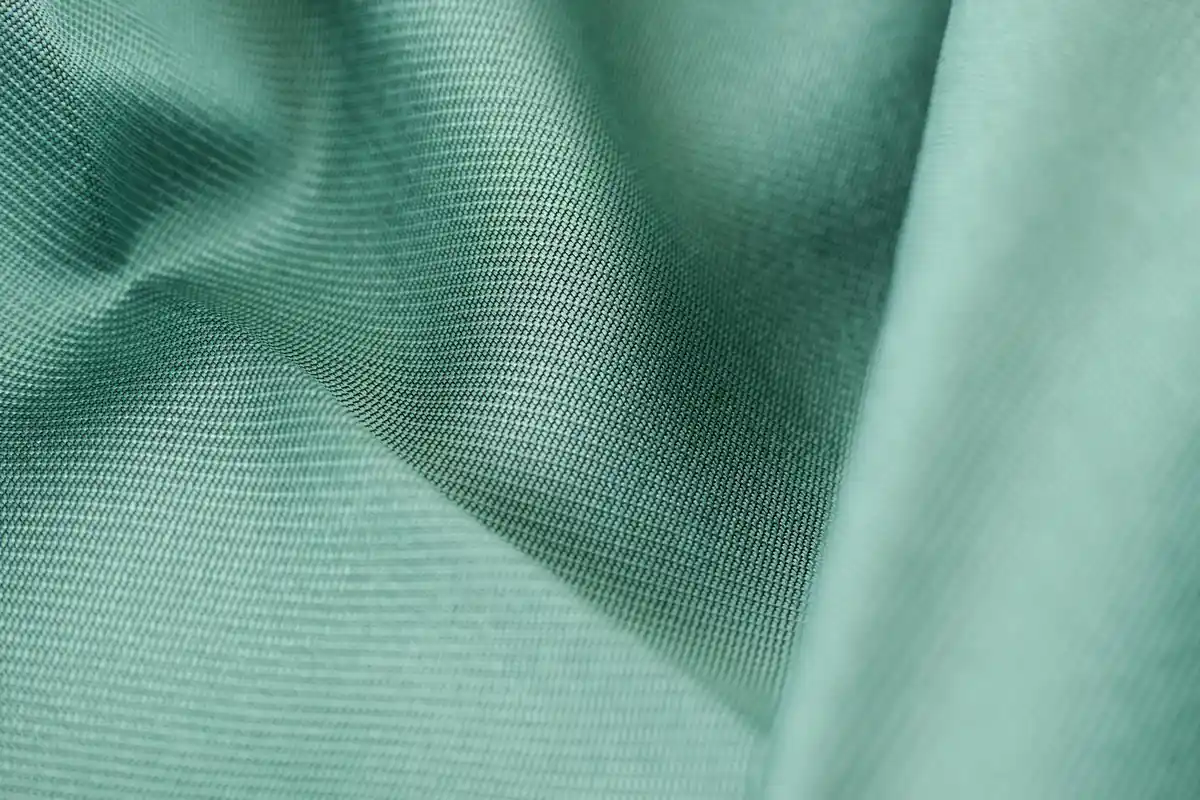
When you hold them, the difference is immediate. Pick up a piece of viscose. It often feels cool and smooth, with a substantial weight that pulls the fabric downward. This weight creates its signature fluid, heavy drape. In a skirt or a maxi dress, viscose clings coolly and moves in soft, languid waves. It’s a fabric that feels grounded.
Now, pick up silk. Its hand is lighter, often with a subtle dry scroop or rustle. Silk doesn’t fall with the same gravitational pull. Instead, it has a lighter, floating drape that seems to whisper against the skin. This fundamental difference in weight and drape makes each fabric suited to different garments.
For a structured viscose vs silk shirt, I often recommend silk. A silk charmeuse or habotai holds a sharper crease and offers a crisper, more refined structure against the body. For a flowy viscose vs silk dress meant for movement, viscose provides that beautiful, cinematic drape at a much lower cost.
The Nature of Their Shine
Their luster tells a story of their origins. Silk’s legendary shine isn’t a surface coating. It comes from the very shape of the silk filament, which is a triangular prism. This structure refracts light like a tiny jewel, giving silk its deep, chatoyant glow that changes with movement.
Viscose’s shine is more manufactured. It comes from the extrusion process and can be controlled. You can find viscose with a high, uniform gloss or in a matte finish. Silk’s shine is inherent and variable, while viscose’s shine is applied and consistent.
The Wrinkle Factor
Here’s a common frustration point. Viscose wrinkles very easily. Those creases from sitting can be stubborn to release. This happens because the regenerated cellulose fibers absorb moisture from the air, which softens them and allows the hydrogen bonds to break and reform in a creased position.
Silk, a protein fiber, is more resilient. It wrinkles less readily and often releases minor wrinkles simply by being hung in a steamy bathroom. If you need a garment to travel well and look fresh with minimal effort, silk has a clear advantage over viscose.
The Big Test: What Happens When You Get Them Wet? (Shrinkage & Care)
Water is where these two fabrics reveal their true nature. Their care is not difficult, but it is specific. Getting it wrong leads to the most common complaints: shrinkage, stretching, and fading.
Viscose’s Kryptonite: Water
Viscose fibers swell dramatically in water, weakening by up to 50% when wet. Think of an over-soaked paper towel-it becomes fragile and loses all its shape. This is the root cause of the problems. When wet viscose is agitated or hung under its own weight, the swollen fibers stretch and deform permanently. Shrinkage often happens later, during drying, as the fibers tighten unpredictably. I’ve seen viscose garments shrink between 3% to 10%, but on a poorly stabilized fabric, it can be much more. Unlike some synthetic fabrics, viscose requires more delicate care to maintain its texture and appearance.
Silk’s Delicate Balance
Silk is stronger than viscose when wet, but it has different enemies. High heat and alkaline substances (like chlorine bleach or strong detergent) break down the protein bonds. This causes yellowing, loss of strength, and a harsh feel. Its shrinkage is usually minimal (1-3%) if treated gently with consistent, cool temperatures.
Step-by-Step Care Protocol for Viscose
Handle viscose like a precious, watercolor painting.
- Always check the label first. Blends with polyester behave very differently.
- Hand wash, never machine wash. Use cool water and a gentle detergent. Do not soak it.
- Never wring or twist. Press the water out by laying the garment flat between two clean towels.
- Lay it flat on a drying rack, reshaping it to its original dimensions as you go.
- Iron on a low heat setting (synthetic) while the fabric is still slightly damp. Use steam.
Step-by-Step Care Protocol for Silk
Treat silk like your favorite skincare routine-gentle, pH-balanced, and rinsing thoroughly.
- Use a pH-neutral soap made for delicates or wool. I use a drop of clear, gentle shampoo in a pinch.
- Hand wash quickly in lukewarm water. Agitate gently for no more than 3-4 minutes.
- Rinse, rinse, rinse until the water runs absolutely clear. Soap residue dulls silk.
- Roll the garment in a clean towel to blot out moisture. Never twist.
- Hang to dry away from direct sun or heat, or lay flat. Silk dries quickly.
- Iron on the lowest setting. Always use a pressing cloth (a clean cotton handkerchief works) as a barrier to prevent water spots and shine.
For all viscose vs silk clothing, remember this core distinction: viscose needs vigilant drying techniques to prevent stretching, while silk needs meticulous washing and rinsing to preserve its fiber integrity and luster. In practice, silk fabric care washing uses gentle detergents and cold water. Gentle handling helps keep its sheen.
Durability, Dyeing, and Long-Term Love
Let’s look past the first impression. How do these fabrics hold up, and how can we work with them?
Strength and Wear
Silk is famously strong for its delicate feel. A single silk filament is stronger than a steel strand of the same diameter. This strength is most reliable when the silk is dry. When wet, it loses about 20% of its strength, so handle it gently during washing. Pilling is extremely rare on quality silk because of the long, smooth filament structure.
Viscose tells a different story. Its strength comes from the reformed cellulose bonds. Viscose is at its most vulnerable when it is wet, losing up to 50% of its strength. This is why a heavy viscose dress can feel like it’s tearing under its own weight in the wash. Pilling can occur on viscose, especially in areas of friction like underarms, due to the shorter staple fibers often used.
Sun and Mildew
Both fabrics need protection, just from different enemies. Silk is a protein, much like your hair. Prolonged exposure to strong direct sunlight will break down those proteins, leading to fiber degradation and color fading. Think of it as extreme sun bleaching.
Viscose, born from plant pulp, fears damp, dark places. Never store a damp viscose item; it is a magnet for mildew. The cellulose provides a perfect food source for mold spores in humid conditions. Always ensure viscose is completely bone-dry before putting it away.
Dyeing Notes for Makers
Both fibers accept color gorgeously, but they form different chemical bonds with dyes.
Silk, as a protein fiber, bonds best with acid dyes or certain reactive dyes. The process requires heat and an acidic environment (often using vinegar or citric acid) to set the color. The results are rich, luminous, and generally wash-fast, especially when compared to synthetic fibers or other natural fibers like cotton and wool.
Viscose, a cellulose fiber, uses fiber-reactive dyes (like those for cotton) or direct dyes. The dye bonds to the hydroxyl groups in the cellulose. I strongly advise against home-dyeing viscose garments because of its dramatic wet weakness. The agitation needed in a dye bath can easily distort or damage the fabric. It’s a task better suited to stable woven viscose yardage handled with extreme care. Dyeing viscose rayon blends, such as blends with cotton or polyester, adds complexity because each component absorbs dye differently. That’s why testing swatches and careful control of the dyeing process are essential.
Understanding Blends
Blends change the care rules. A silk-cotton blend marries silk’s drape with cotton’s casual durability, but it must be washed as delicately as pure silk. The real game-changer is elastane (spandex).
A viscose blend with 3-5% elastane gives you that comfortable stretch. That tiny amount of synthetic fiber means you must avoid high heat in drying and ironing, as it can melt or degrade the elastane. Always use a cool iron and low dryer settings, or better yet, air dry.
Troubleshooting Common Problems and Making Your Choice
Here’s what to do when things go sideways, and how to pick the right fabric from the start.
My Viscose Garment Stretched or Shrank!
This is the most common issue. If your viscose stretched out, try washing it gently in cool water and laying it flat to dry, smoothing it back to its original dimensions. You might recover some shape.
Shrinkage is usually permanent. Viscose shrinks because the fibers themselves swell and contract, tightening the fabric’s structure; you can’t “block” it back out like you can with wool. Prevention is key: always wash in cool water and avoid the dryer.
My Silk Has Water Spots!
Don’t panic. Water spots on silk are mineral deposits left behind after a splash dries. The fix is simple: lightly mist the entire spotted area with clean water until it’s evenly damp, not soaking. Then, lay the garment flat to dry. This silk water spots removal method is safe for silk and helps preserve its sheen. It’s a gentle, at-home care step you can use anytime. As it dries uniformly, the spot will disappear.
Viscose vs. Silk for Rugs and Bedding
This is a big point of confusion. For rugs, “art silk” often means viscose. A silk rug is an investment: incredibly durable and finely knotted, but expensive and sensitive to sun fading. A viscose rug offers a stunning, luminous sheen at a fraction of the cost. Treat a viscose rug as a low-traffic, decorative piece; it won’t hold up to daily stomping or damp conditions like a hallway or bathroom.
For bedding and sleeping caps, silk is the champion. Its temperature-regulating properties and supremely smooth hand reduce friction on hair and skin. Viscose, while smooth, doesn’t offer the same natural climate control.
The Final Choice Framework
Ask yourself these questions to decide:
- Is this for daily, easy-care wear? Lean towards viscose.
- Is it a special, heirloom-quality piece? Silk is worth the investment.
- Is it for hot, humid weather? Both work, but silk breathes more actively.
- Is budget the main factor? Viscose wins.
- Are you avoiding animal products? Choose viscose, or for a more eco-friendly option, look for Tencel™ (lyocell).
Final Threads on Fabric Performance and Care
When selecting between viscose and silk, let your laundry habits guide you. Silk, as an animal protein fiber, requires a cool, gentle hand wash to maintain its molecular structure, while viscose’s plant-based cellulose needs a flat, air-dry method to prevent permanent distortion from water’s weight.
I view every garment as a commitment to its material science, urging you to consider the lifecycle of all fibers, from the ethical sourcing of wool to the recycling potential of polyester blends. Your growing knowledge of fabric properties—why cotton shrinks or nylon resists abrasion—is the most sustainable tool you have for building a durable, conscientious wardrobe.
Deep Dive: Further Reading
- Viscose vs Silk – The Ultimate Comparison – Sinosilk
- Silk vs. Viscose: Which Fabric is best for Your High-End Product Line or Fashion Line?
- r/Fabrics on Reddit: I was thinking of buying a dress but the entire composition is viscose
- Silk vs. Tencel vs. Viscose
- What is Viscose Fabric? A Guide to the Material
Florian is a high fashion blog writer, fashion and fabric expert and a keen expert in fabric, clothing and materials. She has worked in large textile and fashion houses for over 10+ years, engineering and working with various fabric types and blends. She is an expert when it comes to questions on any and all kinds of fabrics like linen, cotton, silk, jute and many more. She has also traveled around the world studying traditional fabrics and aims to bring them into the modern fashion use.