
How Do You Wash a Wool-Polyester Blend Without Damaging It?
That cozy sweater or smart blazer blending wool and polyester is a wardrobe staple, yet its care label can feel confusing. I handle these fabrics daily in my workshop, and I will guide you through washing them safely at home.
This article breaks down the science and gives you practical steps, covering how the two fibers interact in water and heat, testing for shrinkage, choosing the correct detergent and cycle, handling dye bleeds, and my proven dos and don’ts for drying and storage.
What Is a Wool-Polyester Blend, Really?
Think of a wool-polyester blend as a carefully engineered partnership. Each fiber brings its best qualities to the mix. Wool is a natural protein fiber, like the hair on your head. Under a microscope, you’d see it’s covered in tiny scales. These scales are the reason wool can shrink and felt together permanently when they’re exposed to heat, harsh agitation, or a sudden shift from hot to cold water.
Polyester is a synthetic polymer, a type of plastic. It’s essentially a long chain of chemicals that melts under high, direct heat. It doesn’t absorb water like wool, but it does grab onto oil-based stains with a strong hold. Its chemical properties influence how it’s manufactured and used in textiles.
Blend ratios change everything about the fabric’s character. A 70% wool, 30% polyester blend will feel soft, warm, and have a beautiful, lofty drape. Flip that to 30% wool, 70% polyester, and the fabric becomes crisper, more structured, and significantly more resistant to wrinkles and everyday wear. More wool gives you softness and warmth, while more polyester gives you shape retention and durability, something crucial when blending fabrics like cotton, wool, and polyester.
You’ll find these blends in many places:
- Sweaters and Cardigans: Polyester helps them hold their shape season after season.
- Suit Trousers and Blazers: The blend resists wrinkles and maintains a sharp crease.
- Coats and Blankets: Wool provides insulation, polyester adds strength.
- Area Rugs: Here, polyester adds crucial stain resistance and lowers cost, while the wool content gives the rug a luxurious, resilient pile that feels wonderful underfoot.
Unsure of your fabric’s content? You can perform a simple burn test on a hidden thread or seam allowance. Snip a few fibers and carefully light them with a match. Wool smells like burning hair and turns to a crumbly ash, while polyester melts, drips, and forms a hard, dark bead, smelling sweet and chemical.
The Safe Laundry Protocol: A Step-by-Step Guide
Washing a wool-polyester blend is about managing the weaknesses of both fibers. The goal is to clean without heat shock, agitation, or wringing. Hand-washing is my recommended method for any cherished garment, especially when washing wool-synthetic blends. It’s gentle and gives you complete control.
Step 1: Read the Label, Then Double-Check
Always start with the care label. Look for the symbols: a tub of water means it can be washed, a circle means dry clean. But here’s my insider tip: for blends, “Dry Clean Only” is often about the garment’s construction. A lined blazer with interfacing should go to the cleaner. A simple wool-polyester knit sweater? I’ve hand-washed hundreds. If the fabric is a stable knit or weave and isn’t lined, hand-washing is usually a safe bet.
Step 2: Pre-Treat Stains the Right Way
Stains behave differently on each fiber. Tackle them before the main wash.
- Oil-based stains (makeup, gravy, butter): These love polyester. Put a single drop of clear dish soap (like Dawn) directly on the spot. Gently work it in with your finger and let it sit for 10 minutes.
- Protein-based stains (blood, egg, dairy): These bind to the wool protein. Soak the stain with cold water immediately. Never use hot water, as it will set the stain permanently into the wool fibers.
Step 3: Choose Your Wash Method
You have two paths here. Choose based on the item’s value and sturdiness.
Hand-Washing (The Best Method)
Fill a clean sink or basin with lukewarm water. I test it with my wrist-it should feel neutral, not hot or cold. Add a capful of a wool & cashmere shampoo or a mild, pH-neutral soap. These are formulated not to strip wool’s natural oils.
Submerge the garment and gently swish it through the water. Imagine you’re slowly waving a flag. No rubbing, no twisting, no scrubbing. Let it soak for 10 to 15 minutes. Gentle swishing and soaking do the cleaning; agitation causes felting and shrinkage.
Drain the soapy water. Refill the basin with fresh lukewarm water of the same temperature for rinsing. Gently press the garment into the clean water to rinse. You may need to repeat this rinse once or twice until the water runs clear.
Machine Washing (The Careful Gamble)
I only machine-wash very sturdy, non-delicate items like blankets or bath mats. The rules are strict.
- Use a front-loading or impeller top-loading machine only. The old-fashioned top-loader with a central agitator column is the enemy. It will felt your wool.
- Set the machine to the “Wool,” “Handwash,” or “Delicate” cycle. This uses a slow tumble and cold water only.
- Always place the item inside a zippered mesh laundry bag for an extra layer of protection.
Step 4: The Critical Rinse and Roll
This step is non-negotiable for preventing stretching and distortion. Never lift a soaking wet wool garment by its own weight. Never wring it out.
After the final rinse, gently press the item against the side of the sink to push out water. Then, lay a large, clean, dry towel flat. Place the damp garment on top, smoothing it into its natural shape.
Starting at one end, roll the towel and garment up together tightly, like a yoga mat or Swiss roll. Press down on the roll as you go. This forces the towel to absorb the excess moisture from the fabric. The “towel roll” method safely removes water without stretching or felting the fibers.
Unroll the towel. Your garment will be damp, not sopping. Transfer it to a fresh, dry towel or a mesh drying rack, reshaping it gently. Let it dry flat, away from direct heat or sunlight.
Drying and Ironing: Where Most Mistakes Happen
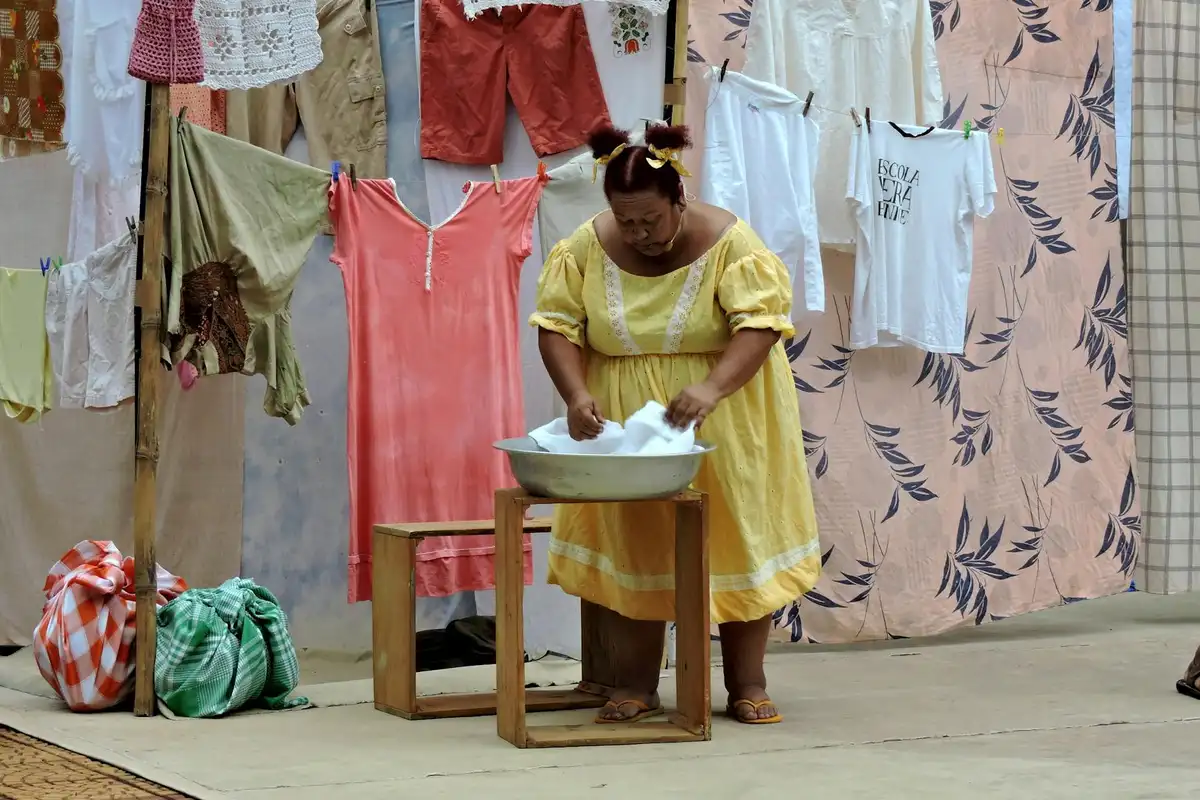
After washing your wool-polyester item, the next steps are critical. This is where heat and agitation can permanently damage the fabric. I see more garments ruined in the drying phase than in the wash. For polyester-spandex blends, the wash and dry steps are especially important to preserve stretch and fit. In the next steps, we’ll outline how to wash and dry polyester-spandex fabric safely.
Why You Must Never Use the Dryer (Usually)
Putting a wool-polyester blend in a standard clothes dryer is a gamble you will likely lose. The risk comes from both fibers reacting badly.
- The wool’s microscopic scales, agitated by tumbling, will latch onto each other and cause felting. This makes the fabric shrink dramatically and become thick and stiff.
- The polyester, a plastic polymer, can be damaged by high heat. It can melt just enough to become shiny in spots or harden into a crisp, brittle texture. This damage is not reversible.
There is one narrow exception. Some heavy items like area rugs with a very high polyester percentage (think 80% or more) might be labeled for tumble drying on low. Always, always check the care label first-it’s your best guide. For almost all garments, flat drying is the only safe method.
How to Dry a Wool-Polyester Garment Flat
Lay-flat drying preserves the shape and fiber integrity. Here is my lab-tested method.
- After the final rinse, gently press out excess water. Do not wring or twist the fabric, as this can stretch it.
- Lay a clean, dry, absorbent towel on a flat surface. A mesh drying rack or a table works well.
- Place the damp garment on the towel and gently reshape it. Smooth out the seams, pull the collar to its proper shape, and ensure it’s lying at its original dimensions.
- Keep the garment away from direct sunlight and heat sources like radiators. Intense heat can still degrade the polyester over time and cause the colors in the wool to fade.
- After a few hours, flip the garment over to ensure the underside dries completely. This prevents moisture from getting trapped, which can lead to mildew.
How to Safely Remove Wrinkles
Wool-polyester blends hold their shape well but can develop wrinkles from storage. Consider a warmer wool-polyester-cotton blend as an option. These fabrics strike a balance between warmth and easy care. Your goal is to use moisture and gentle heat, not direct contact.
A garment steamer or the steam function on your iron is your best tool. Use the low or wool setting. Hold the steamer nozzle a few inches from the fabric and let the vapor relax the fibers. Never let the hot plate of an iron touch the fabric directly, especially when ironing silk, linen, or other delicate fabrics.
For a simple fix, hang the item in your bathroom while you take a hot shower. The ambient steam will ease most light wrinkles away.
If you must use an iron, use the absolute lowest heat setting. Place a thin, dry pressing cloth-a clean cotton tea towel or pillowcase is perfect-between the iron and your garment. Press lightly and keep the iron moving.
When to Choose Dry Cleaning (And What It Actually Does)
Dry cleaning is a common recommendation, but it’s not always necessary. Let’s clarify what it is and when it’s the right choice.
First, “dry” cleaning is a misnomer. The process uses a liquid chemical solvent, typically perchloroethylene (“perc”), instead of water. This solvent is effective at dissolving oils and greases without swelling natural fibers like wool, which minimizes shrinkage and distortion.
You should choose professional dry cleaning for wool-polyester blends in a few specific cases:
- Structured garments: Suits, blazers, and tailored coats have complex inner constructions (canvas, interfacing) that can be distorted by water immersion.
- Items with non-removable linings or delicate trim: If the lining is silk or acetate, or if there’s beading or embroidery, the solvent clean is safer.
- Severe staining from oil, grease, or wine: The dry-cleaning solvent can break down these stains better than a water-based detergent applied at home.
For a basic wool-polyester sweater or socks, dry cleaning is often overkill. The chemical process can be harsh over many cycles, slowly degrading the wool fibers. A gentle hand wash is usually more than sufficient and is kinder to the fabric’s long-term life.
For large items like wool-polyester blend area rugs, professional cleaning is often the only practical option due to their size and weight. They have the equipment to handle it properly.
Troubleshooting Common Wool-Polyester Problems
Even with perfect care, things happen. Let’s tackle the most frequent issues head-on. I have fixed these problems in my own laundry and in the lab, so these are tested methods.
“My Sweater Shrank and Felted!”
That tight, matted texture is a classic sign of wool felting. The polyester part didn’t shrink; it’s the wool fibers. Each wool fiber has microscopic scales. Heat, agitation, and rapid temperature changes make these scales lock together like Velcro, permanently condensing the fabric. This is a common technique used in wool felting and shrinking methods.
This type of shrinkage is usually permanent, but you can attempt one salvage operation. The goal is to relax the scales with a lubricant. Fill a basin with lukewarm water and add a generous glug of hair conditioner. Soak the garment for 30 minutes. The conditioner acts as a lubricant. Gently squeeze out water (never wring), then carefully stretch the fabric back to its original shape on a flat towel. This is called blocking. Let it air dry completely. It might not return to its original size, but it can become wearable again.
“It’s Covered in Little Fuzz Balls (Pilling)”
Pilling is a friction problem. Under arms, along the sides, or where a bag rubs-these are prime pill zones. The strong polyester fibers don’t break easily. Instead, they catch the shorter, looser wool fibers and twist them into tiny knots on the surface, especially when wearing less durable wools.
Remove pills with a dedicated tool like a fabric shaver or a battery-operated pill remover for the cleanest result. You can also lay the fabric flat and gently drag a clean safety razor across the surface. Always go in one direction. To prevent future pilling, turn your garments inside out before washing to reduce surface friction. Store sweaters folded; wire hangers can stretch the shoulders and create pull points.
“My Rug Has a Crush Mark or Looks Flat”
For wool-polyester blend area rugs, pile crush is common. The wool fibers get bent and stay that way. First, vacuum the rug gently, always following the direction of the pile to help lift the fibers.
For a deep dent from furniture, try the ice cube method. Place an ice cube directly on the crushed spot and let it melt completely. The wool fibers will absorb the moisture and often spring back to their original shape as they dry. This uses wool’s natural resilience. Let the area dry fully before walking on it.
“It Feels Stiff or Scratchy After Washing”
That harsh feel is often not the fabric itself, but what’s left on it. Modern detergents and hard water can leave a mineral or alkaline residue that makes fibers feel stiff.
A final acid rinse often solves this. After your final wash or rinse, fill a clean basin with cool water and add one tablespoon of plain white vinegar. Swish the garment in this solution for a few minutes. The mild acid neutralizes any leftover alkali from soap. Rinse once more with fresh cool water and dry as usual. For ongoing wool itchiness, a wash product with added lanolin can help restore a softer hand.
Your Blend’s Care Blueprint
Treat every wool-polyester garment by its most delicate component: the wool. Wash exclusively in cold water with a mild detergent and always lay the item flat to dry, which prevents the wool from felting and the polyester from heat-setting wrinkles. This method respects the unique properties of each fiber, safeguarding the fabric’s structure and your investment, especially when combined with proper techniques to remove wrinkles from cotton and wool fabrics.
I view conscientious fabric care as the first step toward sustainable ownership. Apply this same curious, science-based approach to all textiles in your home, from learning why cotton shrinks to how silk accepts dye, to build a wardrobe that lasts longer and wastes less.
Research and Related Sources
- r/Ultralight on Reddit: How do you wash Merino Wool / Polyester Blends?
- Can I wash a wool/polyester blend? sewing discussion topic @ PatternReview.com
- How wash your wool blends at home – in partnership with KITRI – Kair
- How to properly wash wool and polyester coats – Quora
- Guide for How to Wash Different Fabrics | Arm & Hammer
Florian is a high fashion blog writer, fashion and fabric expert and a keen expert in fabric, clothing and materials. She has worked in large textile and fashion houses for over 10+ years, engineering and working with various fabric types and blends. She is an expert when it comes to questions on any and all kinds of fabrics like linen, cotton, silk, jute and many more. She has also traveled around the world studying traditional fabrics and aims to bring them into the modern fashion use.