
How Do Modal Stretch Fabrics Wrinkle, and How Should You Care for Them?
Seeing wrinkles on your soft modal stretch clothes after a wash can be frustrating. I work with these fabrics daily, and the good news is that a few simple care steps can keep them looking smooth.
This article will explain why modal blends wrinkle differently than pure cotton, how to launder them to prevent shrinkage and fading, and the best methods for drying and storing to maintain their shape and stretch.
Executive Summary: The Quick Scoop on Modal Stretch
Let’s get straight to the point. Modal stretch fabric is almost always a blend. You have a base of modal, which is a regenerated fiber made from beechwood pulp, paired with a small amount of elastane or spandex, typically between 5% and 10%.
This combination gives you a fabric with a specific, wonderful feel. It has an incredibly soft hand, a fluid drape that moves with you, and excellent breathability. The stretch recovery is good, but it’s not bouncy like a pure synthetic.
Its wrinkle behavior is a tale of two extremes: it laughs off the casual wrinkles from a day of wear but can set permanent, ugly creases if crushed in a suitcase or, most commonly, damaged by high heat.
The single most important thing to remember is the golden rule of care. Always use cool water, handle it gently, and avoid high heat in the washer, dryer, and iron at all costs. Heat is the enemy of both the modal and the elastane in this blend.
What Modal Stretch Actually Is (And Isn’t)
First, let’s talk about modal itself. I work with it in the lab often. It starts as beechwood chips, which are broken down into a pulp, dissolved into a liquid, and then extruded through fine holes to become fibers. This makes it a type of rayon, a regenerated cellulose fiber. Think of it as a more refined, high-performance cousin to standard viscose rayon.
Here’s a critical distinction I see confused all the time. “Modal stretch” is not a single fiber. It’s a fabric construction. The modal provides the softness, drape, and absorbency. The stretch, the give and snap-back you feel, comes entirely from that small percentage of synthetic elastane (like Lycra or Spandex) woven or knit into the yarn.
In your hand, modal feels cooler and silkier than cotton. Compared to regular rayon, it’s significantly stronger when wet, which is a huge plus for washing. It also holds dye beautifully, resulting in deeper, more vibrant colors that resist fading better than many natural fibers.
So, to answer the direct question: Yes, modal fabric can be stretchy, but only when it is intentionally blended with elastane. Pure 100% modal has no inherent stretch and behaves more like a fluid silk. The stretch in a modal blend is durable, but it will wear out faster and can degrade permanently if you subject it to high heat or chlorine bleach.
You’ll find modal stretch in places where comfort is king. It’s a star in underwear and loungewear for its softness against the skin. It makes fantastic t-shirts and casual dresses that are both flattering and easy to move in. I even see it in lighter activewear, where its breathability and moisture-wicking are real assets.
The Science Behind the Wrinkles: Fiber Structure vs. Daily Life
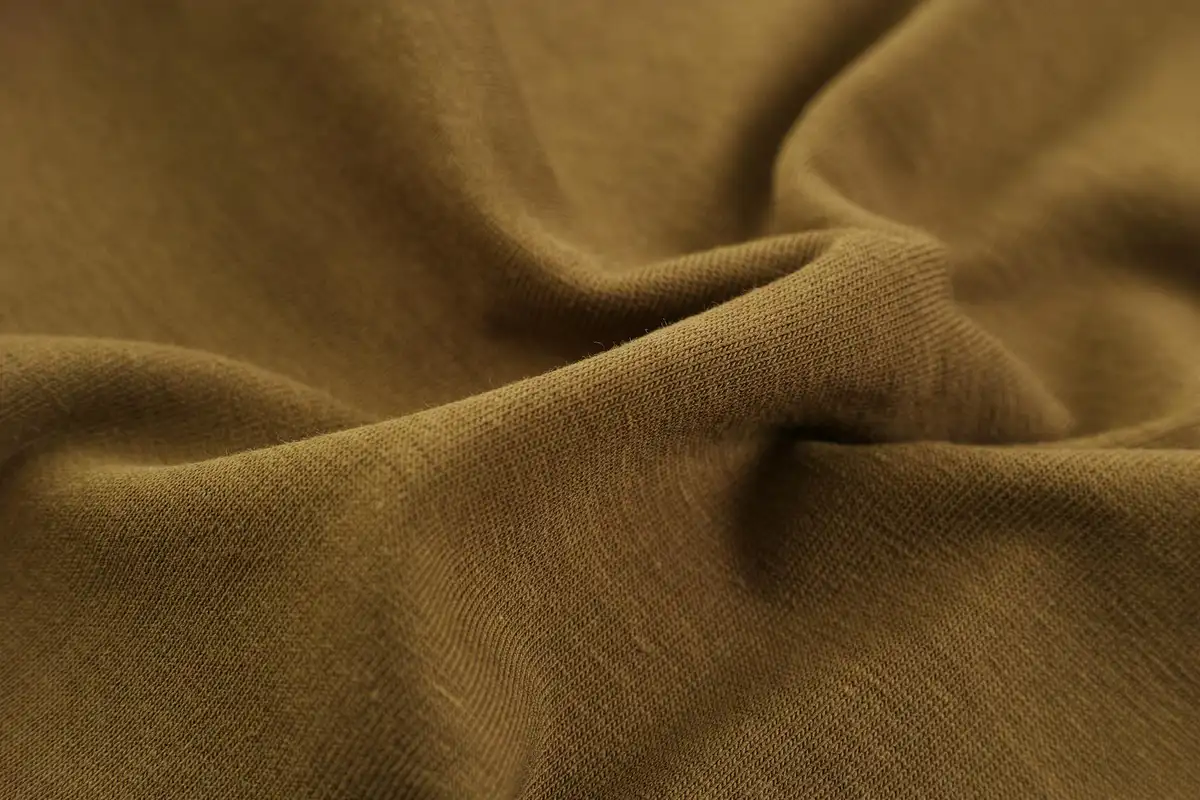
Modal fibers start with a natural advantage. Under a microscope, they have a smooth, rounded cross-section. Think of a bundle of glass rods. This sleek shape lets the fibers slide past each other easily when you move, which is why your modal t-shirt feels so fluid and resists crumpling right out of the closet. It has a great initial “hand,” or feel.
But there’s a hidden weakness. Modal is a cellulose fiber, made from reconstituted beechwood pulp. All cellulose fibers, like cotton and linen, have low elastic recovery. Here’s what that means in your laundry basket. When you bend your elbow or sit down, you stress the fabric. The long polymer chains in the fiber bend. With enough force and time, the hydrogen bonds holding them in place break. When they reform, they often lock into this new, bent position. A crease is born.
Comparing modal to common fibers gives you a clear picture: cotton wrinkles more readily on its surface from everyday wear, while polyester’s synthetic chains have much higher spring-back, like a coil. Modal sits in the middle. It holds its smooth look better than cotton after a wash but lacks polyester’s stubborn resilience. Once a deep fold sets in, it can be surprisingly tenacious. That’s a key difference among viscose rayon (modal), cotton, and polyester: modal sits between them, with softness and improved wash performance. Understanding this trio helps tailor fabric choices to both feel and care needs.
So, what specifically causes those stubborn wrinkles in modal stretch blends? The culprits are usually avoidable:
- Prolonged Folding: Storing a dress folded tightly in a drawer for months will train deep crease lines into the cellulose.
- High-Heat Drying: This is the biggest offender. The heat essentially “bakes” the fibers into whatever crumpled shape they were in the dryer.
- Overloading the Washer: When clothes can’t move freely, they get tangled and compressed, leading to unnatural, crushed wrinkles from the spin cycle.
- Wearing Tension: Sitting for a long commute with fabric taut across your knees creates a sustained bend that can set.
So, does modal fabric wrinkle easily? My lab-tested answer is nuanced. It wrinkles less than cotton straight from a hot dryer, but more than your average polyester blouse. The key difference is that once modal develops a deep crease, it often requires more intentional intervention (like steaming) to release it compared to a synthetic blend. These wrinkle characteristics matter for wearability—affecting daily ease and how presentable the garment stays with minimal effort. They also influence the care guidance designers provide and what consumers expect from modal garments.
The Modal Stretch Care Protocol: A Step-by-Step Guide
Caring for modal stretch is about respecting both parts of the blend: the delicate cellulose and the heat-sensitive elastane (usually Lycra or spandex). This protocol keeps your clothes smooth, soft, and fitting perfectly.
Washing: Preserving Softness and Shape
Always start by turning the garment inside out. This protects the smooth outer surface from abrasion against other clothes or the drum. Use cold or cool water, with a maximum temperature of 30°C (86°F). Hot water shocks the fibers, raising the risk of shrinkage and making wrinkles more likely to set.
Select the gentle or delicate cycle on your machine. This cycle uses a slower agitation and a lower spin speed. A fast, harsh spin can twist and crush the fabric, creating wrinkles you didn’t have before. I recommend a mild, liquid detergent. Avoid powders that might not fully dissolve and detergents packed with optical brighteners or heavy enzymes, as these can degrade the cellulose fibers over many washes, making them weaker and duller.
Give your clothes room to swim. Overloading the machine is a surefire way to end up with a tangled, wrinkled mess that puts undue stress on the elastane threads.
Drying: The Most Critical Step
This is where you have the most control. The absolute best method is to reshape the garment and lay it flat on a drying rack or a clean towel. Flat drying prevents gravity from distorting the stretch and avoids deep fold lines from hangers. If you must use a dryer, choose the lowest heat setting possible-“air fluff” or “no heat” is ideal. Crucially, remove the items while they are still slightly damp. This makes final smoothing easy and prevents over-drying.
High heat is the enemy of this fabric blend. It poses a triple threat: it can cause the modal fibers to shrink, it can melt or degrade the elastane threads (killing the stretch), and it will permanently bake in any wrinkles. Does modal shrink after a wash? Yes, modal can and will shrink if exposed to high heat during washing or, more commonly, in a hot dryer. Keep the temperature low, and your size will stay consistent.
Ironing and Steaming: Fixing the Creases
If wrinkles appear, reach for a garment steamer first. The gentle, pervasive moisture relaxes the cellulose’s hydrogen bonds beautifully, allowing the fibers to return to their natural straight state with almost no risk. It’s my go-to tool for modal.
If you need to iron, use the lowest possible setting. The “synthetic” or “silk” setting is correct. Do not use steam from the iron directly on the fabric, as this can cause water spotting. Instead, use a dry iron with a protective press cloth (a thin cotton handkerchief works) between the iron and the garment. Never, ever iron directly over a seam or area you know contains elastane. The concentrated heat can melt the threads, leaving a shiny, hardened scar and compromising the garment’s recovery.
Storing: Keeping Things Smooth
For tops, dresses, and anything you want to keep flowing, use padded or wide-shaped hangers. Wire hangers can create sharp puckers at the shoulders. For knit modal items or things you must fold, fold them loosely. A pro tip is to place a sheet of acid-free tissue paper inside the folds. This prevents sharp, persistent crease lines from forming where the fabric layers press together. Avoid long-term storage in vacuum-sealed bags. The extreme compression can permanently imprint folds that are difficult to remove.
Troubleshooting Common Problems with Modal Stretch
Even the best fabrics can develop quirks. Modal stretch is wonderfully forgiving, but it has its own language of care. Here’s how to translate and fix the most common issues I see in the lab and at home.
Problem: Deep, set-in creases from storage.
You pull a favorite modal tee from a packed drawer and find sharp, permanent-looking folds. Don’t worry. These are memory creases, not permanent damage. The modal fibers have been held in a bent position for so long they’ve “forgotten” their flat state. You can often reset this memory with moisture and gentle tension, no heat required.
I fix this all the time. Fill a clean spray bottle with cool water. Lightly mist the creased areas until the fabric is damp, not soaked. Lay the garment on a clean, flat towel. Gently stretch and smooth the fabric with your hands, coaxing the wrinkles out. Let it air dry completely. For stubborn folds, hanging the item in a steamy bathroom (from the shower, not directly in the water) can provide the extra humidity needed for the fibers to relax. This method works particularly well on cotton and wool fabrics.
Problem: Fabric has stretched out and baggy.
This usually happens when the elastane (spandex) fibers get overworked or overheated. Think of elastane like a spring. Constant stretching or high heat can fatigue it, making it slow to snap back. The solution is a cool wash and a shape-conscious dry to help the elastane recover its memory.
- Wash the garment alone in cool water (30°C or 86°F max) on a gentle cycle.
- Never wring it out. Press it between towels to remove excess water.
- Lay it perfectly flat on a drying rack or fresh towel, gently shaping it back to its original dimensions. Smooth out the neckline, seams, and hem.
As it dries, the modal and elastane will contract slightly, often returning much of the original fit. I find this works about 80% of the time for moderate stretching.
Problem: Loss of softness or buildup.
Modal feels less luxuriously soft, or even slightly stiff or sticky. This is almost always residue-from detergent, fabric softener, or hard water minerals-coating the fibers. Fabric softener is a major culprit; it creates a waxy film that ruins modal’s natural drape and breathability. A vinegar rinse is your best tool to dissolve this buildup without harsh chemicals.
Skip the detergent. Run the garment through a wash cycle with one cup of plain white distilled vinegar. Use cool or warm water. The acetic acid breaks down the residue. After the cycle, run a second rinse cycle with clean water to ensure all vinegar and dissolved gunk is flushed away. You’ll be amazed at how the original silky hand returns.
Problem: Shine or scorch marks from ironing.
This is the one problem that is often permanent. That shiny, glossy patch or dark scorch mark isn’t on the modal-it’s the elastane component that has melted. Elastane has a very low melting point, around 150°C (300°F). A typical iron on a cotton setting is far too hot. Once elastane melts and forms a hard polymer spot, it cannot be reversed. Prevention is your only real strategy.
- Always iron modal stretch inside out.
- Use the absolute lowest heat setting on your iron (often silk or synthetic).
- Place a pressing cloth, like a thin cotton handkerchief, between the iron and the fabric.
- Better yet, don’t iron it at all. Use the steam methods mentioned earlier.
How Modal Stretch Compares to Cotton
People often ask me if modal is more delicate than cotton. It’s not more delicate, but its care is more specific. Think of cotton as a sturdy sponge and modal as a sophisticated silk-blend. Modal is actually more durable than cotton when wet, retaining about 15% more tensile strength, and it holds dye so well you’ll see far less fading over time. For modal-cotton blends, use a gentle wash cycle with cool water and air dry to keep the blend soft and colors bright. Avoid high heat and harsh detergents.
Where cotton can handle high heat and rough handling, modal asks for cool water and gentle cycles to preserve its stretch and sublime feel. Cotton might forgive a hot dryer; modal will reward you for air-drying. Choose modal for drape, color retention, and luxurious comfort. Choose cotton for its straightforward, rugged ease. Knowing the difference lets you care for each perfectly.
Final Notes on Modal Stretch Care
The most important rule for modal stretch is to treat heat like an enemy. Wash in cool water and always, always tumble dry on a low or no-heat setting to preserve both its silky texture and its recovery power. This simple habit prevents the majority of shrinkage and wear that damages these versatile fabrics.
Caring for your clothes thoughtfully extends their life and honors the resources used to make them. What you learn from caring for modal—how fibers react to heat, moisture, and mechanical action—applies directly to understanding cotton, wool, polyester, and all their blends, building your own practical textile science knowledge.
Expert Resources and Citations
- What Is Modal Fabric – How It’s Made + Used
- All About Micro Modal: Fabric and Care Guide – Blue Bungalow USA
- r/femalefashionadvice on Reddit: Let’s talk about Modal. How to take a tree and turn it one of the softest materials on the market. Part 3: Properties of Modal
Florian is a high fashion blog writer, fashion and fabric expert and a keen expert in fabric, clothing and materials. She has worked in large textile and fashion houses for over 10+ years, engineering and working with various fabric types and blends. She is an expert when it comes to questions on any and all kinds of fabrics like linen, cotton, silk, jute and many more. She has also traveled around the world studying traditional fabrics and aims to bring them into the modern fashion use.