Tie-Dye vs. Shibori: Which Dye Technique Should You Choose?
You might think tie-dye and shibori look similar, but their methods and results are worlds apart. I’ve dyed countless yards of fabric in my workshop, and I’m here to guide you through the real differences.
This article will break down both arts for you, covering the core binding techniques, how fiber science dictates your pattern, the right way to wash and care for each type, and how modern makers are adapting these traditions.
Executive Summary: The Core Facts for Your Fabric
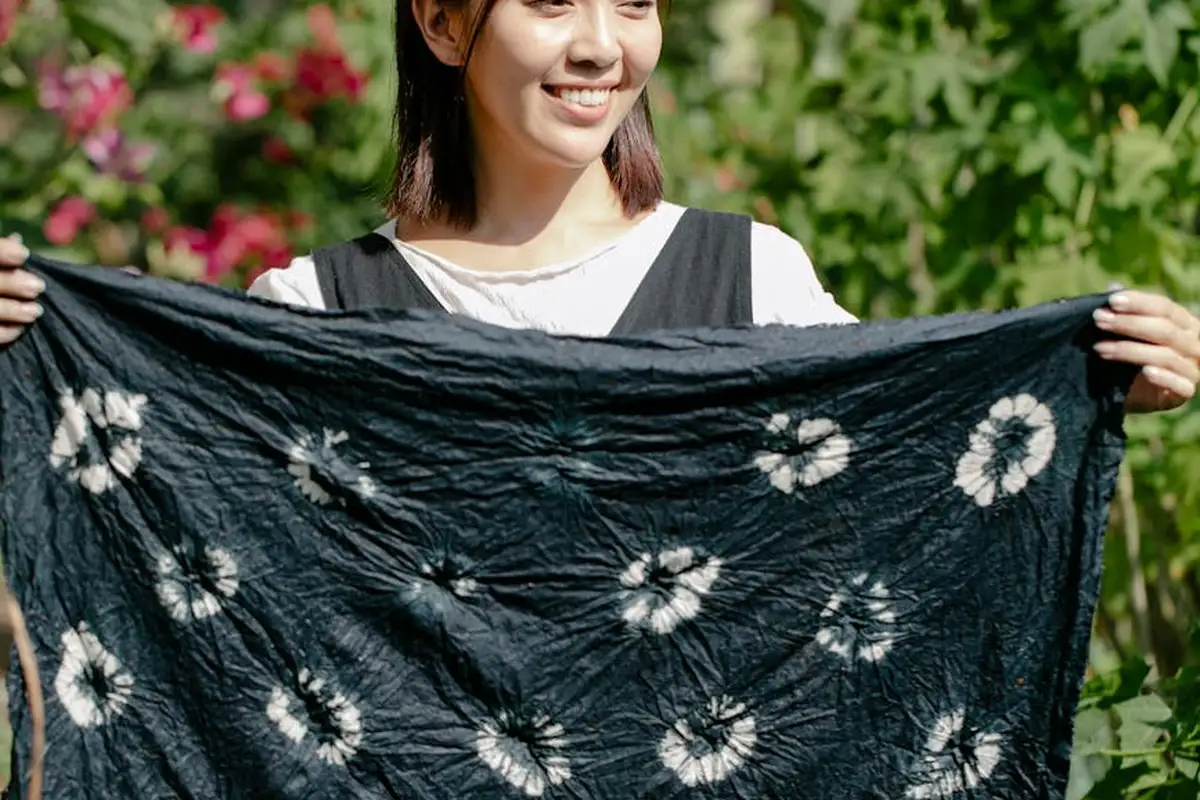
At its heart, tie-dye is a bold, freeform resist technique. You twist, scrunch, or tie fabric with string and rubber bands, then apply dye. The results are energetic, spontaneous bursts of color. Shibori is a precise, pattern-focused system from Japan. It uses methods like intricate folding, careful stitching, or wooden clamping to create geometric, repeatable designs. The process is deliberate and controlled.
The core fabric science principle is identical for both: they use physical resist to block dye molecules from reaching the fibers. When you tie or clamp fabric tightly, you compress the fibers in that spot. The dye solution can’t penetrate that compressed area, leaving it undyed. The tighter and more even the resist, the sharper your final pattern will be.
The main differences come down to what you want to achieve and how you care for the finished piece.
- Typical Results: Tie-dye creates random, organic, and often circular patterns. Shibori produces deliberate, geometric patterns like diamonds, stripes, or intricate textures.
- Common Dye Types: Most beginner tie-dye kits use fiber-reactive dyes for cotton. Traditional shibori often uses indigo, a vat dye, but modern adaptations use the same fiber-reactive dyes as tie-dye for cellulose fibers, or acid dyes for silk and wool.
- Impact on Washing: Both techniques require a rigorous initial wash to remove unfixed dye. However, a shibori piece with very precise, sharp lines often signals the fabric was resist-dyed before being sewn into a garment, which can make overall care simpler.
For a quick start, I recommend tie-dye for beginners wanting to experiment on a cotton t-shirt. The kits are accessible and the process is forgiving. Choose shibori if you want more control over the pattern and are ready to work on natural fibers like linen, rayon, silk, or wool with the appropriate dyes.
How Fiber Structure Dictates Your Dye Results
Your fabric isn’t a blank canvas. It’s a web of microscopic fibers, and their chemical structure decides how-or if-they will grab onto dye. Plant-based cellulose fibers like cotton, linen, and rayon are the easiest and most forgiving targets for the dyes used in these techniques. Their molecular structure has active sites that readily form strong chemical bonds with fiber-reactive dyes. This creates vivid, washfast colors. Different fabrics—cotton, wool, and synthetics—dye in distinct ways. Understanding those differences helps plan the process for any fabric you choose. I see the best, brightest results on mercerized cotton or high-quality rayon.
Protein fibers like silk and wool require a different approach. Their fibers are sensitive to high heat and agitation, which can cause felting in wool or damage the delicate surface of silk. You must use gentler acid dyes and maintain a warm, acidic dye bath (often with vinegar) for the color to bond properly. The process is less about dramatic saturation and more about achieving beautiful, nuanced shades. Always keep the temperature low and handle the fabric gently to prevent shrinkage and distortion.
I strongly warn against using standard tie-dye or shibori kits on synthetic fibers like polyester or nylon for your first projects. These petroleum-based fibers are non-porous and require specialized disperse dyes and very high, consistent heat (often near boiling) to force the dye molecules into the fiber. It’s a finicky process that usually requires a stovetop, not a bucket. The result with a cold-water dye kit will be a faint, chalky stain that washes right out.
Always test your fabric content first, especially with blends. A 50/50 cotton-polyester blend will dye, but the colors will be much paler and less vibrant on the polyester portions. For a reliable home test, perform a careful burn test on a hidden seam allowance. Cotton burns quickly with a paper-like ash, while polyester melts and beads. Knowing your fiber is the first, most crucial step to a successful project, especially when you’re trying to verify 100% cotton fabric.
The Step-by-Step Science of Washing and Setting the Dye
Your dye job is only as good as your washout. This step locks in color and prevents a rainbow disaster in your future laundry.
Start with a cool water rinse. Hold the piece under running water or soak it in a basin, gently squeezing, until the water runs almost clear. This removes the unfixed dye molecules that would otherwise bleed onto your hands or other clothes.
Next, wash the piece alone. Use a dye-trapping detergent, which works by grabbing loose dye particles in the wash water. A pH-neutral option is safest for all fibers and dye types.
Fiber science dictates your water temperature. That includes linen, where washing linen water temperature can influence dye performance as well as fabric feel. When washing linen, choosing the right temperature helps balance cleanliness with fiber health. For plant fibers like cotton, linen, or rayon, a hot water wash (around 60°C or 140°F) helps set fiber-reactive and vat dyes by driving the chemical bond to completion. For animal fibers like wool and silk, heat and agitation are the enemy. Always use cold water for protein fibers to prevent felting, shrinkage, and damage to the dye’s bond.
Never skip a colorfastness test. After the final wash, press a clean, damp white cloth against a dark area of the fabric for 30 seconds. If color transfers, wash it again. Your regular laundry will thank you.
Pre-washing your blank fabric is the most critical step for even color. Sizing-the starch or polymer applied to fabric to make it crisp-acts like a raincoat, repelling dye. A hot wash with a little detergent strips this away, letting the dye penetrate every thread uniformly. Doing a pre-wash also helps prevent shrinkage by removing finishes that tighten fibers. This keeps the fabric steady and size-consistent through future washes.
Managing Shrinkage: Before, During, and After Dyeing
Shrinkage can crumple your design if you don’t plan for it. The strategy changes at each stage.
Before you fold or tie a single knot, pre-shrink your fabric. For a cotton t-shirt or linen, run it through the washer and dryer on the hottest settings it will face in its life. This forces the natural fibers to contract fully before you create your pattern, so your beautiful circles and pleats won’t warp later.
The resist technique itself can cause shrinkage. Pulling cords extremely tight, especially on woven fabrics, crushes the yarns at the bind points. This can create permanent, puckered creases. On knits like a cotton jersey, it can overstretch the fabric, which then contracts unevenly.
Washing your finished masterpiece requires a gentle touch. Use the cold, gentle/delicate cycle and a mild detergent. Tumble drying applies heat and agitation, a combination that stresses dyes and fibers. Lay the piece flat or hang it to air dry; this preserves both the vibrancy of the color and the dimensions of the cloth. Rayon fabrics, in particular, benefit from air-drying to preserve softness and drape. You’ll find rayon-specific drying care tips in the next step.
Wool operates under its own rules. The scaly protein structure of wool fibers locks together with heat, moisture, and agitation-a process called felting. Once wool felts, it shrinks dramatically and cannot be restored. This can happen during dyeing or washing, regardless of the dye you used.
Handling Pro-Tip: The Fabric Grain is Your Blueprint
Think of the fabric’s grain as the roadmap for your design. Ignoring it leads to crooked patterns and distorted fabric.
The lengthwise grain runs parallel to the neat, finished edge of the fabric, called the selvage. It has very little stretch. When you fold or pleat along this straight grain in shibori, you get sharp, predictable lines that stack neatly.
The bias is the 45-degree diagonal across the weave. It has tremendous stretch. If you pull your tying thread tightly against the bias, you stretch the fabric out of shape. That stretched area may never relax back, leaving you with a permanent, distorted bulge in your design.
Before you start, always smooth your fabric perfectly flat. Find the selvage and identify the straight grain. Let that guide your folding, pleating, and tying. Your final pattern will be crisp, and your fabric will hold its shape.
Choosing Dyes: Why Chemistry Determines Your Colors
Think of your fabric as a lock, and the dye as the key. The right key opens the fiber and forms a permanent bond. The wrong one just stains the surface, ready to wash out.
For plant-based fibers like cotton, linen, and rayon, you need a fiber-reactive dye key. These dyes form a covalent chemical bond with the cellulose molecule. I use them for nearly all my cotton tie-dye projects. They need an alkaline environment, created with soda ash, to trigger the reaction. The result is stunningly vibrant, wash-fast color that becomes part of the fiber itself.
For protein-based fibers like silk, wool, and other animal hairs, you need an acid dye key. These dyes are attracted to the positively charged sites on the protein fiber, especially when helped by a mild acid like white vinegar or citric acid. The colors can be extraordinarily rich and deep, perfect for creating subtle shibori gradients on a silk scarf.
Tie-Dye vs. Shibori Colors: Tradition Meets Play
Historically, these techniques used different palettes due to their origins. Modern crafters, however, mix and match freely.
- Tie-Dye Colors: Often celebrates bold, high-contrast, and mixing colors. Think rainbows, spirals, and electric hues. The technique naturally pushes for playful, overlapping color sections.
- Traditional Shibori Colors: Was famously linked to a single, profound shade: indigo blue. The beauty came from the depth of shade and the stark white of the reserved pattern. Modern shibori artists use the full spectrum of acid and fiber-reactive dyes, embracing everything from soft pastels to deep blacks.
Non-Negotiable Safety & Setup
Dye powders are fine particulates you do not want to inhale.
- Always wear a basic particle mask when mixing powder dye.
- Wear nitrile or rubber gloves to protect your skin.
- Work in a well-ventilated space.
- Dedicate tools (pots, spoons, measuring cups) to dyeing only. Do not return them to kitchen use.
A Note on “All-Purpose” Dyes
Dyes like Rit are direct dyes. They work on many fibers through sheer adhesion, not a strong chemical bond. On natural fibers, they produce softer colors and have poor wash-fastness, fading quickly. On synthetics like polyester, they often require near-boiling water and constant stirring for even color. For results that last, I always choose the dye chemistry built for my specific fabric, especially when hand dyeing synthetic fabrics.
Troubleshooting Fading, Bleeding, and Care Mistakes
You’ve put in the work. Let’s make sure your creation lasts. Fading and bleeding are usually a sign of one of three issues.
Dyes fade primarily due to ultraviolet light exposure, which breaks down dye molecules over time. Washing with harsh detergents or bleach accelerates this. Improper setting-like not using soda ash for cotton dyes or vinegar for silk dyes-means the dye never properly bonded and will wash out rapidly.
How to Stop Dye Bleed After the Fact
If you’re still seeing color in the rinse water after the initial wash, the dye is not fully set. You can often fix it.
- For Fiber-Reactive Dyes (Cotton): Soak the piece in a commercial dye fixative solution. These products help seal any loose dye molecules.
- For Acid Dyes (Silk/Wool): Give it a final rinse in cool water with a cup of white vinegar. The acid bath can help attract any remaining dye back to the fiber.
Do Shibori and Tie-Dye Fabrics Fade Over Time?
Yes, all dyes fade. Sunlight is a powerful bleach. Understanding fabric dye permanence helps explain why some colors stay vibrant longer. Proper dye selection and gentle care slow the process dramatically, letting you enjoy the colors for years. A cotton shirt dyed with quality fiber-reactive dyes and washed in cool, gentle cycles will hold its brilliance far longer than one dyed with an all-purpose dye and washed in hot water.
Salvaging a Bleeding Piece
Found color transfer in the wash? Don’t panic. Rewash the piece immediately, alone.
- Use the hottest water the fabric can tolerate (check the fiber care, not the dye care).
- Add a dye-trapping sheet (like a Shout Color Catcher) to the wash.
- Use a specialized detergent like Synthrapol. It’s designed to suspend loose dye particles in the water so they can’t redeposit on the fabric.
- Air dry and check if the bleeding continues. You may need to repeat this process.
Last Notes on Keeping Your Designs Vivid
Your fabric choice is the single most important factor for successful dyeing. For lasting, vibrant results, always work with natural fibers like cotton, silk, or linen, which form strong bonds with fiber-reactive and acid dyes. Synthetic blends will resist the dye, leading to pale, washed-out patterns.
Treating your hand-dyed pieces with care honors the craft and extends their life. I encourage you to learn the simple fabric science behind each textile you own, from a silk scarf’s pH needs to how cotton’s shrinkage affects a final fit. This knowledge turns laundry day into an act of preservation, keeping your unique creations in rotation for years.
Industry References
- Shibori vs. Tie-Dye | FaveCrafts.com
- Indigo Tie Dye Its not Tie-Die – Shibori Explained – BailiwickBlue
- What is Shibori? 5 Things to Know about Sophisticated Tie Dye
Florian is a high fashion blog writer, fashion and fabric expert and a keen expert in fabric, clothing and materials. She has worked in large textile and fashion houses for over 10+ years, engineering and working with various fabric types and blends. She is an expert when it comes to questions on any and all kinds of fabrics like linen, cotton, silk, jute and many more. She has also traveled around the world studying traditional fabrics and aims to bring them into the modern fashion use.