What Needle Size and Type Should You Use for Stretch and Woven Fabrics?
A skipped stitch or a pulled thread can stop your sewing project cold. I am here to give you the clear, practical advice to choose needles with confidence.
This guide breaks down the fabric science behind needle selection. We will cover how needle point types prevent damage in knits versus wovens, choosing the correct needle size based on fabric weight and thickness, and my hands-on method for testing needle performance before you sew a full seam.
Executive Summary: Your Quick Needle Guide
Use a ballpoint or stretch needle for stretch fabrics. Use a universal or sharp needle for woven fabrics.
For medium-weight fabrics, start with a size 80/12 needle for wovens and a 75/11 for knits.
Fabric weight and fiber content matter just as much as the weave. In cotton fabrics, classification by weave, tightness, and weight helps predict performance and end use. These factors influence drape, durability, and suitability for different garments. A heavy cotton denim and a delicate silk charmeuse are both wovens, but they demand different needle sizes and types.
Always pre-wash your fabric to account for shrinkage before you cut and sew.
How Fabric Structure Dictates Needle Choice
Think of fabric structure as its skeleton. A woven fabric, like cotton poplin or linen, has threads that cross over and under each other in a tight grid. A knit or stretch fabric, like jersey or sweater knit, is made from a single, looped yarn that creates a chain of stitches. Beyond structure, yarn differences—fiber type, twist, and ply—also influence texture and drape. Understanding fabric textile yarn differences helps explain why similar structures can behave differently.
A sharp needle is designed to cleanly pierce the spaces between those woven threads, while a ballpoint needle has a rounded tip that pushes the loops of a knit aside without breaking them.
Using a sharp needle on a knit is like trying to separate linked rings with a pin. You will snag and cut the yarn, creating a permanent run. A knit’s stretch and recovery depend on those loops staying intact. The ballpoint needle preserves that structure by sliding between the fibers.
This table shows how fabric properties directly guide your needle choice.
| Fabric Type | Structure | Stretch Factor | Recommended Needle | Care Note |
|---|---|---|---|---|
| Cotton Poplin | Woven | Minimal (horizontal only) | Universal (80/12) | Pre-wash to account for up to 5% shrinkage. |
| Wool Crepe | Woven | Some drape, little stretch | Sharp/Microtex (70/10) | Hand wash cold, lay flat to dry. Prone to felting with heat and agitation. |
| Polyester Jersey | Knit | Good two-way stretch | Ballpoint (75/11) | Machine wash cool. Low heat only when ironing to avoid melting. |
| Nylon-Spandex Blend (Activewear) | Knit | High four-way stretch | Stretch (75/11) | Wash in cool water. High heat will degrade spandex elasticity over time. |
Why the Right Needle Prevents Damage
The wrong needle doesn’t just make sewing difficult. It causes physical harm to your fabric. A sharp needle on a knit will create visible, permanent holes that look like a line of punctures. You will get skipped stitches and severe puckering along the seam because the fabric cannot feed evenly.
This damage weakens the seam at a microscopic level, creating points of stress that are likely to fail in the wash, leaving you with a split seam. A ballpoint needle on a dense woven, like canvas, can bend or break because it cannot penetrate the tight weave cleanly.
Fiber Content and Needle Interaction
Fibers themselves react differently to a needle’s point. Natural fibers like cotton and linen are more forgiving. Synthetics like polyester and nylon are smoother and can be slick. I often use a polyester thread on polyester fabric because the similar fibers and finishes create a strong, smooth seam, much like the contrast you see when comparing nylon and polyester fabrics.
For delicate animal fibers like fine wool or silk, a very sharp needle is your best friend. A dull or universal point can catch and pull individual fibers, creating a visible snag in the fabric’s surface. A sharp Microtex needle makes a clean hole without dragging the yarn. Always handle these fabrics with care, supporting their weight as they feed through the machine.
Decoding Needle Sizes and Types: A Primer
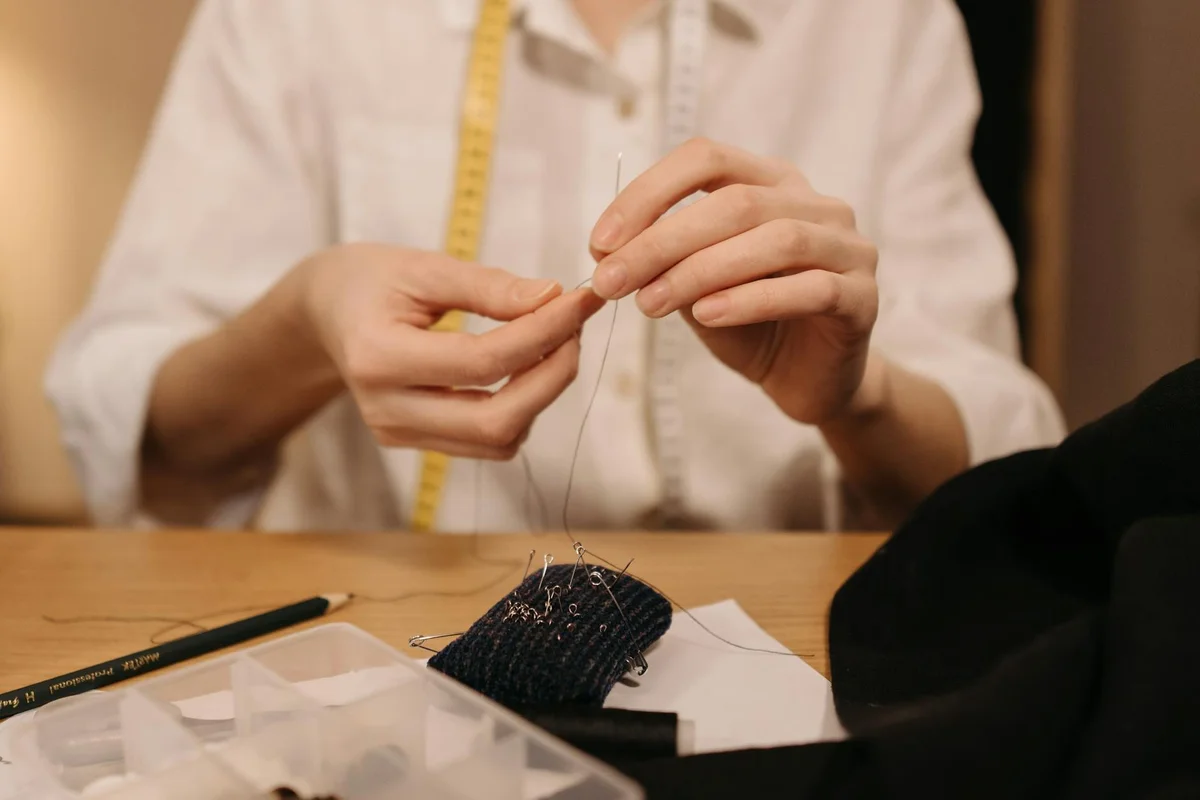
Think of a sewing needle like a pencil. The needle size is the thickness of the lead. The needle type is the shape of the tip. Get both right, and your work flows smoothly.
Needle size is that number pair you see, like 80/12. The first number is the European metric diameter in hundredths of a millimeter. The second is the older American sizing. A 80/12 needle has a shaft 0.8mm thick. This thickness needs to match your fabric’s weight.
Needle type is all about the point’s shape. A universal point, a sharp point, a rounded ballpoint-each is engineered to interact with fabric fibers in a specific way. Choosing the right point prevents damage and ensures a clean stitch.
Needle Sizes Demystified
Match the needle’s thickness to your fabric’s heft. Using a needle that’s too fine can break. One that’s too heavy will leave visible holes.
- Fine (60/8, 65/9, 70/10): For delicate fabrics: silk chiffon, fine cotton voile, lightweight polyester linings.
- Medium (75/11, 80/12): Your workhorse. Perfect for standard quilting cotton, linen, shirting, and stable knits like ponte.
- Heavy (90/14, 100/16, 110/18): For dense fabrics: denim, canvas, upholstery fabric, and multiple layers.
I keep a fabric scrap from every project. Before I sew a seam, I test the needle and thread on that scrap. This two-minute test saves hours of frustration from skipped stitches or snagged fabric.
Needle Point Types and Their Jobs
The point’s job is to part fibers, not spear them. Here’s how the common types work.
Universal Needle: This is a generalist. Its point is slightly rounded, a compromise meant to handle basic wovens and very stable knits. Can you use a universal needle on stretch fabric? Sometimes, on a stable knit with minimal stretch. For a true, springy jersey or fabric with spandex, it’s a gamble that often leads to skipped stitches.
Ballpoint and Stretch Needles: These have a distinctly rounded tip designed to push between the loops of a knit fabric instead of piercing and potentially breaking the threads. Do you need a special needle to sew stretch fabric? Yes, for reliable results. A ballpoint is for most knits. A stretch needle has a deeper scarf (the groove) and a special eye to handle elastic threads, making it ideal for very high-stretch fabrics like swimwear or dancewear.
Sharp/Microtex Needle: This needle has a keen, acute point for piercing tightly woven fibers with precision. I use it for crisp poplin, silk taffeta, microfiber, and laminated fabrics. It creates beautifully even stitches without fraying.
Specialty needles like twin needles create parallel rows of stitching in one pass. They are fantastic for professional-looking hems on knit fabrics, and we’ll explore them in detail next.
The Stretch Fabric Toolkit: Needles for Knits and Elastane
This is your direct answer to “what needle do you use for stretch fabric.” The golden rule is simple: use a needle with a rounded point. This preserves the elasticity of the fabric and prevents runs. For even better control of how the fabric stretches while you sew, consider stitch type and tension as part of sewing fabric stretch control.
Choosing the Needle Type for Stretch
Your main choices are ballpoint and stretch needles. Both have rounded tips, but they are not identical.
- Ballpoint Needle: Use this for most everyday knits-cotton jersey, interlock, ponte roma, sweatshirt fleece. It smoothly separates the yarns.
- Stretch Needle: Switch to this for fabrics with significant elastane or spandex content (typically over 10%). Think activewear, leggings, and swimsuits. Its design helps prevent skipped stitches when the fabric is stretching under the needle.
A universal needle risks damaging knit fibers and causing inconsistent stitch formation, which leads to weak seams.
Choosing the Needle Size for Stretch
Pair the correct point type with the right size. A thin, sleek nylon-spandex blend still needs a fine needle, just one with a ballpoint.
- Lightweight Knits: Silk jersey, fine cotton jersey, single knits. Use a 70/10 or 75/11 ballpoint.
- Medium-weight Knits: Interlock, ponte roma, double knits. An 80/12 ballpoint is perfect.
- Heavyweight Knits: Sweatshirt fleece, sweater knits, scuba. A 90/14 ballpoint will handle the thickness.
How to Use a Twin Needle on Stretch Fabric
A twin needle gives a ready-to-wear finish to hems and topstitching on knits. It creates two parallel lines of straight stitching on top and a zigzag on the bobbin side, allowing the seam to stretch.
- Use a ballpoint twin needle. The size (like 4.0/80) refers to the distance between needles (4.0mm) and the needle thickness (80/12).
- Thread your machine as if for two needles. You’ll need two spools of thread on the top.
- Always test on a scrap of your project fabric first. Adjust the tension if needed; you want the bobbin zigzag to lay flat without puckering.
- Use a straight stitch plate (the one with the small round hole). The wider opening on a zigzag plate can let the fabric get pulled down.
- Sew at a slow, steady pace. Let the feed dogs move the fabric without you pulling it.
This technique creates a durable, professional-looking hem that moves with the fabric, not against it.
The Woven Fabric Workshop: Needles for Stability and Detail
If you’re wondering “what needle for cotton fabric” or any other stable material, you’re in the right place. For woven fabrics, your guiding rule is simple: universal or sharp needles are your go-tos. When working with cotton fabric, these needles make stitching smooth and precise.
Wovens don’t stretch along the grain, so your needle’s job is to pierce cleanly without damaging the fibers or leaving large holes.
Choosing the Needle Type for Wovens
The universal needle is your true workhorse. Its slightly rounded point pushes threads aside to penetrate most woven materials cleanly. I start with this needle for basic cotton, linen, and common polyester-cotton blends. It’s the default for a reason.
Switch to a sharp or microtex needle when precision is key. This needle has a fine, acute point designed to pierce individual threads in tight weaves without deflection. It’s my absolute must-have for crisp poplin, slippery sateen, delicate silk charmeuse, and fine polyester linings. It prevents the needle from pushing the fabric down into the needle plate, which can cause skipped stitches.
For very heavy wovens like dense canvas, duck cloth, or denim over 12 oz, you’ll need specialty needles. A denim needle has a stiffer shaft and a sharper point to power through multiple layers. For genuine leather or suede, use a leather needle, which has a cutting chisel point.
Choosing the Needle Size for Wovens
Size is about matching the needle’s thickness to your fabric’s weight. A needle that’s too large will leave permanent holes; one that’s too small can bend or break.
- Lightweight Fabrics (chiffon, voile, organza): Use a fine 60/8 or 70/10 needle.
- Medium-weight Fabrics (broadcloth, quilting cotton, linen, taffeta): An 80/12 needle is the perfect, most common choice.
- Heavyweight Fabrics (denim, canvas, coating wool, upholstery): Start with a 90/14 and move to a 100/16 or heavier for extreme layers.
Always pre-wash your woven natural fibers to account for shrinkage before you cut a single pattern piece. There’s nothing worse than a perfectly sewn cotton garment that shrinks and distorts in its first wash, pulling at seams sewn with the perfect needle. This is especially important for fabrics that are known to shrink more than others, as they can be less reliable to maintain their size after washing.
Needle Tips for Common Woven Fibers
Here’s how I match the needle to the fiber science on my worktable.
Cotton: A sharp 80/12 is my ideal. Cotton fibers are relatively short and spun into yarn, so a clean pierce is better than a push. Remember, cotton scorches easily. When pressing seams, use a medium-hot iron with steam, and always press with the fabric right-side down or use a press cloth.
Silk: Handle this protein fiber with reverence. I use a fine, new sharp needle (70/10) for every project. A microscopically dull needle will catch and snag the long, smooth filaments. If you hear a “pop” while sewing silk, stop immediately. You’ve likely broken a filament.
Polyester and Woven Blends: These synthetic fibers are strong and heat-sensitive. A universal or sharp needle works well; choose the size based on fabric weight. The benefit here is pressing: polyester can tolerate a hotter iron, which helps set seams crisply. Just avoid such high heat that you melt or glaze the fabric.
Textile Expert’s Notes: Handling, Troubleshooting, and Care
This is where lived experience in the studio meets textbook knowledge. These pro-tips bridge the gap between sewing a seam and creating a lasting piece.
The Sewing Machine Health Check
Think of your needle as a consumable tool, like sandpaper. It dulls with use. I change my needle every 8 to 10 hours of sewing, or at the start of every new major project. A dull needle forces its way through fabric, heating up and weakening fibers, which leads to damage you can’t always see immediately.
Your machine will tell you when the needle is past its prime. Listen and look for:
- Audible “pops” or a punching sound.
- Frequent thread breaks, especially with quality thread.
- Uneven or skipped stitches.
- Snags or pulls in the fabric surface.
When in doubt, swap it out. A fresh needle is the cheapest fix for most sewing problems.
Fabric Preparation Pro-Tips
Your needlework is only as good as your fabric prep. This step is non-negotiable for predictable results.
Pre-wash your fabric exactly as you plan to wash the finished item. This pre-emptively accounts for shrinkage and removes any finishes. For cotton, linen, wool, and rayon (viscose), pre-washing is critical—these fibers can shrink significantly, from 3% to 10% or more. If you’re making a fitted garment, sewing that now-larger seam allowance on pre-shrunk fabric is what keeps the fit true.
How you cut matters just as much. For wovens, always align your pattern pieces with the straight grain or designated bias. For knits, I lay the fabric out flat and let it relax for an hour before cutting to allow any rolling edges to settle. This prevents the cut pieces from twisting into unusable shapes.
Long-Term Care for Your Handmade Items
The right needle does more than just sew a seam; it creates a durable join that respects the fabric’s structure. A proper, clean pierce with the correct size needle creates a seam that can withstand tension and washing without weakening the surrounding fibers.
Your care routine must follow fiber science:
- Cotton and Linen: These are workhorses. Most can be machine washed. Turn items inside out to reduce abrasion on seams and surfaces.
- Silk and Wool: These protein fibers are more delicate. I hand-wash in cool water with a pH-neutral soap. Agitate gently and never wring. The lay-flat-to-dry method is your friend.
- Synthetics (Polyester, Nylon): They are strong but prone to static and oil stains. Wash in cool to warm water to prevent setting wrinkles. Use a gentle cycle to minimize pilling.
Choosing the right needle isn’t just a technical step. It’s a simple act of respect for the material in your hands, honoring its unique science from the first stitch to the hundredth wash.
Final Stitches: Matching Needle to Material
The most reliable rule is this: let the fabric’s structure, not just its fiber content, guide your needle choice. For stretch fabrics, a ballpoint or stretch needle preserves the knit. For wovens, a sharp universal needle gives you clean penetration. Start there every time. When it comes to sewing neoprene needle selection, it matters even more. We’ll dive into neoprene needle options next.
Treating your fabrics right with the correct needle is a quiet act of responsible ownership-it prevents damage, extends a garment’s life, and honors the material. I tell my students to view each project as a chance to learn more about fiber behavior, from how cotton shrinks to why silk dyes so vibrantly.
Related Guides and Information
- Needles Guide
- What Do Sewing Machine Needle Sizes Mean? | Sewjersey.com
- Needle Sizes Explained: Choosing the Right Gauge for Different Injections
- Needle Guide – SCHMETZneedles
- Sewing Machine Needle Types-Sizes-Applications Needle Type Needle Sizes
- r/sewing on Reddit: Can someone explain needle sizes to me?
Florian Ventura
Florian is a high fashion blog writer, fashion and fabric expert and a keen expert in fabric, clothing and materials. She has worked in large textile and fashion houses for over 10+ years, engineering and working with various fabric types and blends. She is an expert when it comes to questions on any and all kinds of fabrics like linen, cotton, silk, jute and many more. She has also traveled around the world studying traditional fabrics and aims to bring them into the modern fashion use.