
Which Leather Breathes Better and Lasts Longer?
You’re looking at a jacket or a sofa and wondering: should you choose real leather or faux leather? The right choice depends on what you need it to do, and I’m here to help you sort through the science and the myths.
I’ve tested both materials in the lab and worn them for years, so I’ll break down how they really perform. We will cover the science of breathability, the true meaning of longevity, practical care steps, and the vital conversation about animal welfare and material origins.
Executive Summary: The Quick Fabric Science Verdict
Let’s break down how these two materials behave from a textile science perspective. Think of this as your cheat sheet for what to expect from each.
- Real Leather: This is a natural material made from a collagen protein matrix. Its structure is full of microscopic pores, much like your skin. This porous nature is what makes it breathable, allowing moisture vapor from your body to pass through. Over time, oils, light, and use change its surface, creating a unique patina. It’s incredibly durable but requires regular conditioning with oils to stay supple. Never, ever put it in a washing machine.
- Faux Leather: This is a laminated fabric, not a single material. It’s usually a polyester or cotton knit backing coated with a plastic film, like PVC (polyvinyl chloride) or PU (polyurethane). The plastic top layer is non-porous, which means it traps heat and sweat against your skin, offering minimal breathability. The color is perfectly uniform and won’t develop a patina. The plastic coating is prone to cracking and peeling with repeated flexing. Surface cleaning is often as simple as using a damp cloth.
The core choice comes down to this: do you value the breathability and unique, living character of real leather, or the consistent look and animal-free composition of faux leather?
Material Data Table: Faux Leather vs. Real Leather
This table gives you a side-by-side look at the key performance metrics. I’ve worked with both in the lab and in practical wear tests, and these points consistently hold true.
| Property | Real Leather | Faux Leather (PU/PVC) |
|---|---|---|
| Breathability | High | Low |
| Why it matters: Breathability is about moisture vapor transfer. Real leather’s porous structure wicks perspiration away, keeping you more comfortable during extended wear. Faux leather acts as a barrier, which can lead to a clammy feel. | ||
| Shrinkage Risk | Low (but Risk of Distortion) | High |
| Why it matters: Leather doesn’t shrink like a cotton tee. If soaked and dried improperly, it stiffens, warps, and can become misshapen. Faux leather’s risk is delamination; high heat (from a dryer, radiator, or hot car) can cause the plastic coating to bubble and separate from its fabric backing. | ||
| Heat Tolerance | Moderate | Low |
| Why it matters: Real leather can handle brief exposure to moderate heat (like from your body) but can dry out and crack near direct high heat sources. The plastic layers in faux leather are very heat-sensitive and can melt, glue, or permanently deform. Never iron it directly. | ||
| Stretch/Flex Factor | Molds & Stretches Slowly | Stretches & May Not Recover |
| Why it matters: Quality leather slowly conforms to your body’s shape and holds that shape. Faux leather stretches more readily with the knit backing, but the plastic top coat can crack if over-flexed, and the material may not spring back, leading to baggy knees or elbows. | ||
| Primary Fiber Content | Collagen (Animal Protein) | Polyester/Cotton (Backing) + PU/PVC (Coating) |
| Why it matters: This is the fundamental difference. Real leather is a natural, biodegradable protein. Faux leather is a composite of synthetic polymers and sometimes natural fibers, making it non-biodegradable but vegan. Care, dyeing, and repair methods are entirely different because of this core composition. |
What Are You Actually Wearing? Fiber and Fabric Structure
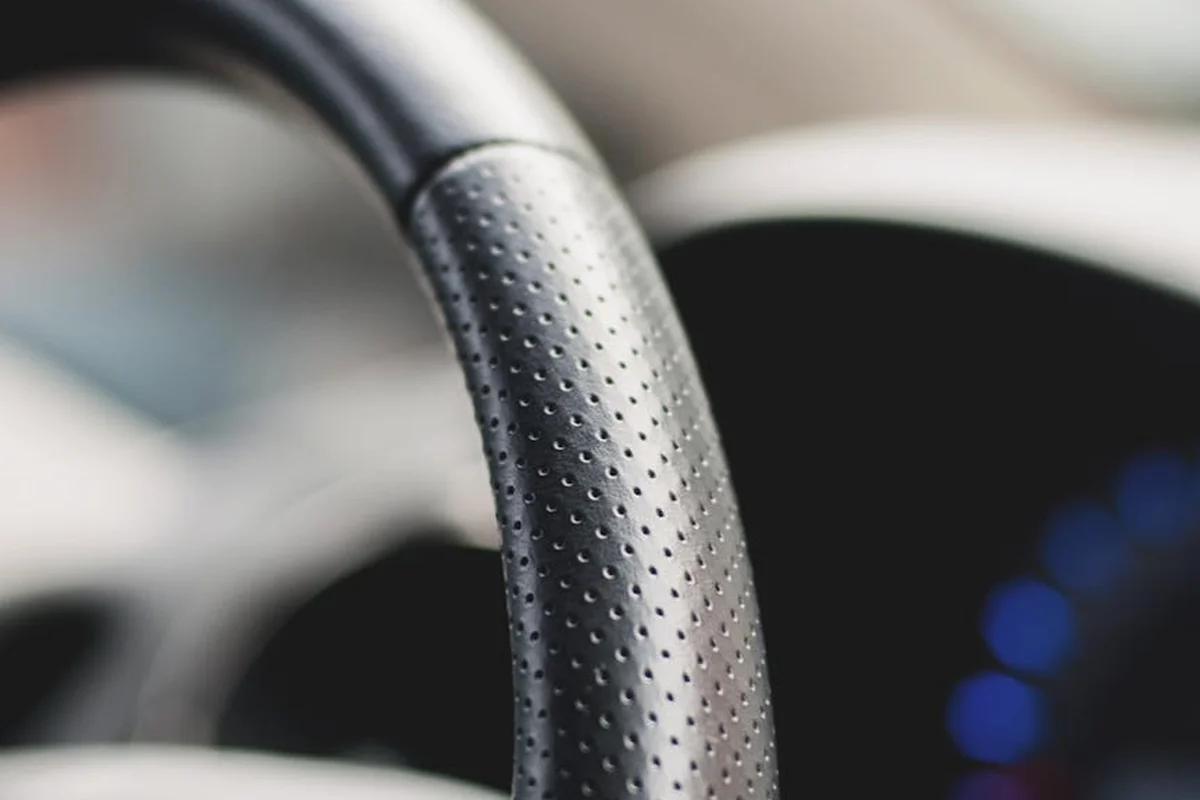
Let’s get to the core of this comparison. This isn’t about two similar fabrics. It’s a biological structure versus a manufactured laminate. Understanding this difference explains everything about how they feel, wear, and age.
Real leather is a protein “fabric” made from a woven matrix of collagen fibers. Think of it like a dense, natural sponge. Under a microscope, you’d see a chaotic, three-dimensional network of fibers with microscopic pores and channels throughout. This porous structure isn’t an add-on. It’s intrinsic. Different grain structures—full grain with the natural surface intact, and top grain that’s been sanded and corrected—shape this porous network. That surface choice influences how freely the leather breathes. It’s why leather can absorb conditioner, why dyes penetrate deeply, and crucially, why it breathes.
Faux leather, or synthetic leather, is a layered system. It has two main parts. First, a textile backing fabric provides structure. This is often a stretchy polyester jersey or a stable cotton knit, similar to other polyester-based synthetic fabrics. Second, a surface coating is applied to that fabric. This coating is usually PVC (polyurethane) or PU (polyurethane).
Imagine taking a thin plastic raincoat and permanently laminating it to a t-shirt. The backing gives it drape and feel, while the plastic top layer provides the look. This leads to a common question: what materials are faux leather made from? The answer is almost always a plastic polymer coating (PVC or PU) bonded to a polyester or cotton fabric base.
The Breathability Test: Why You Sweat in a Faux Leather Jacket
Breathability is simple. It’s a material’s ability to let moisture vapor (like your sweat) pass through it. A breathable fabric keeps you comfortable. A non-breathable one traps humidity against your skin.
Real leather breathes because of its sponge-like, porous structure. Those microscopic channels allow air and moisture vapor to circulate. Wearing a real leather jacket is like being in a well-ventilated room. Your body heat and slight perspiration can escape, which makes it suitable for longer wear across seasons, unlike some synthetic fabrics that trap heat and moisture.
Faux leather creates a total barrier. The plastic coating forms a continuous, non-porous film on the surface. Wearing it is like sitting on a plastic bag; moisture has nowhere to go, so it condenses on your skin. You’ll feel clammy quickly. This is why faux leather garments are notorious for making you sweat, even on a cool day.
Here’s a practical tip from the lab. The breathability of real leather can be reduced by heavy surface finishes, paints, or sealants. The breathability of faux leather is virtually zero from day one, no matter what the backing fabric is. So, does faux leather breathe? No, not really. The plastic coating acts as an impermeable barrier.
Longevity and Wear: Patina vs. Cracking
Asking which is more durable is the wrong question. They have completely different aging processes. One evolves, the other deteriorates.
Real leather longevity comes from its nature as a living, responsive material. With proper care, including occasional conditioning with oils or creams, it can last for decades. It develops a patina-a soft, rich change in color and sheen from use, light, and oils. This is often considered desirable. It has high abrasion resistance but can be scratched, cut, or dried out. When damaged, it’s repairable. You can stitch it, patch it, or re-dye it.
Faux leather longevity is limited by chemistry, not use. Its plastic coating contains chemicals called plasticizers that keep it flexible. These evaporate over time. As they leave, the coating becomes brittle and cracks. This is not an “if” but a “when.” For low-quality pieces, cracking can start in 3-5 years. High-grade faux leather might last 10+ years with gentle care. The failure always starts at stress points: creases, elbows, and seams. The color doesn’t age; it wears off or the top coating peels away.
Repair is a key difference. You can’t truly restore cracked faux leather. Once that plastic layer fails, the fabric underneath is exposed. So, what’s the lifespan of faux leather? Expect 5 to 10 years before the coating becomes brittle and cracks, depending on quality and use. And does faux leather fade or get shiny? The color can fade with UV exposure, and the surface often develops a shiny, worn patina in high-friction areas, which is usually seen as wear, not character.
Care and Handling Protocol: Step-by-Step for Each Material
Think of care as preventative medicine for your jacket or sofa. Improper care is the single biggest reason these materials fail before their time. Follow these separate routines to keep them in top shape.
How to Clean and Condition Real Leather
Real leather is a natural, protein-based material. It needs moisture and oils to stay supple, but too much water will harm it. Here’s my lab-tested method.
- Dust or vacuum first. Loose grit acts like sandpaper, scratching the surface every time you move.
- Use a cloth dampened with cool water and a drop of pH-neutral soap (like Castile). Wipe gently. Never soak the leather or run it under water; think of it like blotting a spill, not washing a dish.
- Dry naturally, away from radiators or direct sun. Forcing dry heat cooks the fibers, making them brittle and prone to cracking.
- Once a year, or when the leather feels stiff, apply a quality conditioner like Lexol. Rub a small amount in thoroughly with your hands. The warmth helps it penetrate. This step replenishes the natural oils lost over time and is non-negotiable for longevity.
- Store away from direct sunlight and heat sources. UV radiation fades color and dries out the hide permanently.
How to Clean and Protect Faux Leather
Faux leather is a layered plastic fabric. Your goal is to protect the thin plastic topcoat from scratches and the fabric backing from moisture. Avoid anything harsh, especially when it comes to UV exposure to synthetic fabrics.
- Wipe regularly with a dry, soft microfiber cloth. This removes the daily dust that can dull the glossy finish.
- For sticky spots or stains, use a cloth lightly dampened with mild soapy water. A dedicated faux leather cleaner is safer. Never use acetone, nail polish remover, or strong solvents, as they will dissolve the plastic coating on contact.
- Dry immediately with a separate, dry cloth. Do not let water air-dry on the surface, as it can seep into seams and cause the fabric layer to weaken or mildew.
- Avoid creating permanent creases. The plastic topcoat can crack if bent in the same spot repeatedly, like on a jacket elbow or bag fold.
- For items near a window, use a UV-protectant spray designed for plastics. Sunlight breaks down the plasticizers that keep the vinyl soft, leading to inevitable cracking and stiffness.
A critical rule for both: keep them out of the laundry room. Never machine wash or tumble dry real leather. The agitation and heat will shrink and distort it irreparably, like cooking a steak into a tough, misshapen piece of jerky. For faux leather, the washing machine’s tumbling action causes delamination-the plastic layer separates from the fabric backing, creating bubbles and peeling. Ironing will melt the plastic surface of faux leather and scorch real leather.
When Dyeing and Alteration Enter the Chat
This is for the brave makers and upcyclers. I love a good project, but you need honest facts before you start.
Dyeing Real Leather
Genuine leather can be successfully dyed because it is porous. I use professional, alcohol-based leather dyes. The alcohol carries the pigment deep into the hide fibers for a permanent color change. The process requires patience and good ventilation, but the results are durable and can even be re-dyed later. The main risk is applying too much dye at once, which can leave a stiff, painted feel. Thin, multiple coats are key.
“Dyeing” Faux Leather
Here is the hard truth from my workshop. You cannot dye traditional PVC or PU faux leather at home like you would cotton. The material has a non-porous plastic skin. Liquid dye just sits on top and wipes off. What you find in stores are surface paints or ‘vinyl dyes,’ which are essentially thin paints that form a new colored layer on top. This layer wears, scratches, and cracks independently from the material underneath. It’s a cosmetic cover-up, not true dyeing.
Alterations & Shrinkage
Do not try to shrink either material intentionally. It will damage them. For alterations, real leather can be cut and sewn with a heavy-duty machine and leather needles. The holes from stitching become a permanent part of its character. Faux leather can also be sewn, but you must know that every needle hole is a permanent perforation. These holes can become stress points and lead to tearing, especially on tight seams or bags carrying weight. Always use a fresh, sharp needle and consider reinforcing high-stress areas with interfacing.
Your Long-Term Material Care Strategy
Match your choice to your life: real leather requires dedicated conditioning to breathe and last decades, while faux leather stays uniform with minimal care but lacks natural ventilation. Treat real leather like skin that needs moisture, and faux leather like a plastic laminate that needs protection from sharp folds and heat.
Owning any textile responsibly means learning its specific needs-whether it’s preventing cotton shrinkage, dyeing nylon, or washing wool-to extend its life and value. Silk fabrics, with their distinct types, properties, and careful care needs, illustrate how this knowledge translates into practical handling. I encourage you to apply this same curious, careful approach to all fabrics, building a wardrobe that lasts through informed care and continuous learning.
Relevant Resources for Further Exploration
- What Is Breathable Leather: Enhanced Comfort and Durability – Andar
- Is Leather Breathable? Debunking the Myth | Leather Jacket Master
- Breathability of leather – www.leather-dictionary.com – The Leather Dictionary
Written by Florian Ventura. Florian is a high fashion blog writer, fashion and fabric expert and a keen expert in fabric, clothing and materials. She has worked in large textile and fashion houses for over 10+ years, engineering and working with various fabric types and blends. She is an expert when it comes to questions on any and all kinds of fabrics like linen, cotton, silk, jute and many more. She has also traveled around the world studying traditional fabrics and aims to bring them into the modern fashion use.