
What Are the Real Differences Between Fabric, Textile, and Yarn?
If you’ve ever felt unsure whether to call something a fabric or a textile, you’re not alone-this mix-up can lead to confusion when washing, dyeing, or shopping for materials. I’ve worked in textile labs for years, and I’ll clarify these terms so you can care for your clothes with confidence.
We will cover the precise definitions, how each impacts properties like shrinkage and dye absorption, and why this knowledge matters for handling cotton, wool, silk, and blends.
Executive Summary: Your Quick Guide to Smarter Fabric Care
Think of yarn, textile, and fabric like pasta. Yarn is a single strand of spaghetti, a continuous thread. Textile is the whole cooked sheet of pasta fresh from the pot. Fabric is the specific lasagna noodle you cut from that sheet to build your dish.
Confusing these terms can lead to real laundry disasters, but knowing the difference helps you predict exactly how your clothes will behave. It lets you choose the right washing method every time.
Here is your cheat sheet. Yarn is twisted fiber. Textile is any material made from fibers. Fabric is a flexible textile used for making things like clothes and curtains.
What is Yarn? It All Starts with a Twist
Yarn is the continuous, twisted strand of fibers that forms the basic building block. It is ready for weaving, knitting, or sewing. To answer a common question, yarn is simply a long, coherent thread made by twisting fibers together for strength and consistency.
You will mainly encounter two types of yarn. Spun yarns are made from short fibers, called staples, like cotton or wool. These yarns are fuzzy, breathable, and trap air. Filament yarns are made from one incredibly long, continuous fiber, like silk from a cocoon or polyester from a chemical spinneret. These yarns are sleek, smooth, and very strong.
The fiber in your yarn dictates its entire future. Protein fibers (wool, silk) shrink and react to heat and pH differently than plant fibers (cotton, linen) or synthetics (polyester, nylon). This knowledge is your power. It tells you if a hot wash will cause dramatic shrinkage or if a certain dye will work.
You can identify a mystery yarn at home with a simple burn test. Always work safely over a sink. Snip a small piece, hold it with tweezers, and carefully light it. Note the smell and the ash. Cotton burns quickly with a papery smell and leaves soft, gray ash. Wool burns slowly, smells like burning hair, and leaves a crushable black bead. Polyester melts, shrinks from the flame, and leaves a hard plastic bead.
Yarn Fiber Deep Dive: From Sheep to Skein
Each yarn fiber has a unique personality that shapes your final fabric. Wool has a springy loft, meaning it can compress and bounce back, creating warm, insulating fabrics. Cotton has a crisp dryness, making for absorbent, breathable yarns. Cotton fibers contribute to the soft and natural feel of fabrics. Polyester offers slick strength, adding durability and wrinkle resistance.
The twist of the yarn itself is a secret tool. A low-twist yarn is soft and fluffy but can pill more easily. A tightly twisted yarn creates a firmer, more durable, and often more shrink-resistant fabric because the fibers are locked in place. You can feel this; tightly twisted yarns have a hard, cord-like feel before they are woven.
When considering animal fibers like wool, cashmere, or silk, it is vital to think about source. I look for certifications like Responsible Wool Standard or peace silk, which allows the moth to emerge. Excellent plant-based alternatives exist. For wool’s warmth, consider brushed cotton or high-loft acrylic blends. For silk’s drape, look at rayon or Tencel lyocell.
From Yarn to Textile: The Weaving, Knitting, and Bonding Phase
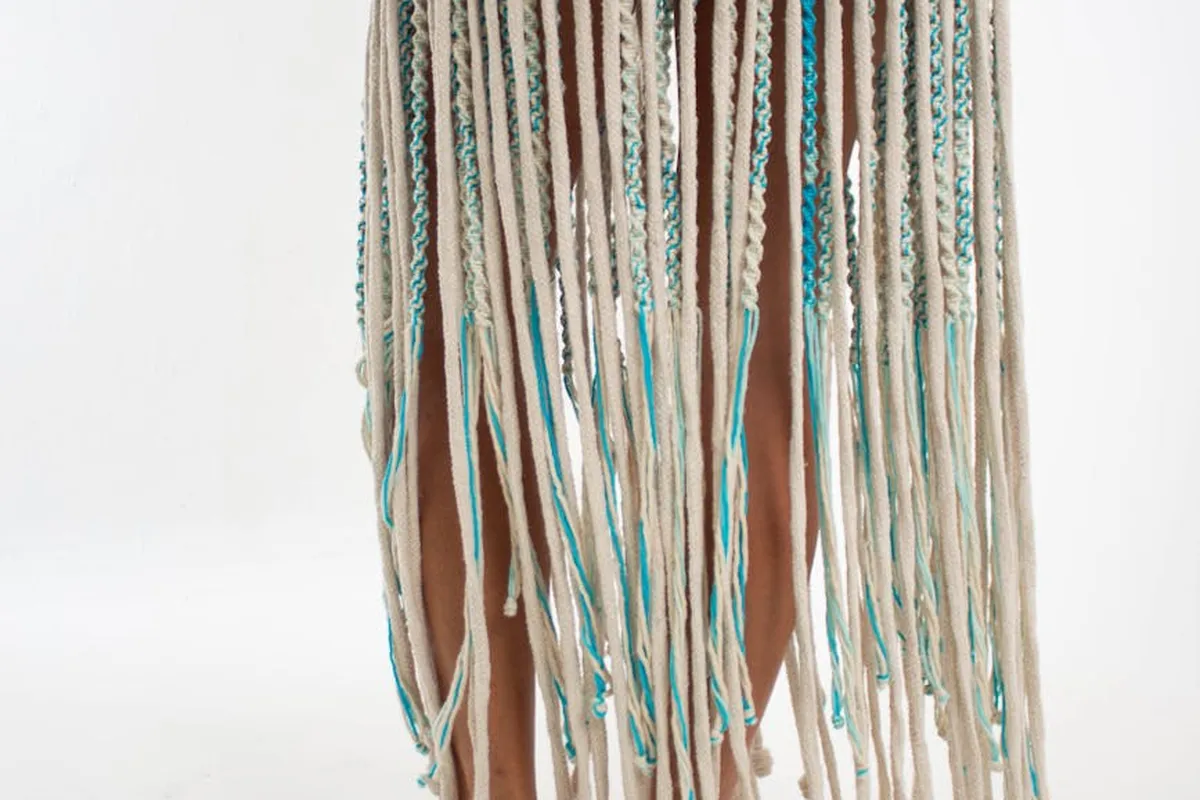
In the lab or the mill, we use the word ‘textile’ as the big umbrella. A textile is any material manufactured from fibers, whether they are woven, knitted, knotted, or bonded together. This is where the transformation from a single yarn to a usable material happens. The production process takes those spun yarns and builds them into a structure.
Yarns are interlaced on a loom to create a woven textile, like the crisp grid of your cotton bedsheet. They are looped together with needles to create a knit textile, like the springy fabric of your favorite sweater. Sometimes, fibers skip the yarn stage entirely. In non-woven textiles like felt or interfacing, fibers are matted, fused, or chemically bonded directly into a sheet.
Understanding this phase answers two common questions. ‘What is a textile?’ It’s the constructed material. ‘How are fabric, textile, and yarn related?’ Think of it as a chain: fibers are spun into yarn, yarn is constructed into a textile, and a specific type of textile becomes a fabric.
Woven vs. Knit: A Caretaker’s Cheat Sheet
The construction method isn’t just about how it looks. It dictates how you must care for it. I test this every day. Woven fabrics, with their stable grid, generally hold their shape well but are prone to fraying at cut edges. Knit fabrics, built from interlocking loops, offer stretch but can lose their form or develop pills over time.
Your wash cycle must respect this. A woven cotton shirting can typically handle a regular machine cycle with warm water. A delicate knit silk blouse demands a gentle, cold wash in a mesh bag. For a wool knit, agitation and heat are the enemies, often leading to severe shrinkage (felting) that you cannot reverse, unlike some fabrics that shrink less when washed.
When you ask for the difference between a woven and knit fabric, this is the practical truth for your laundry room. Your denim (woven) recovers from a wash. Your t-shirt (knit) might stretch out at the neckline or hem. Knowing the difference between fabric weaves and materials helps you understand why this happens.
Fabric vs. Textile: Why Your Laundry Label Cares
Here is the precise, scientific distinction I use when writing care guides. All fabrics are textiles, but not all textiles are fabrics. The term ‘fabric’ refers specifically to those flexible, planer textiles designed for end-uses like apparel, upholstery, or bedding.
Your linen tablecloth is made of fabric. The geotextile matting under your driveway is a technical textile. The carbon fiber in a racing bike frame is a high-performance textile. They are all made from manufactured fibers, but only one is a fabric.
In everyday talk, we swap the words all the time. That’s fine. But in fabric science and on your care label, ‘fabric’ is the more specific, useful term. It tells you the material is intended for domestic handling.
The Shrinkage and Care Connection
Identifying something as a ‘fabric’ gives you immediate clues. A cotton poplin fabric will have care instructions for a home washer and dryer, and yes, it might shrink 3-5% on its first warm wash. An industrial polyester textile used for a car headliner isn’t coming with a laundry tag.
Fabric care labels assume domestic washing and drying cycles, which is why they specify temperature and agitation levels to control shrinkage and dye loss. However, even with these measures, some shrinkage can still occur, so it’s important to follow a fabric shrinkage care guide for delicate materials. Textile care for non-fabric items often involves industrial solvents or processes you’d never use at home. This distinction is why knowing you’re dealing with a fabric, and what kind, is your first step to preserving it.
Your Hands-On Protocol: Testing, Washing, and Choosing
Let’s get practical. You have a material in your hands. Is it yarn, a textile, or a cut of fabric? Knowing this changes everything about how you treat it. I start every project with a simple two-step check.
First, look at the construction. Yarn is a single, continuous strand, often twisted, waiting to be knit or woven. A textile is the broad category for anything created from yarns-this includes the fabric on a bolt, your carpet, even industrial conveyor belts. Fabric usually refers to the flexible sheet of textile used for making things like clothes and curtains.
Second, if the fiber content tag is missing, a controlled burn test in a safe sink tells the truth. Snip a tiny piece, hold it with tweezers over a metal bowl, and observe how it burns and smells after it cools (burn test to identify fibers). Cotton burns quickly with a papery smell, leaving soft gray ash. Wool burns slowly, smells like burning hair, and leaves a brittle, crushable bead. Polyester melts and burns with a chemical scent, leaving a hard plastic bead.
Step-by-Step Care Based on Fiber, Not Just Feel
Your care routine should target the fiber, not just the garment’s style. A silk blouse and a wool sweater, both protein fibers, need similar gentle care, even if they look totally different.
Here is my lab-tested protocol. I keep this list pinned in my laundry room.
- For Protein Fibers (Wool, Silk, Cashmere): Hand wash only in cold water (below 30°C/86°F) with a pH-neutral liquid soap. Never rub or wring. Gently press water out in a towel. Lay flat to dry, reshaping as it dries. Heat and agitation cause felting and permanent shrinkage.
- For Plant Fibers (Cotton, Linen, Hemp): These are workhorses. Machine wash at 40°C (104°F) is safe for most items. You can expect up to 5% shrinkage on the first wash, so buy with that in mind. Tumble dry on low, but line drying prevents further shrinkage and is more eco-friendly. Iron with steam while slightly damp.
- For Synthetic Fibers (Polyester, Nylon, Acrylic): Machine wash cool (30°C/86°F). They are very resistant to shrinkage from washing. The real issue is that synthetics hold body oils and odors. Use a sport-specific detergent for workout gear. Tumble dry on low heat; high heat can melt or glaze fibers.
- For Blends: Always defer to the most delicate fiber in the mix. A 60% cotton / 40% wool blend should be washed like wool. A 95% polyester / 5% spandex blend can be washed cool but should never go in a hot dryer, as the spandex (elastane) degrades with heat.
I always use liquid detergent for delicates and dark colors-it dissolves completely in cold water. Powder detergent is great for cottons and linens washed in warm water, where it can fully activate.
Textile Expert’s Note: Pro-Tips for Cutting, Dyeing, and Longevity
This is where years in a workshop pay off. Small habits make a huge difference in your results.
Invest in a pair of sharp scissors you use only for fabric. Paper dulls the blade incredibly fast. A dull blade crushes the yarns as it cuts, forcing them apart instead of slicing them cleanly. This leads to immediate fraying and a messy edge.
When cutting woven fabric, you must follow the grain. The lengthwise grain (parallel to the selvage) has very little stretch. The crosswise grain has a little more give. Cutting off-grain, on the bias, creates maximum stretch and drape, which is great for certain designs but will distort a simple shirt. If your woven garment twists around your body after washing, it was likely cut off-grain at the factory.
Thinking of dyeing natural fabrics? Natural fibers are your friend. Cotton, wool, and silk absorb dye molecules deeply and readily. You can use fiber-reactive dyes for cotton or acid dyes for wool and silk. Most synthetics like polyester require disperse dyes and very high heat (often a rolling boil) that is difficult to achieve safely at home.
To stop dye bleeds on new items, wash that vibrant red fabric or dark jeans alone in cool water first. This sets any loose dye. For delicate fabrics, use a gentle cycle and cold water to protect fibers. Adding a cup of white vinegar to the rinse cycle can help lock in color on cotton and rayon.
Finally, repair with the structure in mind. A hole in a knit sweater is a broken yarn. Darning re-weaves a new yarn over that gap, replicating the structure. A tear in a woven fabric is broken threads in two directions. A patch, applied underneath and secured with a tight zig-zag stitch, supports the area better for the long term.
Last Notes on Fiber, Yarn, and Fabric
When you care for a garment, you are caring for its final, finished form. Your care routine must start by treating the fabric’s constructed surface gently and then consider the fiber content hiding within. Wash a delicate woven silk blouse like the fragile textile it is, not just the protein fiber it’s made from.
This knowledge makes you a responsible owner. Learning how textiles work lets you choose durable items, care for them properly, and reduce waste, which is the most sustainable practice of all.
Deep Dive: Further Reading
- Yarn – Wikipedia
- Textile – Spun, Knitted, Weaving | Britannica
- What is the Difference between Fiber, Yarn and Fabric?
- Types of yarns and their characteristics | James Dunlop Textiles
- Difference Between Yarn And Fabric | The Yarn Bazaar
- What is Yarn? An In-depth Guide – Sino Silk
Florian Ventura
Florian is a high fashion blog writer, fashion and fabric expert and a keen expert in fabric, clothing and materials. She has worked in large textile and fashion houses for over 10+ years, engineering and working with various fabric types and blends. She is an expert when it comes to questions on any and all kinds of fabrics like linen, cotton, silk, jute and many more. She has also traveled around the world studying traditional fabrics and aims to bring them into the modern fashion use.