
Is Cotton or Nylon Better for Your Underwear?
Stuck between the soft familiarity of cotton and the sleek fit of nylon for your underwear? I test fabrics for a living, and the right choice boils down to your body’s needs and your daily routine.
We will cover breathability versus moisture-wicking, how each fabric handles heat and shrinkage, care for long-term wear, and the essential feel of each against your skin.
Executive Summary: Cotton vs Nylon for Underwear at a Glance
Let’s start with the core truth you need to hear. There is no single “better” fabric. The winner depends entirely on your body and your daily life. Your choice hinges on what you value most in the garment touching your skin all day.
Cotton wins for superb breathability, natural softness that improves with washing, and skin-friendly comfort for everyday wear. It’s the classic choice for a reason—especially when cotton quality counts.
Nylon wins for high durability that resists runs and tears, excellent moisture-wicking that pulls sweat away, and reliable shape retention that fights bagging. It’s built for performance.
This is the simple frame. You are choosing between a breathable, absorbent fabric (cotton) and a strong, quick-drying one (nylon). Think of it in tactile terms. Choosing cotton is like picking a soft, broken-in t-shirt you can live in. Choosing nylon is like selecting a sleek, supportive athletic legging that moves with you.
The Science of the Fibers: Plant-Based vs. Lab-Made
Fabric behavior doesn’t start on the sewing table. It begins at the microscopic fiber level. The physical structure of each tiny strand dictates everything you feel and everything the fabric does. You cannot separate performance from this molecular foundation.
The key contrast is between the natural, irregular structure of cotton and the uniform, engineered structure of nylon. One grew in a field, the other was precision-crafted in a reactor.
Cotton Underwear: The Thirsty Plant Fiber
Cotton is a natural cellulose fiber. Under a microscope, it looks like a flattened, twisted ribbon with a hollow core. I always describe it as a microscopic sponge or a tiny drinking straw.
This hollow core is the secret to its personality. It’s why cotton can absorb up to 27 times its weight in water. That’s incredible absorbency. But it’s also the reason a cotton garment can feel damp and cool against your skin after absorbing sweat, and why it is prone to shrinkage when the fibers swell and contract with heat and moisture.
That spongy, irregular structure is what gives cotton its beloved matte, slightly fuzzy texture and its supremely breathable nature, allowing air to circulate freely. When compared to other fabrics, cotton’s unique characteristics stand out.
For care, this structure means gentler handling. Machine wash cotton underwear in cool to warm water (up to 40°C or 104°F) to minimize shrinkage. Expect and allow for about 3-5% shrinkage on the first wash, sometimes more if it’s not pre-shrunk. Tumble dry on low or, better yet, line dry to preserve its shape and softness for years.
Nylon Underwear: The Resilient Synthetic Strand
Nylon is a synthetic polyamide, a long chain of molecules created in a lab from petroleum derivatives. Its structure is smooth, continuous, and uniform-think of a perfectly round, glossy filament.
This engineered smoothness makes it inherently strong, elastic, and highly resistant to absorbing water into its core. Here’s my favorite analogy. While cotton soaks water *into* itself like a sponge, nylon sheds it *along* its surface like a duck’s feathers, channeling moisture away.
This gets right to the frequent question, “is nylon and cotton the same?” The answer is a definitive no, and the proof is in this fundamental difference: cotton absorbs, nylon transports.
For care, nylon’s toughness allows for more robust cleaning but demands cooler temperatures. Always wash nylon in cold water to prevent heat setting wrinkles and to protect delicate elastics often blended with it. It has minimal shrinkage, typically less than 2%, when washed properly. Avoid high-heat dryers; the high heat can melt or weaken the fibers, causing premature thinning or shine. Air drying is fastest and safest. For more specific tips on caring for nylon fabrics, especially waterproof ones, check out our detailed guide.
Underwear Fabric Properties: A Direct Comparison for Daily Use
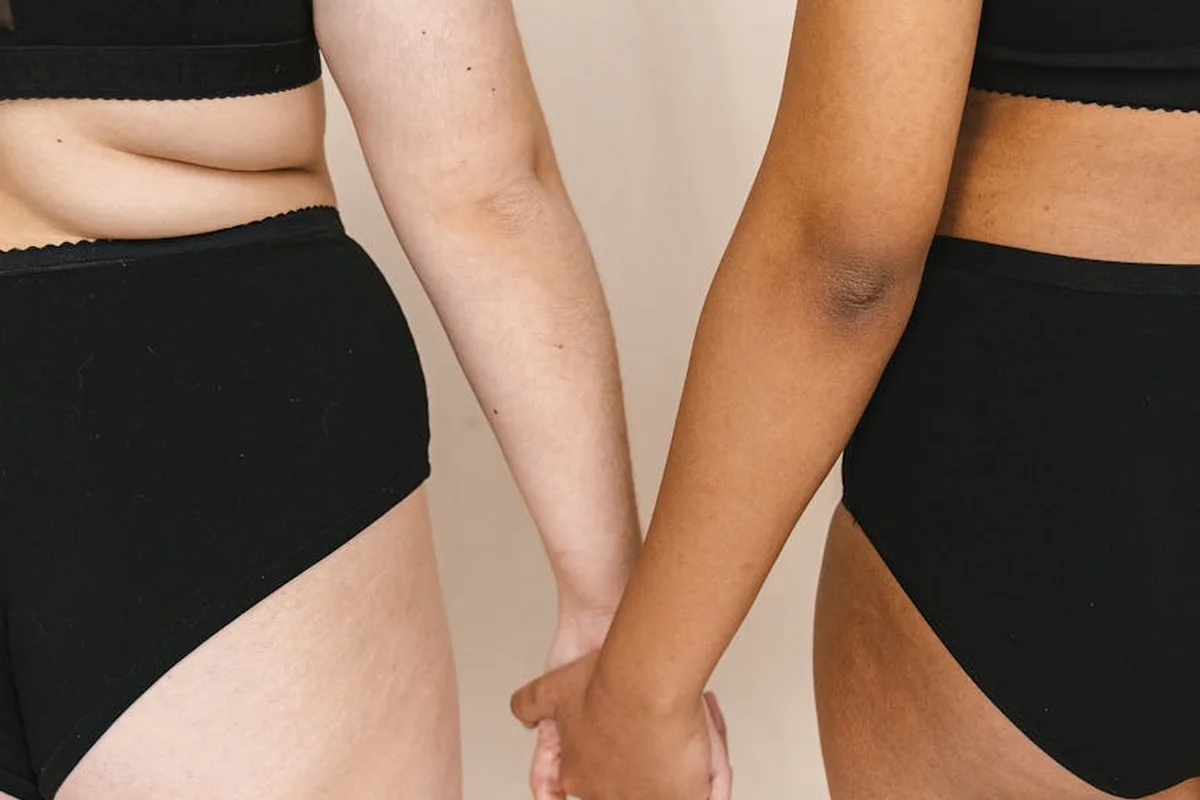
Let’s break this down into five head-to-head matchups. I will focus on what each property means for how the fabric feels and performs on your body from morning to night.
Breathability: Which Fabric Prevents Overheating?
Breathability is simply the fabric’s ability to let air circulate and body heat escape. Think of it as the garment’s ventilation system. It’s especially important when choosing fabrics for hot and humid climates.
Cotton has a naturally open, breathable structure. Air passes through its fibers freely. This keeps you cooler and reduces that stifled feeling. For hot weather, nightwear, or sensitive skin, cotton’s superior breathability is its biggest win.
Nylon is made from continuous filaments woven or knitted tightly. This creates a less porous barrier. It traps more warm air close to your skin, which can feel less ventilated. In a cozy winter base layer, this is a bonus. For everyday underwear in warm conditions, it can be a drawback.
Moisture Management: Absorption vs. Wicking
This is a crucial difference. Absorption and wicking are not the same thing.
Cotton is a champion absorber. Its fibers actively pull moisture (like sweat) into their core. This can feel cooling initially, like a damp cloth on skin. The risk is that cotton can hold onto that moisture, leading to dampness that may cause chafing if you don’t change soon.
Nylon does not absorb much. Instead, it wicks. It pulls moisture along the surface of its smooth fibers to the outer layer of the fabric where it can evaporate. This keeps the layer against your skin feeling drier during activity. It’s the same principle behind performance socks. You often see the “cotton vs nylon socks” debate settled in favor of nylon blends for hiking or sports precisely for this quick-drying wicking action.
Durability and Longevity: Which Withstands More Washes?
From a pure strength standpoint, nylon is the tougher fiber. Its polymer chains are incredibly strong, resisting tears, abrasion, and general wear from friction. Cotton fibers, especially when wet, are weaker and can degrade over many wash and dry cycles.
But there’s a twist. While the nylon fiber itself is strong, nylon and its blends are more prone to pilling those little fabric balls from surface friction. Those pills are annoying, but they sit on top of a base fabric that is still intact. A cotton garment might not pill as much, but the fibers themselves are slowly wearing thin.
Comfort and Feel: Softness Against Your Skin
Comfort is deeply personal, and hand feel (the tactile quality) is key.
Cotton is inherently soft and gets softer with repeated washing. It has a gentle, slightly textured comfort that most find non irritating. When people ask about “cotton vs nylon smoothness,” they’re often feeling this difference.
Nylon offers a different kind of comfort. It has a uniformly sleek, almost silky hand. It feels smooth and light against the skin. On dry skin, that slickness can sometimes lead to static cling or, for some, a slight chafing sensation that cotton doesn’t cause.
Stretch, Fit, and Recovery
Pure, woven cotton has very little inherent stretch. It gets its give from being knitted (like a jersey tee) or from being blended with elastane (spandex/Lycra).
Nylon has excellent recovery meaning it springs back to shape. For this reason, you’ll rarely find 100% nylon underwear. It’s almost always blended with a small percentage of spandex to create a snug, second skin fit. This makes nylon blends the go to for activities like yoga or running, where you need flexibility without the fabric sagging or binding.
Material Data Table: Key Metrics for Cotton and Nylon Underwear
This table gives you general, at a glance benchmarks. Remember, the specific construction (a tight knit vs. a loose weave) or finish can shift these numbers.
| Property | Cotton | Nylon | Practical Note |
|---|---|---|---|
| Breathability | High | Low | Cotton’s open structure cools; nylon can feel warmer. |
| Shrinkage Rate | 3-5% (on first wash) | Less than 1% | Pre wash cotton in cool water to minimize fit change. Nylon is very stable. |
| Heat Tolerance | Medium-High | Low | Cotton can handle a medium iron. Nylon melts at high heat use a cool iron only. |
| Stretch Factor | Low (unless blended) | High (when blended with spandex) | For active wear, seek cotton-spandex or nylon-spandex blends. |
How to Wash and Care for Cotton and Nylon Underwear: Step-by-Step Guides
Treating cotton and nylon underwear the same is a recipe for damaged clothes. Their fibers react to water, heat, and agitation in opposite ways. Follow these distinct protocols to keep each fabric at its best.
Washing Cotton Underwear: Preserving Softness and Size
Cotton is a natural, hygroscopic fiber. It swells with water, and heat makes its twisted molecular structure relax and contract. Your goal is to clean it without triggering that contraction.
- Turn garments inside out. This protects the outer color from fading and reduces abrasion that can wear down the soft surface.
- Use a mild, liquid detergent. I avoid powders because they can leave a gritty residue that gets trapped in cotton’s swollen fibers and feels rough against skin.
- Wash in cool or warm water (30-40°C / 85-105°F). Use the gentle or delicate cycle to minimize agitation.
- Avoid chlorine bleach. It oxidizes and weakens the cellulose fibers, leading to yellowing and holes over many washes. For whites, I use a peroxide-based bleach alternative.
This cool, gentle process minimizes the relaxation of cotton’s fibers, which is what causes shrinkage. Think of it like gently wringing out a sponge instead of throwing it in a hot dryer.
Washing Nylon Underwear: Protecting Elasticity and Color
Nylon is a synthetic thermoplastic. This means heat can actually soften and deform its shape. Most underwear nylon is blended with spandex (elastane), which is even more heat-sensitive.
- Always use cold water. Hot water can set body oils and stains into the synthetic fibers, making them permanent.
- Choose a gentle detergent and skip fabric softener. Softener coats nylon’s smooth fibers, clogging its ability to wick moisture away from your skin.
- Use a short, delicate wash cycle. Less time tumbling means less friction, which is the main cause of pilling on synthetics.
- Wash darks separately. Nylon holds onto loose dye particles in the wash water more readily than cotton, leading to color transfer.
This cold, quick method prevents the heat damage that can melt or permanently stretch nylon fibers and destroys the spandex’s snap-back elasticity.
Drying and Ironing: The Final, Critical Steps
This is where the most dramatic fabric damage happens. Applying the wrong heat here can undo all your careful washing.
For cotton, air drying is ideal. If you use a dryer, select low heat and remove items while they are still slightly damp. You can then smooth and stretch them to shape before they finish air drying. You can iron cotton on a medium-high setting with steam. The heat and moisture help relax wrinkles from the sturdy fibers.
For nylon, you must always air dry. Lay items flat or hang them on a line. Never, ever put nylon in a dryer. The concentrated heat can cause irreversible damage like melting, glossing (where fibers fuse and look shiny), or permanently warping the leg and waistbands. If you must iron nylon, use the absolute lowest heat setting (often “synthetic” or “nylon”) and place a thin pressing cloth between the iron and the fabric.
High heat is the enemy of nylon’s structure and will ruin the garment’s fit and feel in one cycle. I treat my dryer like it’s off-limits for any nylon blend.
Troubleshooting Common Underwear Fabric Issues
Even with perfect care, problems pop up. Here’s how to tackle them with fiber science as your guide.
How to Fix (and Prevent) Cotton Shrinkage
Prevention is always easier. Consistently washing in cool water and air drying is your best defense.
If a favorite cotton piece has shrunk, you can sometimes coax it back. While the garment is still damp from washing, gently but firmly stretch it lengthwise and widthwise. Reshape it to its original dimensions and lay it flat to dry. You may need to do this over a few washes.
The science is simple: heat and agitation cause cotton’s twisted, spring-like fibers to contract and lock together more tightly. You’re manually trying to unlock and re-stretch them before they set.
Eliminating Odor from Nylon Underwear
Synthetic fibers like nylon are hydrophobic-they repel water. But oily sweat and bacteria can cling to their surface. Trapped bacteria are what cause that persistent, musty odor. Texture matters: certain nylon fabrics are engineered with micro-textures that reduce bacterial buildup. When paired with antimicrobial finishes, these nylons stay fresher and odor-free.
My go-to fix is a pre-wash soak. Mix 1 part white vinegar to 4 parts cold water in a basin or sink. Soak the nylon underwear for 30 minutes. The vinegar helps break down the alkaline salts in sweat and kills odor-causing bacteria. Then, wash as usual with a cool water cycle.
For tough odors, use an enzymatic detergent made for sportswear. The enzymes target and break down the specific protein and oil molecules that cause smells. Always ensure nylon underwear is completely, bone-dry before putting it in a drawer, as any dampness invites bacterial growth. Additionally, follow proper odor prevention techniques for nylon fabrics to maintain freshness.
Dealing with Pilling on Blends
Pilling are those tiny fabric balls that form on the surface. They happen when friction causes short, broken fibers to tangle together. In a cotton-nylon blend, the weaker cotton fibers often break first and wrap around the stronger nylon cores.
To remove existing pills, use a fabric shaver or a battery-powered pill remover. Gently glide it over the fabric’s surface. Don’t press too hard, as you might cut the base fabric.
To prevent future pilling, always wash underwear inside out. This puts the seams and abrasion on the inside. For an extra layer of protection, wash them in a zippered mesh laundry bag. This drastically reduces friction from other clothes during the cycle.
Choosing Your Underwear Fabric: Matching Fiber to Function
Forget searching for a single “best” fabric. The right choice depends on what you’re doing while wearing it. I keep both types in my drawer because they serve different purposes. Think of it like tools: you need a hammer for nails and a screwdriver for screws. Your primary need for the day should guide your choice.
Both cotton and nylon have valid, important places in a modern underwear drawer.
When to Reach for Cotton Underwear
Choose cotton when your top priority is letting your skin breathe. Its natural fibers are like a tiny, open-cell sponge. They absorb moisture vapor (sweat) and allow air to circulate freely against your skin. This makes it my go-to for all-day, everyday wear.
For daily comfort in warm climates or for those with sensitive, eczema-prone skin, cotton is often the safest and most comfortable bet.
It’s perfect for lounging, office days at a desk, or any low-activity situation where you want to feel dry and airy. Is cotton the best fabric for underwear for everyday life? For most people, I find the answer is yes. Its natural temperature regulation is hard to beat for general use. Just remember, once a cotton garment gets truly wet, it stays damp for a while, which is why I don’t recommend it for sweat-heavy activities.
When to Choose Nylon or Nylon-Blend Underwear
Reach for nylon (almost always blended with a little spandex for stretch) when you need to move. This fabric is designed for performance. The synthetic fibers don’t absorb water like cotton does. Instead, they whisk moisture away from your skin to the fabric’s surface where it can evaporate quickly. This is called wicking.
For any athletic activity, travel, or long days where chafing is a concern, a nylon blend will keep you drier and more secure than pure cotton.
This makes it the better option for running, hiking, gym sessions, or even a busy shift on your feet. The fit is often more compressive and locked-in, which reduces friction. Durability is also key here; nylon’s strong fibers resist pilling and abrasion far better than cotton when subjected to constant movement and washing.
Understanding Cotton-Nylon Blends
Blends aim to get the best of both worlds. A common ratio is 80% cotton for softness and 20% nylon for strength. The cotton provides the next-to-skin comfort, while the nylon threads reinforce the fabric, adding durability and helping control shrinkage, which is one of the benefits of cotton blend fabrics.
The trade-off is that a blend is often less breathable than pure cotton but will hold its shape and last longer through many washes, especially when used in cotton-polyester blend sheets.
Care for these blends by following the instructions for the more delicate fiber in the mix. Usually, that means treating them like nylon: wash in cold water with a mild detergent and tumble dry on low heat or air dry. This protects the nylon’s elasticity and prevents the cotton portion from shrinking excessively. If you need to test a mystery blend, a burn test can help. Cotton smells like burning paper and leaves a fine gray ash. Nylon melts, smells like celery, and forms a hard, dark bead.
Making Your Final Fabric Choice
Your best underwear comes down to listening to your own body and your daily routine. Test a high-quality cotton-polyester or cotton-nylon blend first; it often gives you the balanced performance you’re looking for without the extremes of either pure fiber. Treat it with care, washing in cool water and avoiding high heat, to preserve that just-right feel.
Every garment lasts longer when you respect its fiber science, whether it’s gentle cold washing for silk, proper drying for wool to avoid felting, or using the right detergent for synthetic dyes on polyester. Learning how fabrics like these respond to washing, shrinkage, and wear is the most sustainable choice you can make, reducing waste and honoring the resources in your wardrobe.
References & External Links
- Nylon Underwear vs Cotton: How to Choose Between Fabrics – Thigh Society USA Inc.
- r/vulvodynia on Reddit: Cotton vs nylon
- Cotton Vs. Nylon Underwear – What’s the Difference & Which is Better for Your Health? | ThirdLove – Thirdlove
Florian is a high fashion blog writer, fashion and fabric expert and a keen expert in fabric, clothing and materials. She has worked in large textile and fashion houses for over 10+ years, engineering and working with various fabric types and blends. She is an expert when it comes to questions on any and all kinds of fabrics like linen, cotton, silk, jute and many more. She has also traveled around the world studying traditional fabrics and aims to bring them into the modern fashion use.