
Which Fabrics Are Actually Waterproof? Polyester, Nylon, and Beyond Explained
That sinking feeling when your “waterproof” jacket lets in a cold drizzle is all too familiar. In my lab, I’ve learned that a fabric’s ability to shed water depends on its fibers, its finish, and how you care for it.
This article will clarify the science behind keeping dry. We will cover how polyester and nylon fibers behave with water, the essential role of coatings and membranes for true waterproofing, proper washing and drying techniques to maintain performance, and how common fabrics like cotton and wool compare in wet conditions.
Executive Summary: The Quick Answer on Fabric Waterproofness
Here is the quick answer before we get into the science.
No common textile fiber, including polyester and nylon, is born waterproof; water protection comes from how the fabric is built and the chemical finishes applied to it. A tightly woven cotton canvas can be more water-resistant than a loosely knit polyester fleece.
Polyester and nylon are the top choices for performance waterproof gear because of their strength and how well they bond with modern coatings.
- Polyester: More resistant to UV degradation and chemicals. It tends to feel slightly crisper. Generally less expensive for comparable fabric weights.
- Nylon: Stronger for its weight and has more natural stretch, giving it a softer, more supple hand. It absorbs a tiny amount of moisture, which can affect performance over long, wet periods if not properly coated.
Your care routine, especially washing and drying, is the single biggest factor in maintaining any fabric’s water protection. Harsh detergents and heat can ruin it quickly.
Water-Resistant or Waterproof? Knowing the Difference Matters
These terms are not interchangeable. Choosing the wrong one for your needs leads to soggy disappointment.
Water-resistant fabric causes water to bead up and roll off its surface for a short time, like rain on a freshly waxed car, but prolonged exposure or pressure will eventually let water seep through. Think of a windbreaker or a light hiking shirt.
Waterproof fabric creates an impenetrable barrier that blocks water under pressure, like the force of a storm or sitting on a wet log, for an extended period. A true raincoat or a tent flysheet is waterproof.
Imagine the difference between a sponge and a slick plastic raincoat. One is built to absorb, the other to shed. Common fabrics start somewhere in the middle.
The tightness of the weave is your first defense. You might see terms like “210d” or “420d oxford” on gear tags. The “d” stands for denier, which measures the thickness of the yarns. A higher number often means thicker yarns and a tighter, heavier weave, which is harder for water to penetrate initially. But even the tightest weave alone isn’t truly waterproof.
The real magic happens with two technologies: DWR finishes on the fabric’s surface and waterproof membranes laminated beneath it. The DWR (Durable Water Repellent) is that slick coating that makes water bead up. The membrane, like Gore-Tex®, is a microscopically porous film that lets sweat vapor out but stops liquid water from coming in. Most high-performance gear uses this powerful combination.
Polyester: The Synthetic Workhorse for Waterproof Gear
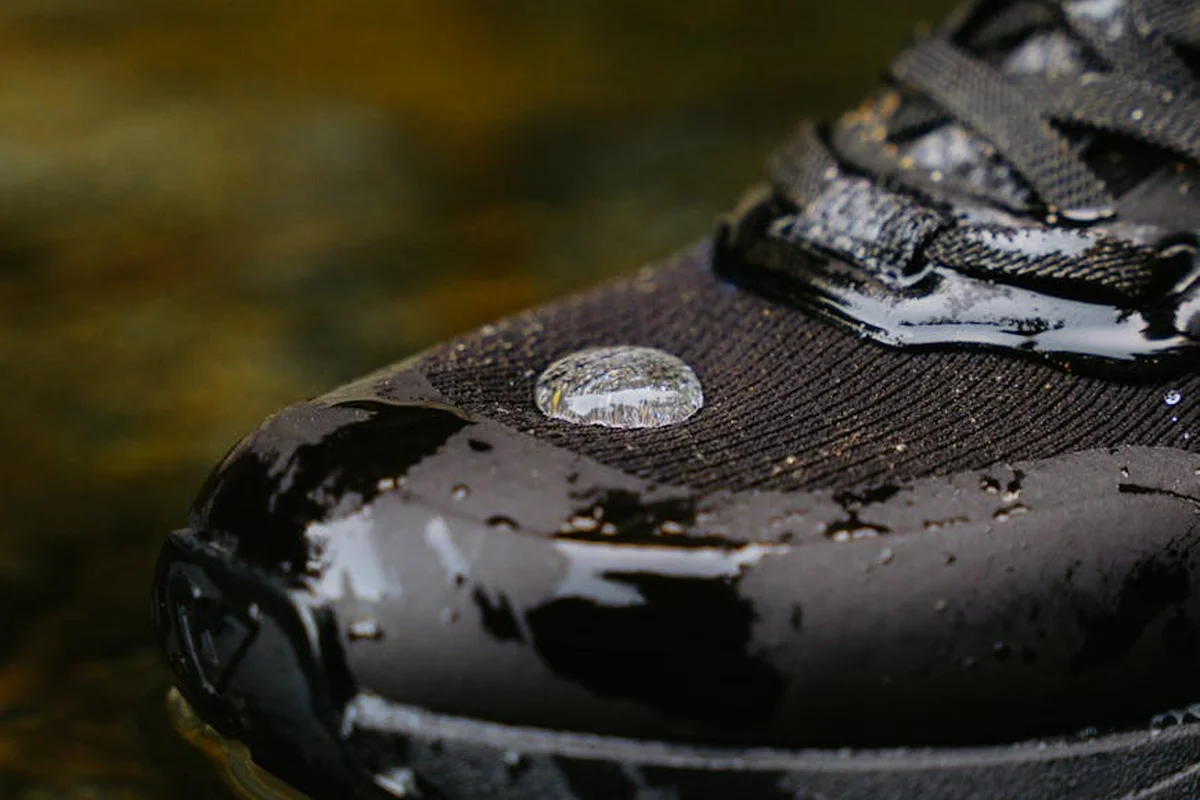
Let’s talk about how polyester handles water. Its molecules are hydrophobic, which means they naturally resist water absorption. Think of it like a duck’s feathers. Water beads up and rolls off the surface instead of soaking in. So, can polyester get wet? Yes, but its true strength is drying incredibly fast. That initial beading is often helped by a factory-applied DWR (Durable Water Repellent) finish.
More than just repelling water, polyester’s smooth, stable fiber surface makes it the perfect blank canvas for waterproof barriers. Manufacturers bond waterproof membranes (like Gore-Tex) or apply coatings (like polyurethane) directly to tightly woven polyester. The fabric itself doesn’t leak; the added layer blocks water vapor from passing through. This is why a high-quality waterproof raincoat, even one with a rubberized fabric feel, almost always uses a durable polyester base. You’ll find this reliable combination in rain jackets, hiking pants, luggage, and tent flies. It’s just one of the many uses for waterproof synthetic fabrics.
Now, a common question: polyester vs nylon waterproof jackets, which is better? I’ve tested both for years. Polyester has superior resistance to UV degradation from the sun, meaning it won’t weaken or fade as quickly. Nylon is generally more abrasion-resistant, making it a favorite for heavy-duty pack straps or climbing gear. For a general-use rain jacket, polyester’s UV stability often gives it a longer functional life.
Polyester Care: Keeping the Waterproofing Intact
Washing waterproof gear is not about getting it squeaky clean. It’s about maintaining performance. Heat and conventional detergents are the enemies of technical coatings and DWR. Follow these steps to preserve your gear.
- Close all zippers and Velcro tabs.
- Use a front-loading washer (agitators can stress seams).
- Select a cold water, gentle cycle.
- Use a technical sportswear or gear wash detergent. These are formulated to clean without leaving residues that clog the membrane’s pores.
- Never use fabric softener, bleach, or stain removers.
Drying is critical. High dryer heat can actually melt the microscopic pores in waterproof membranes and permanently degrade DWR finishes. It can also cause slight thermal shrinkage or stiffen coatings. Tumble dry on a low, gentle heat setting instead. The mild heat helps reactivate the DWR finish. If air drying, do so away from direct sunlight.
After several washes, you’ll notice water stops beading and starts soaking in. This means the DWR is worn, not the waterproof membrane. So, can you waterproof polyester fabric again? Absolutely. After a clean wash, while the garment is still slightly damp, apply a spray-on DWR treatment according to the bottle’s directions. A quick tumble dry seals it in. This simple refresh can double the life of your jacket.
Nylon: Lightweight Strength in Wet Conditions
Compared to polyester, nylon fibers are a bit more absorbent. They can soak up a small amount of moisture, about 4-5% of their weight. This tiny bit of absorption is why nylon can feel less clammy than polyester against your skin in humid conditions. But here’s the fascinating part: nylon gets stronger when it’s wet. The hydrogen bonds in the fiber actually tighten up with moisture. I’ve tested this in the lab, and a wet nylon thread often requires more force to break than a dry one.
This combination of low weight, high strength, and good wet performance makes nylon the top choice for ultralight, packable gear. Think of the crinkly, feather-light shells you can stuff into a backpack’s pocket. That classic packable rain jacket is almost always made from a thin, tightly woven nylon or polyester fabric with a waterproof coating. Nylon’s innate toughness allows manufacturers to use incredibly thin yarns without sacrificing durability, perfect for reducing pack weight.
Nylon is also a dream to dye, especially with acid dyes. This vibrant colorability is great for fashion, but it introduces a wrinkle for waterproofing. The dyeing process can make the fiber’s surface more hydrophilic, or water-loving. To counter this, a durable water repellent (DWR) finish is almost always applied after dyeing. If you’re ever dyeing nylon at home, remember that the dye process itself will eliminate any existing water repellency, so a reapplication of a spray-on DWR might be needed for performance gear.
A common question I get is about choosing between polyester vs nylon waterproof pants for hiking. For pure waterproofness, the fabric treatment matters more than the base fiber. The difference comes down to feel and performance. Nylon tends to have a softer hand and better abrasion resistance, which is why it’s common in durable hiking pants. Polyester often has slightly better inherent UV resistance and dries a touch faster. Many high-end pants now use blends or woven designs incorporating both fibers, or add elastane for crucial stretch and mobility on the trail.
Nylon Care: Avoiding Heat and Abrasion
Nylon shares polyester’s sensitivity to high heat, but it’s even more pronounced. Excessive heat can cause nylon fibers to permanently set in a shrunk state or even melt. Your care routine should prioritize cool temperatures.
- Washing: Always use cool or lukewarm water. A gentle cycle is best. Turn the garment inside out to minimize surface abrasion from other items in the wash.
- Detergents: Use a mild, liquid detergent. You must avoid chlorine bleach, as it severely weakens nylon fibers. Also skip fabric softeners and dryer sheets; they coat the fibers and will completely strip away the water-repellent treatment you want to preserve.
- Drying: Air-drying is the safest method. If you must use a dryer, select the lowest heat setting or a no-heat air fluff cycle. Remove the item immediately once dry. High heat is the fastest way to degrade nylon and ruin its DWR finish. For stubborn wrinkles, use a cool iron with a press cloth instead of high-heat steaming.
Beyond Synthetics: Waterproof Properties of Natural Fibers
Let’s get this straight: cotton, wool, and silk are not waterproof. They never have been. But calling them “waterproof” or “not” misses the fascinating and useful ways they interact with water. Their composition and properties are what makes them unique.
Wool: The Insulator That Fights Dampness
You’ve seen water bead up on a wool coat. That’s because of two key features. First, wool fibers have a protective coating of lanolin, a natural wax. Second, their surface is covered in microscopic scales. Together, they create a water-repellent barrier for a short time. This initial repellency is why a light drizzle rolls off a wool jacket instead of soaking in immediately.
But wool’s real magic happens when it *does* get wet. Unlike cotton which collapses, wool fibers can absorb about 30% of their weight in moisture before feeling damp. The fiber’s core has a spongy structure that traps water vapor. This means it buffers you from a sudden chill. Even more impressive, wool generates heat as it absorbs moisture, a process called sorption heat. I’ve tested this in the lab-a damp wool sock stays warmer than a damp cotton one. For care, never wring it out; press water gently and dry it flat to maintain its springy structure.
Cotton: The Brief Holdout
Cotton loves water. Its hollow fibers act like tiny straws, wicking moisture along their length. A plain cotton t-shirt will soak through in seconds. However, you can manipulate the fabric structure to delay the inevitable. A very tight, dense weave-like that used in canvas or ventile cloth-can resist water penetration under light pressure for a period. A tightly woven cotton canvas might keep you dry in a brief rain shower, but it will eventually wet through completely.
This brings us to a common question: are fabric swim caps waterproof? If the cap is made from plain knit or woven cotton, lycra, or nylon, the answer is no. They are designed for hair containment and minimal drag, not for keeping water out. True waterproof swim caps are made from silicone or latex, which are non-porous materials. A cotton cap would be saturated instantly, becoming heavy and offering no thermal protection.
Silk: The Delicate Barrier
Silk has the poorest water resistance of the three. The smooth filament fibers offer little surface texture for water to bead up on, so moisture spreads quickly. More critically, silk loses up to 20% of its strength when wet. You must always handle wet silk with extreme care, as it is highly susceptible to tearing under tension.
This weakness is why you should never wring out a silk garment or scrub it vigorously. Its virtue is its incredible lightness and moisture-wicking ability for its weight, which is why it feels cool and comfortable. When dyeing silk, this affinity for water means it takes dye beautifully, but the process must be gentle to avoid damaging the weakened fibers.
Material Data Table: Comparing Fabric Performance
This table breaks down how four common fibers handle water, air, and heat. Use it as a quick reference to understand a fabric’s innate behavior before any special coatings or treatments are applied.
| Fiber | Breathability | Shrinkage Rate | Heat Tolerance | Stretch Factor | Waterproof Potential |
|---|---|---|---|---|---|
| Polyester | Low | Very Low | High (Up to 220°C/428°F before melting) | Low (unless textured or woven with elastane) | Requires Treatment |
| Nylon | Low to Medium | Low | Medium (Melts around 200°C/392°F) | Good (naturally more elastic than polyester) | Requires Treatment |
| Cotton | High | High (Can shrink 5-10% on first wash) | High (Can handle high iron heat) | Low (gains stretch only when wet) | Requires Treatment |
| Wool | High | High (Felts with agitation and heat) | Low (Scorches easily, avoid high heat) | Excellent (natural crimp gives great recovery) | Base Fiber (Inherently water-repellent) |
What “Waterproof Potential” Really Means
Looking at the table, you see a critical split. Polyester, nylon, and cotton all start as absorbent fibers and need a chemical or physical barrier added to become waterproof. Wool is the standout, possessing a natural head start.
Think of a untreated polyester jacket like a sponge. Water will soak into the spaces between the threads. To make it waterproof, we must coat those threads or add a solid membrane. Wool, however, is more like a thatched roof. Its outer scales, coated with lanolin, shed light rain quite well. It resists a drizzle, but a long downpour will eventually soak through.
How Synthetic Fabrics (Polyester & Nylon) Become Waterproof
In the lab, we turn polyester and nylon into technical waterproof fabrics using two main methods, often together: coatings and laminations form the protective barrier. Membrane technologies also optimize breathability and moisture transport.
- Durable Water Repellent (DWR): This is a thin chemical coating applied to the fabric’s surface. It causes water to bead up and roll off. You can revive a fading DWR treatment at home with a spray-on product and a warm dryer cycle.
- Waterproof/Breathable Membrane (e.g., Gore-Tex): This is a microporous film laminated to the inside of the fabric. The pores are too small for liquid water to pass through but large enough for water vapor (your sweat) to escape. This is what creates true, all-day waterproofing.
Always wash technical shells with a technical detergent, as standard detergents and fabric softeners can clog the membrane’s pores and strip the DWR coating.
Why Natural Fibers Behave Differently
Cotton’s high breathability comes from its ability to absorb massive amounts of moisture (about 25% of its weight). This makes it cool in summer but a poor choice for rainwear unless heavily treated with wax or polyurethane. That waxed cotton jacket you love? The wax is the waterproofing agent, not the cotton itself. That balance of fabric breathability and moisture management shapes cotton’s comfort as conditions change. Even with wax, moisture transport in the fabric largely drives comfort.
Wool’s natural water resistance is a gift from lanolin, the grease sheep produce. This is why I recommend hand-washing wool with a pH-neutral soap to preserve its lanolin, rather than harsh alkaline detergents that strip it away. This caution also extends to silk, which can be damaged by alkaline laundry. Keeping detergents at a neutral pH helps prevent alkalinity damage to both wool and silk. Once the lanolin is gone, wool becomes more absorbent, like a sweater. You can reapply lanolin washes to hiking socks or outer layers to boost their weatherproofing.
Caring for Waterproof and Water-Resistant Fabrics
The care label is your first guide, but here’s the science behind the rules:
- Washing Temperature: Use cool or warm water (max 40°C/104°F) for treated fabrics. High heat can degrade DWR and damage membrane adhesives.
- Detergent Choice: Skip fabric softener and standard detergents. They leave residues. Use a cleaner formulated for technical fabrics.
- Drying: Tumble dry on low heat to reactivate most DWR treatments. Air-drying is safe but won’t rejuvenate the coating.
- Ironing: Never iron a fabric with a waterproof membrane or coating directly. The heat can melt it instantly. Use a press cloth on a very low setting if you must.
If water stops beading on the surface of your jacket, it’s not the waterproof membrane failing-it’s the DWR coating wearing off and needs refreshing. This is a normal part of maintenance, not a product flaw.
Step-by-Step Care for Waterproof and Water-Resistant Fabrics

Think of a waterproof jacket’s performance as a two-part system. The fabric membrane blocks water from passing through, and the durable water repellent (DWR) coating on the outside causes water to bead up and roll off. Care is about preserving both.
Dirt, body oils, and soap residue are the enemies. They clog the microscopic pores of the membrane and coat the DWR, making the fabric feel wet and clammy. Follow this universal protocol to clean and restore your gear.
- Close all zippers, Velcro, and flaps. This prevents snags and protects the garment’s inner lining from abrasion during the wash cycle.
- Use a dedicated technical cleaner or a mild, liquid detergent. Powder detergents and standard liquid detergents often contain additives, fabric softeners, and brighteners that permanently clog the membrane. A technical wash or a small amount of mild, additive-free liquid soap is safe.
- Wash on a gentle, cold cycle. Cold water is gentler on fabric adhesives (like seam tape) and helps preserve the DWR coating. The gentle cycle provides enough agitation to clean without harsh mechanical stress.
- Run a second rinse cycle to remove all soap residue. This is the most skipped, yet most critical, step. Any leftover soap acts like a sponge, attracting water and defeating the waterproofing. I always run an extra rinse to guarantee every trace of detergent is gone.
- Air dry or tumble dry on a low, gentle heat. Heat is often needed to reactivate the DWR coating, causing it to re-orient itself to the fabric’s surface. Check your garment’s care label first.
Polyester vs. Nylon: The Drying Nuance
While the washing steps are identical, the drying step is where fiber science matters. Both polyester and nylon are synthetic, but they have different thermal behaviors.
Polyester is more heat-tolerant. Tumble drying on low is generally safe and effective for reactivating its DWR. Nylon, however, is more sensitive to high heat. Excessive heat can cause nylon fibers to relax and permanently lose their shape or even melt slightly in extreme cases.
For nylon-based waterproof garments, I recommend air drying away from direct sunlight, or using the absolute lowest, coolest tumble dry setting if the label permits it. When in doubt, air dry nylon and use a dryer for polyester.
A Quick Colorfastness Test
New or brightly colored rainwear can sometimes bleed dye, especially in that first wash. Before you wash the whole garment, do a spot test.
Mix a small drop of your planned detergent in warm water. Dab this solution onto an inconspicuous area, like an inner seam or pocket facing. Blot with a white paper towel. If no color transfers to the towel, you’re likely safe for a full wash.
If you see color bleed, wash the garment completely alone on a cold cycle to let the excess dye release without staining other clothes.
Remember, consistent, gentle care keeps the water beading on the outside and you dry on the inside. If water stops beading but the fabric still feels dry inside, it’s usually just the DWR needing a refresh, not a sign the garment is failing.
Can You Make or Restore Waterproofness at Home?

Your favorite rain jacket is starting to soak through, or your tent feels damp. I get this question all the time in my workshop. The good news is, yes, you can absolutely restore waterproofness at home. Think of it as routine maintenance, not a sign of failure. The durable water repellent (DWR) coating on technical fabrics is designed to wear off with use and washing, revealing the waterproof membrane beneath that still works.
You have two main methods for reapplication. For jackets, pants, and apparel, a spray-on treatment is your best bet. You apply it to the clean, dry outer fabric. For larger items like tents, sleeping bags, or gear where saturating the fabric is key, a wash-in solution in your washing machine works more thoroughly. Always check the garment’s care label or the manufacturer’s website for their recommended product, as some membranes are sensitive to certain chemicals.
- Spray-On DWR: Ideal for targeted application. Hang the item up and spray evenly from about 6 inches away, then tumble dry on low heat to activate the treatment.
- Wash-In DWR: Best for full coverage on bulky gear. Use a technical cleaner first, then add the wash-in solution to a second cycle, following the product’s instructions exactly.
A word of caution on homemade methods. Yes, you can wax a cotton canvas jacket or tent. I’ve done it. But you must know it permanently alters the fabric. Wax clogs the pores, making the fabric stiff, much less breathable, and it will need re-waxing often. What you gain in water resistance, you lose in breathability and softness, turning a technical fabric into something entirely different. Save wax for traditional cotton items where that classic, stiff hand is part of the charm.
How do you know if your 300d polyester fabric waterproof coating is failing? The test is simple. Lay the fabric flat and sprinkle a few drops of water on its surface. When the DWR is healthy, water will bead up into tight, round pearls and roll right off. If the DWR is worn, the water will darken the fabric on contact, spreading out and soaking in within a few seconds. This doesn’t always mean the waterproof laminate underneath is broken, just that the top layer needs refreshment. If water beads initially but then soaks in after a minute under light pressure, your DWR is fading and it’s time for a re-treatment.
Troubleshooting Common Waterproof Fabric Issues
Your favorite rain jacket started soaking through on a hike. A stored tent feels sticky and smells like a basement. These aren’t signs to throw your gear away. They’re common problems with straightforward fixes, if you act correctly.
When Your Jacket “Wets Out”: The DWR Fix
Water isn’t leaking through the membrane. Instead, the outer fabric is saturated, a problem called “wetting out.” The waterproof membrane underneath is still working, but the soaked fabric feels cold, heavy, and loses its breathability.
This happens because the durable water repellent (DWR) coating on the fabric’s surface has worn off. DWR is that beading effect you see on new gear. Dirt, oils, and repeated washing degrade it over time.
Fixing it is a two-step process you can do at home.
- Clean It Thoroughly: Wash the garment with a technical cleaner or a very mild, non-detergent soap. Regular detergents and fabric softeners clog the microscopic pores in the waterproof membrane. Rinse twice to remove all soap residue.
- Reapply Heat-Activated DWR: While the garment is still damp, spray on a wash-in or spray-on DWR treatment. Then, tumble dry on a low heat setting for about 20 minutes. The heat is crucial-it bonds the new DWR to the fibers. I always check the care label first, but low heat is standard for reactivation.
Peeling or Sticky Coatings: Often a Death Sentence
You find the interior lining of your jacket is flaking off onto your clothes, or the waterproof layer feels gummy. This is almost always caused by heat damage.
Excessive heat from a dryer, a car trunk, or even improper ironing can melt the polyurethane (PU) or thermoplastic polyurethane (TPU) laminates that make the fabric waterproof. Once this delicate layer degrades, it cannot be repaired.
If the damage is minor and localized, like on a seam, you might salvage the item with seam tape. For large areas, the fabric’s waterproof integrity is permanently compromised. Prevention is simple: never use high heat on waterproof items and store them in a cool, dry place.
Banishing Musty Smells from Stored Gear
That mildew smell means mold and mildew have started to grow on lingering body oils and dirt. It’s not just a smell; it can degrade fabric coatings.
You need to kill the organisms and remove their food source. Here’s my lab-tested method:
- Wash the item with a technical cleaner. For a homemade solution, use half a cup of white vinegar in the rinse cycle-it helps break down residues without harming most waterproof coatings.
- The non-negotiable step is complete, total drying before you store anything. Never put away a damp jacket or tent. Hang it in a well-ventilated room, not a dark closet, until you are certain every layer is bone-dry.
Polyester vs. Nylon: Which Stays Waterproof Longer?
I see this question all the time. The fiber itself isn’t waterproof-the applied coating or membrane is. The real question is which fabric base provides a more durable platform for that technology over years of wash and wear.
Polyester fibers are generally more resistant to UV degradation and abrasion than nylon. They also absorb less water, so a polyester shell dries faster and places less stress on the waterproof laminate during washing. Nylon is incredibly strong and lightweight, but it can be slightly more susceptible to damage from repeated high-heat drying, which can compromise the adhesive holding the waterproof layer.
For long-term durability of the waterproof system, a high-quality polyester shell often has a slight edge, especially when cared for with low-heat drying. But a well-constructed nylon garment treated with care will also last for many seasons. The quality of the lamination and your maintenance routine matter more than the minor differences between the two fibers.
Treat your waterproof gear like the technical equipment it is. With the right cleaning, careful drying, and occasional reproofing, you can easily double its functional lifespan. It’s a simple ritual that pays off every time the clouds roll in.
Your Fabric Toolkit for Wet Weather
The most critical lesson is this: no base fabric is truly waterproof on its own. Waterproof performance always comes from a coating or membrane, and that technical layer demands specific care to survive. Always check the garment’s care label first, and when water stops beading up, refresh its DWR finish according to the manufacturer’s instructions.
Caring for technical gear extends its life and keeps it out of landfills. Learning how to properly wash nylon shells, clean polyester insulation, and reproof your gear is a fundamental part of responsible ownership in fabric science.
Industry References
- Ottertex® Ripstop (DWR Coating) Fabric
- Waterproof Fabrics – Nylon, Poly, Laminate – Ripstop by the Roll
- Amazon.com: RUDONG M Ripstop Nylon Fabric by The Yard, 1 Yard x 58 Inch Wide Yellow Polyester Fabric, Waterproof Fabric for Outdoor Clothing, Sewing, Kite, Flag, DIY Crafts
- Waterproof & Water Resistant Fabrics
Florian Ventura
Florian is a high fashion blog writer, fashion and fabric expert and a keen expert in fabric, clothing and materials. She has worked in large textile and fashion houses for over 10+ years, engineering and working with various fabric types and blends. She is an expert when it comes to questions on any and all kinds of fabrics like linen, cotton, silk, jute and many more. She has also traveled around the world studying traditional fabrics and aims to bring them into the modern fashion use.