
How Do You Make Fabric-Safe Homemade Linen and Room Sprays?
You want a fresh-smelling home and linens, but worry about harsh chemicals damaging delicate fibers or causing irritation. I test every formula in my workshop to ensure it’s gentle on fabrics and effective for you.
We will cover selecting ingredients that respect fiber structure, balancing water and alcohol for minimal shrinkage, applying scents without causing dye bleeds, and storing sprays to maintain potency and fabric safety.
Executive Summary: The Quick Fabric-Friendly Facts
A linen or room spray is a simple mist you make at home. It uses water or rubbing alcohol as a base to carry scent onto fabrics and into the air.
Making your own has clear benefits. You control the fragrance, it saves money, and you skip synthetic fixatives or harsh chemicals found in some store-bought options.
The main risk is to your textiles: an improper spray can cause stains, watermarks, or even damage the fibers. You must match your recipe to your fabric.
Some fabrics are very forgiving. Cotton, linen, and polyester blends handle most water or alcohol-based sprays well. They are the best canvases for beginners learning how to make a linen spray.
Other fabrics demand caution. Silk and wool are delicate protein fibers. They need highly diluted, pH-neutral homemade linen spray recipes to prevent damage. Understanding silk fabric types, their properties, and care guidelines helps tailor protection and maintenance.
The Fabric Science: Why Sprays Behave Differently on Textiles
Think of a fabric’s fiber as its building block. The type of block determines how it drinks up-or repels-your spray. Plant fibers, protein fibers, and synthetic fibers all react uniquely.
Cotton and linen are like sponges. They readily absorb water, which can cause the fibers to swell slightly. Cotton fabric is breathable and absorbent, making it comfortable for warm weather. Polyester acts more like plastic; it’s hydrophobic, so water beads up on its surface.
You must consider colorfastness. Cotton and linen fabrics are particularly prone to fading. Applying a spray with alcohol or certain oils can loosen dye molecules, especially on dark or vibrant cottons. Always test your homemade linen spray for clothes on a hidden seam or hem first.
Protein fibers are living chemistry. Wool and silk are sensitive to pH shifts and alcohol. Alcohol can strip wool’s protective scales, causing them to lock together and felt. It can also dry out and weaken silk’s sleek fibers.
Can you use a linen spray as a perfume? I don’t advise it. Formulas for fabrics aren’t tested for skin safety, and the alcohol concentration for quick drying can be irritating. Keep it for your sheets and space.
Plant Fibers: Cotton and Linen
These cellulose fibers are the most welcoming to homemade linen spray. Their high absorbency means they soak up your mist evenly, releasing the scent gradually.
Just remember: damp cellulose can grow mildew. After spritzing bedding or curtains, let them air dry fully before putting them back on the bed or bunching them up.
For anyone new to homemade linen spray recipes, starting with cotton towels or linen napkins is your safest bet. They are robust and show problems clearly.
Protein Fibers: Silk and Wool
These fibers require a gentle touch. They come from animals, and their structure is more delicate. A harsh spray can cause permanent harm.
High-proof alcohol is particularly risky. It can dissolve the natural oils in wool, leading to shrinkage and a harsh hand. For these fibers, I recommend a very diluted spray. Use a high ratio of distilled water to a tiny amount of essential oil, and skip the alcohol entirely. Mist the air above the item and let the scent settle, rather than spraying the fabric directly.
This gentle approach is perfect for a homemade linen spray with essential oils and water meant for a delicate silk pillowcase or a wool throw blanket.
Synthetic Fibers: Polyester, Nylon, and Blends
These man-made fibers don’t absorb liquids well. A water-based spray will often bead up on the surface, potentially leaving a watermark as it dries.
Here, a little alcohol in your recipe helps. It speeds evaporation, reducing the chance of water spots. But you face a different hazard: oil stains. Essential oils or fragrance oils can leave permanent greasy spots on polyester or nylon, as they sit on the fiber instead of absorbing.
If you spray synthetics often, watch for residue. A dull, sticky buildup can attract dirt. Wiping the fabric down with a damp cloth every few weeks can prevent this.
Your Hands-On Guide: Building a Basic Fabric-Safe Spray
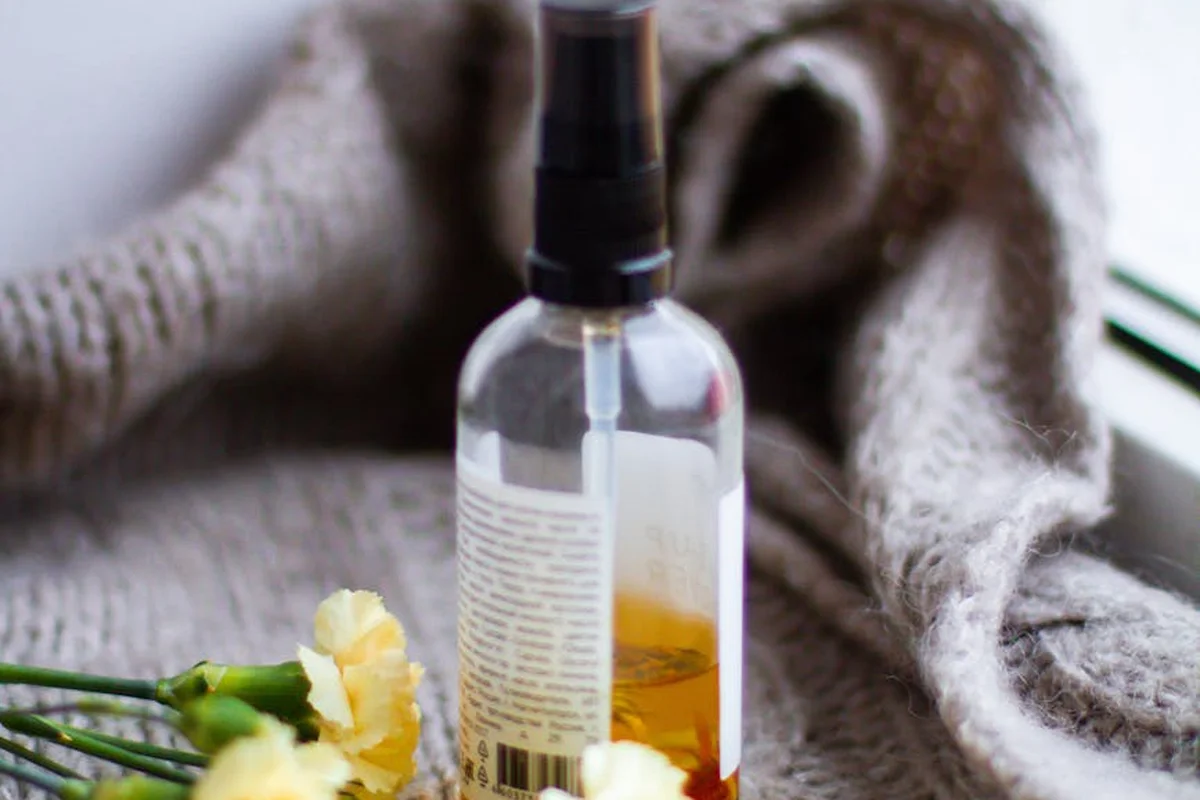
Let’s build your first spray from the ground up. I treat this like a simple lab formula: precise, safe, and repeatable. Forget complicated recipes; this master template works every time.
The universal formula for how to make a linen spray with essential oils is just three parts: a carrier liquid, a dispersant, and the scent itself.
- Carrier: 1 cup of distilled water.
- Dispersant: 2 tablespoons of witch hazel or vodka.
- Scent: 15-20 drops of your chosen essential oils.
Now, the exact steps. Cleanliness is your first defense against spoilage and stains.
- Sanitize an 8-10 ounce glass spray bottle. Wash it with hot, soapy water and let it air-dry completely.
- Pour in your 2 tablespoons of dispersant (witch hazel or vodka).
- Add 15-20 drops of essential oil directly into the dispersant. This helps the oils blend.
- Fill the rest of the bottle with distilled water, leaving a little space at the top. I insist on distilled water to prevent mineral spots on your fabrics; tap water leaves a faint, gritty residue as it dries.
- Secure the lid and shake vigorously for 30 seconds. Your mixture will look cloudy-that’s good.
Safety is non-negotiable when handling concentrated oils. Work in a ventilated area, avoid direct skin contact with undiluted oils, and never spray near eyes or faces. Keep bottles away from children and pets.
Step 1: Choosing and Measuring Your Base
Your base liquid choices affect dry time and fabric feel. Here’s my textile lab breakdown.
- Distilled Water: The pure foundation. It’s light and leaves no residue. Use it for all recipes.
- Witch Hazel: A gentle astringent with mild antiseptic properties. It helps the scent last a bit longer and is my top pick for a homemade linen spray with witch hazel on natural fibers like cotton.
- Vodka (80 proof or higher): Evaporates the fastest. It’s excellent for synthetic blends like polyester or nylon where you want zero dampness. It can be drying on wool or silk.
Stick to the 2-tablespoon measure for your dispersant; more can make fabric stiff or cause spotting on delicate dyes.
Step 2: Selecting and Adding Fragrance Safely
Essential oils are potent. Using too many drops can irritate skin, damage fabric finishes, and even degrade elastic fibers over time. Our 15-20 drop limit in an 8-10 oz bottle creates a safe, effective dilution.
For a classic, calming option, here is how to make a lavender linen spray: use 10 drops of lavender oil and 5 drops of sweet orange oil for brightness. Add them to your dispersant before the water.
Avoid standard fragrance oils or perfumes not specifically formulated for textiles, as they often contain fixatives and carriers that leave oily stains. If you wouldn’t put it directly on your skin undiluted, don’t put it on your fabric.
Step 3: Emulsifying and Storing Your Mix
Oil and water naturally separate. Your shaking ritual is what temporarily blends them into an emulsion. Shake the bottle hard for 30 seconds before each use.
Store your spray in a cool, dark place. Amber or cobalt blue glass bottles protect the essential oils from light, which breaks them down and weakens the scent. Always label your bottle with the date and ingredients-your future self will thank you when tweaking recipes or checking for shelf life. A properly stored spray lasts about 6 months.
Customizing Sprays for Specific Fabrics and Uses
This is where fabric science meets your spray bottle. Different fibers have different needs. A one-size-fits-all spray can lead to water spotting on silk or slow drying on towels.
Tailor your recipe by considering the fiber’s absorption rate and sensitivity to moisture or alcohol. This prevents the common issues of water rings, shrinkage from over-wetting, or color bleeding from harsh solvents.
For Bedding: Sheets, Pillowcases, and Egyptian Cotton
Your goal here is freshness, not dampness. For a perfect homemade linen spray for sheets, lean into light, calming scents. Lavender, chamomile, or bergamot are ideal.
Hold the bottle 8-10 inches from the fabric and use a fine mist. You want to lightly scent the surface, not soak it. Over-wetting cotton, even luxurious Egyptian cotton, can create a damp environment where mildew spores can settle. High-thread-count cottons are durable but benefit from this gentle, even application.
For Clothing and Delicate Weaves
For quick refreshers on polyester blouses or nylon activewear, use a vodka-based spray. It evaporates almost instantly, reducing any risk of water marks. Perfect for moisture-wicking fabrics.
For delicate wool sweaters or silk blouses, switch to an ultra-gentle recipe. Use 1 cup distilled water, only 1 tablespoon of witch hazel, and 5 drops of a mild oil like lavender. Alcohol can strip natural oils from wool and silk, making them brittle, especially when washing wool blends.
The non-negotiable rule: spot test. Spray a tiny amount on an inside seam or hem. Let it dry completely. Check for any change in color, texture, or watermark. Only proceed if the test area is flawless.
Room Sprays vs. Fabric Sprays: A Critical Difference
This is a major point of confusion. Commercial room sprays often contain solvents and higher alcohol concentrations designed to hang in the air and scent surfaces like wood or walls. These can stain or damage fabric fibers.
You can safely use a gentle linen spray as a room spray, but you should never use a commercial room spray on your fabrics. The chemistry is formulated for different purposes.
Finally, a reader often asks: can i use linen spray as perfume? The answer is no. Fabric sprays are not balanced for your skin’s pH, and essential oils can cause phototoxicity or irritation when applied directly. They are for your linens and clothes, not for you.
Care, Handling, and the Textile Expert’s Pro-Tips
Getting the fragrance right is only half the job. To care for your fabrics properly, you need a plan for application and problem-solving. Think of your spray not just as a perfume, but as a textile treatment that interacts with fiber chemistry.
Application Protocol: How to Use and Store Your Spray
Correct application prevents most issues before they start. Always treat your homemade spray like a textile finish, not an air freshener, to protect your fabrics from damage. Follow this sequence for the best results.
- Shake with force. Emulsions love to separate. Shake the bottle for a full 30 seconds to bind the oils and water temporarily.
- Distance is your friend. Hold the nozzle 15-20 cm (6-8 inches) from the fabric. This creates a fine mist that absorbs evenly, preventing concentrated wet spots that can cause rings or stains.
- Ventilate the space. Open a window. You’re inhaling volatilized essential oils, and good airflow is safer for your lungs and helps fabrics dry faster.
- Dry with intent. Let the item air-dry completely before using or storing it. Lay knitwear and delicate silks flat to dry; gravity can stretch them when wet. Hang woven cottens and linens, but avoid direct sunlight which can fade dyes.
- Store your spray wisely. Keep it in a cool, dark cupboard. Heat and light degrade essential oils and encourage bacterial growth in the water base. A stable environment preserves the scent and clarity.
Troubleshooting: Fixing Stains, Odors, and Separation
Even with care, things can go sideways. Here’s how to handle common problems, informed by how fibers react to oils and moisture.
Oil Stain on Fabric: Essential oils are hydrophobic. If a droplet lands on silk or polyester, it can leave a visible ring. Act immediately by dabbing the spot with a cloth dipped in a drop of clear dish soap and cool water, then rinse. The soap breaks the oil’s surface tension so water can lift it. Never rub, as this pushes the oil deeper into the fibers, especially on fabrics like polyester that have an oleophilic bond.
Spray Won’t Stay Mixed: If your oil and water separate instantly, you need an emulsifier. Add a few drops of polysorbate 20 (a common, safe emulsifier) to your bottle and shake thoroughly. It acts like a bridge, allowing the oil droplets to suspend evenly in the water, much like egg yolk in mayonnaise.
Musty Smell on Fabric: This is likely mildew, meaning the fabric was stored damp. Mildew feeds on organic fibers like cotton, linen, and rayon. Wash the item with a laundry additive designed for mildew, using the hottest water the fabric tolerates. For wool or silk, which are protein fibers, consult a specialist cleaner, as home remedies can set the odor.
Preventing Mildew: Always ensure sprayed fabrics are bone-dry. I pat hidden seams with my hand to check for coolness, which indicates residual moisture.
Handling Pro-Tip: The Hidden Seam Test for Every Fabric
This is the single most important step, born from years of seeing good intentions ruin good fabric. Never skip the hidden seam test; it reveals how the unique physics of your fabric will react to the spray’s chemistry.
Find an inconspicuous area: an inside seam allowance, a hem facing, or the back of a collar. Spray a light, even mist and let it dry fully for 24 hours.
After a day, inspect the test spot closely. You are looking for four things:
- Color Change: Has the dye bled or faded? Some synthetic dyes are not colorfast to alcohol or certain oils.
- Texture Feel: Does the fabric feel stiff, rough, or puckered? This can happen with high-alcohol sprays on delicate fibers.
- Water-Spot Ring: Do you see a faint ring? This is common on silk taffeta or dupioni, where water can disrupt the fabric’s natural sheen.
- Shrinkage or Felting: Has the area tightened? Wool and other animal hair fibers can permanently felt (shrink and mat) when agitated with moisture, even from a fine mist.
Your results are a direct lesson in fiber properties. Cotton or linen? It will probably be fine. Silk? Watch for water-spotting. Wool? You risk felting. A polyester blend? Likely safe, but check for oil staining. This two-minute test saves garments and teaches you to see your textiles as the complex materials they are.
Preserving Your Fabric’s Integrity
The single most important rule when using any homemade spray near textiles is to test it first on a hidden seam or fabric scrap. This simple step reveals how a specific fiber, from thirsty cotton to delicate silk, will interact with the moisture and oils in your blend. It protects your favorite pieces from unexpected water spots, oil rings, or dye disturbances that are difficult to reverse.
Caring for your fabrics thoughtfully, whether through mindful cleaning or using simple homemade solutions, extends their life and reduces waste. Every time you test a swatch, you learn more about textile science-observing how fibers absorb, react, and wear builds your practical expertise for a more sustainable wardrobe.
Sources and Additional Information
- What is a Room and Linen Spray? – Vale Scents
- All-Natural Room & Linen Spray | Fabulous Farm Girl
- Non-Toxic Room & Linen Sprays | Natural Room Sprays – MINOT
- Linen & Room Sprays | Non-Toxic, Eco-Friendly Air Fresheners | Green Koala®
Written by Florian Ventura. Florian is a high fashion blog writer, fashion and fabric expert and a keen expert in fabric, clothing and materials. She has worked in large textile and fashion houses for over 10+ years, engineering and working with various fabric types and blends. She is an expert when it comes to questions on any and all kinds of fabrics like linen, cotton, silk, jute and many more. She has also traveled around the world studying traditional fabrics and aims to bring them into the modern fashion use.