
What Are the Standard Dimensions for a Fat Quarter of Fabric?
Staring at a fabric bolt and unsure how much a fat quarter covers? I measure fabrics in my lab every week, so let’s nail down the exact size you’re buying.
This article explains the standard 18″ by 22″ measurement, why this cut is a quilter’s dream, how fiber choices like cotton or blends affect your project, and my tested steps for pre-washing and dyeing to manage shrinkage.
Executive Summary: Your Fat Quarter Fabric Cheat Sheet
The standard dimensions for a fat quarter are 18 inches by 22 inches, or approximately 45 centimeters by 55 centimeters.
Think of it as a short, wide rectangle. It’s created by cutting a half-yard of standard 44-inch wide fabric in half, but widthwise instead of lengthwise.
The main advantage of a fat quarter over a traditional “skinny” quarter-yard is its shape, which allows for more flexible cutting layouts. You can cut larger squares or longer strips for quilt patches, small bag panels, or appliqué pieces that simply wouldn’t fit on a narrow strip.
You’ll most often find fat quarters in quilting cotton, prized for its stable weave and minimal stretch. Bundles also feature linen-cotton blends, lightweight wools, and rayon challis for garment-making.
A fat quarter is a wonderfully versatile precut, but its true usable size is not guaranteed-it depends entirely on the fabric’s fiber content and whether you pre-wash it. A loose-weave linen will shrink and fray more than a tight poplin, changing your final cutting dimensions.
Defining the Cut: What Exactly is a Fat Quarter?
To understand a fat quarter, compare it to its less useful sibling: the “long quarter” or “skinny quarter.” Imagine a yard of fabric as a long, narrow road. A skinny quarter is a 9-inch by 44-inch strip-like a skinny sidewalk running the full length of that road. A fat quarter is a wider block, giving you much more room to maneuver your pattern pieces.
Here’s the simple math. Start with 1 yard of standard 44-inch wide fabric, which measures 36 inches long by 44 inches wide.
- First, cut that yard in half vertically (parallel to the selvage). You now have two long pieces, each 18 inches by 44 inches.
- Take one of those half-yard pieces and cut it in half horizontally (across the width). This gives you your fat quarter: 18 inches by 22 inches.
This cut is prized because it gives you a piece with substantial edges on both the lengthwise grain (more stable, less stretch) and the crosswise grain (slightly more give). For patchwork, this means you can cut stable strips in two different directions, maximizing your layout options from one small piece.
So, when you hear “what is a long quarter of fabric,” you now know it’s the 9″ x 44″ alternative, which is far more limiting for most small projects.
Remember, the 44-inch width is standard for apparel and quilting cottons. If you are working with 54-inch wide flannel, 60-inch wide fleece, or 108-inch wide home decor fabric, the fat quarter dimensions will be different. A half-yard of 54-inch fabric, cut fat, would measure 18 inches by 27 inches. Always check the original fabric width.
Fabric Type Matters: How Fiber Content Changes Your Usable Dimensions
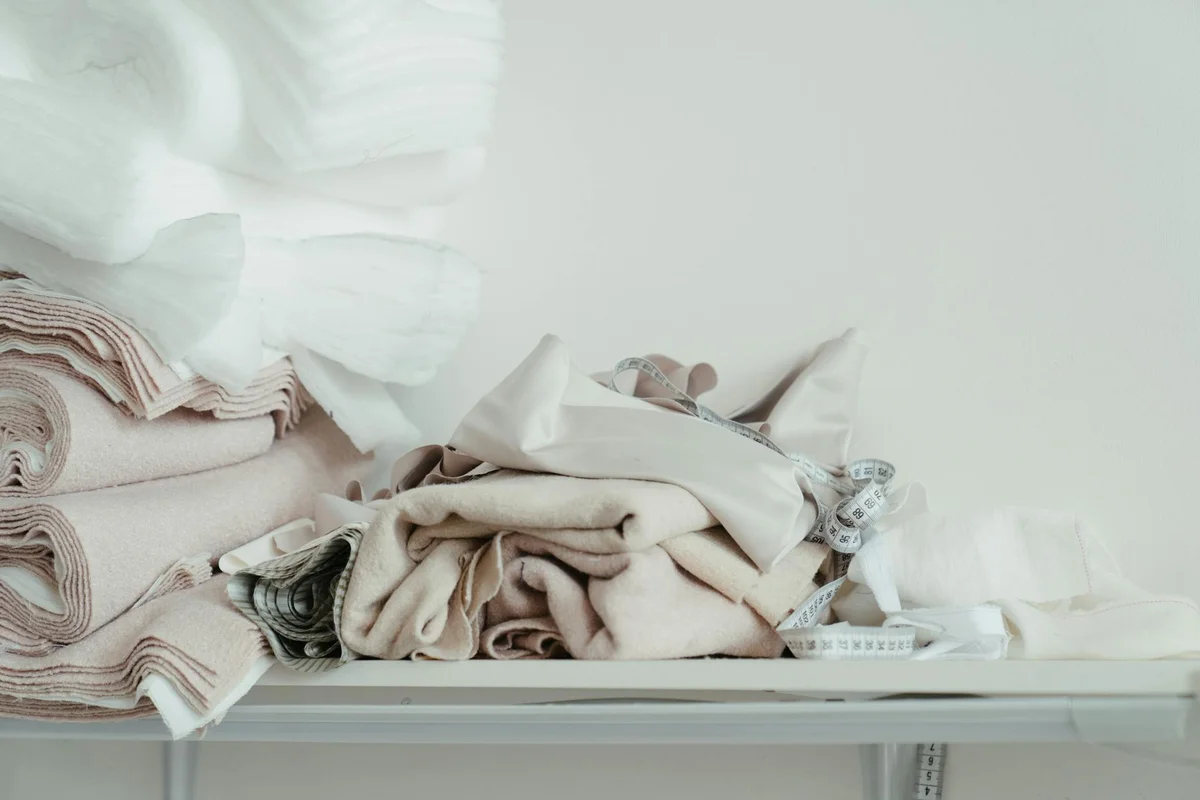
That crisp 18″ by 22″ rectangle is your starting point, but the final size you can actually cut and sew depends entirely on the fabric’s fiber. Think of a fat quarter like a sponge. Some fibers, like cotton, absorb water and tighten up. Others, like polyester, are more resistant. If you skip pre-washing for a project that will ever be cleaned, you are designing for a phantom size that will disappear in the first wash.
From Cotton to Silk: A Fiber-by-Fiber Guide
Quilting cotton is our universal standard. Woven from mercerized, medium-weight yarns, it has a predictable character. You can expect it to shrink between 2% and 5%. A high-quality quilting cotton might only lose half an inch in length and width, while a looser weave could shrink more. Beyond quilting cotton, cotton fabric varieties characteristics, such as different weights, weaves, and finishes, affect texture and drape. Understanding these can help you choose the right fabric.
Linen, made from flax fibers, has a different personality. It loves to shrink, often between 5% and 10% on that first wash. It’s not just about getting smaller. The fibers relax and soften, transforming from a stiff board into a beautifully supple, wrinkled cloth with incredible drape. This is where shrink linen fabric clothing comes into its own, giving a distinctive fit and character after washing. With proper care, the look stays effortless and chic.
Wool flannel is a warm, brushed fabric. Wool fibers are protein-based and have scales. Agitation, heat, and sudden temperature changes can cause these scales to lock together, a process called felting, which is irreversible shrinkage. Gentle, cool hand washing or a dedicated wool cycle is non-negotiable to preserve your dimensions and the fabric’s loft. For wool-synthetic blends, washing instructions can differ from pure wool, so always check the care label.
Silk charmeuse is sleek and luxurious. Silk is a protein fiber like wool but is more delicate. It can shrink slightly, but the bigger risk is water spotting and damage from harsh agitation. I always hand-wash silk in cool water with a specialist detergent. Its final “feel” becomes more fluid and luminous.
Polyester and other synthetics are the stable anchors. Derived from petroleum, these fibers are essentially plastic filaments. They exhibit little to no shrinkage from washing, often below 1%. A polyester fat quarter will stay very close to its original 18″x22″ size, but it can be prone to holding oils and static.
| Fabric Type | Expected Pre-Wash Shrinkage | Post-Wash “Feel” |
|---|---|---|
| Quilting Cotton | 2% – 5% | Softened, crisp hand |
| Linen | 5% – 10% | Softer, relaxed, pronounced drape and texture |
| Wool Flannel | 3% – 8% (can felt if mishandled) | Retains warmth, can become denser if brushed |
| Silk Charmeuse | 2% – 4% | Enhanced sheen, fluid drape |
| Polyester | 0% – 1% | Unchanged, may feel slightly stiffer |
Weave tightness matters as much as fiber. A tightly woven cotton poplin has less room for yarns to contract, so it shrinks less predictably than a standard quilting cotton. A loose, rustic linen has more space to collapse in on itself. You must account for this behavior in your project planning, especially when working with cotton fabrics of varying weave tightness and weight.
Blends, like 50% cotton and 50% polyester, offer a compromise. The cotton provides breathability and a natural hand, while the polyester reduces overall shrinkage and adds wrinkle resistance. A cotton-polyester blend fat quarter will retain more of its original size than a 100% cotton one, giving you a bit more usable fabric to work with. These cotton-blend fabrics bring quality benefits like durability and easy care. Such performance helps ensure reliable results across projects.
For beginners asking about dimensions in centimeters, start with this: a standard fat quarter is about 46 cm by 56 cm. After pre-washing 100% quilting cotton, plan for it to be roughly 44 cm by 53 cm. Always measure your specific piece after you wash and press it. That number is your truth.
The Care Protocol: Pre-Washing and Handling Your Fat Quarter
Always pre-wash fat quarters for projects that will be laundered, unless you are certain of the fabric’s stability. I treat every new piece of fabric as an unknown until I’ve put it through its paces.
Step-by-Step: How to Pre-Wash a Fat Quarter (And Why)
Follow these steps to control shrinkage and set your fabric up for success.
- Finish the edges. Serge or use a tight zig-zag stitch along all four raw edges. This prevents fraying from turning your fat quarter into a tangled mess of threads in the wash.
- Sort by color. Wash darks, bright reds, and deep blues separately from lights for the first wash. This tests for colorfastness safely.
- Choose the right cycle. Use cold water for bright cottons and linens to minimize dye loss. Use a cool, gentle cycle or hand wash for wool and silk. You can use warm water for stable, light-colored cottons.
- Use a mild detergent. Avoid heavy enzymes or optical brighteners on delicate fibers like silk and wool. A small amount of liquid dish soap can work in a pinch.
- Dry with intention. Tumble dry cotton and linen on low if you want to induce any remaining shrinkage. Always air dry wool flat and silk out of direct sunlight to prevent damage.
This process removes the factory sizing or finish, which can affect how fabric accepts dye or glue. It tests for color bleeding before it ruins a project. Most importantly, it lets the fabric shrink on its own terms, before you’ve cut dozens of precise pieces. For a wall hanging or art quilt that will never be washed, you can skip this. For a quilt, garment, or bag, never skip it.
Handling Pro-Tip: Pressing for Maximum Yield
Pressing is not the same as ironing. You lift and lower the iron to reshape and flatten the fibers, rather than sliding it around.
Use the right heat for your fiber:
- Cotton/Linen: Hot iron, use steam liberally.
- Wool: Medium heat, use a press cloth and steam to avoid scorching.
- Silk: Cool to medium heat, use a dry press cloth (steam can cause water marks).
- Polyester: Low heat, no steam unless specified as safe.
Proper pressing after washing removes every wrinkle and crimp, giving you the true, flat dimensions of your fabric yardage. Cutting while the fabric is creased or bunched is a direct path to misshapen pieces. You will waste fabric trying to square up distorted cuts. A few minutes with an iron guarantees you extract every possible inch from your precious fat quarter.
Cutting and Yield: Getting the Most from Your 18 by 22 Inches
Think of the grain line as the fabric’s internal skeleton. Cutting with it gives you stability. Cutting against it gives you drape. For a fat quarter, the 22-inch side runs with the lengthwise grain, which has almost no stretch. The 18-inch side is the crosswise grain, which has a little more give.
Always align your pattern pieces or ruler with one of these straight edges, never the diagonal fold, to ensure your project pieces are cut on-grain.
What Can You Actually Cut From One?
Here’s a practical yield from a standard quilting cotton fat quarter, assuming careful cutting. I always add a tiny buffer for the blade’s width.
- 5″ Charm Squares: You can get 12 squares (3 squares along the 18″ side x 4 squares along the 22″ side).
- 2.5″ Jelly Roll Strips: You can cut 7 strips that are 2.5″ wide and 18″ long (along the width), or 8 strips that are 2.5″ wide and 22″ long (along the length).
- 10″ Layer Cake Squares: You can get 2 full squares. You’ll have a leftover strip about 18″ x 2″.
The Fat Eighth and the “Calculator” Secret
A fat eighth is simply half of a fat quarter. It measures 9 inches by 22 inches. It gives you that same wide, workable shape, just smaller. It’s perfect for tiny patchwork or as an accent.
People search for a “fat quarter dimensions calculator,” but the math is simple: area equals length times width (18 x 22 = 396 square inches). The real trick is to sketch your cuts on paper first. Draw a rectangle and block out the pieces you need. This visual plan saves you from frustrating mistakes and fabric waste.
Cutting Your Own From a Bolt
You can create a fat quarter from yardage. From a standard 42-44″ wide fabric bolt, you would cut an 18-inch length. Then, cut that piece in half vertically to get two pieces roughly 18″ x 22″.
My non-negotiable rule: always pre-wash and press your fabric from the bolt before you measure and cut it for fat quarters. That 18 x 22 measurement must be taken after any shrinkage happens, not before. A cotton can easily lose an inch in width after a warm wash and dry.
Troubleshooting: When Your Fat Quarter Isn’t Behaving
Even precuts can present challenges rooted in fiber science. Here’s how to diagnose and fix common issues.
Problem: Severe Shrinkage After the First Wash
You finish a beautiful mini quilt, wash it, and it’s suddenly too small. This is almost always a pre-washing issue.
The solution starts with analyzing the fiber content. Natural fibers like wool, cotton, and linen have more capacity to shrink than synthetics like polyester. Wool felts with agitation and heat. Cotton and linen experience “relaxation shrinkage” as the tension from weaving releases.
For future projects, pre-wash more aggressively than you plan to care for the finished item. For a cotton you’ll later wash in cold, pre-wash it in warm water and tumble dry on medium. This forces most shrinkage to happen upfront. For wool, skip the machine altogether; hand wash in cool water and lay flat to dry to prevent felting.
Problem: Dye Bleeds in a Bundle
You open a bundle of beautiful fat quarters to find pink streaks on the white fabric. Dye migration happened in storage, often from humidity.
Always test for colorfastness before pre-washing a new precut, especially reds, navies, and purples. Snip a tiny corner (or use a hidden selvedge thread), wet it, and press it between two layers of white paper towel. If color transfers, you know to wash that piece alone.
Wash similar, saturated colors together for their first bath. I also use a dye-trapping sheet in the wash; it works like a magnet for loose dye particles in the water. These sheets are especially helpful when washing delicate fabrics.
Problem: Fabric is Distorted or Stretched
Your fat quarter looks skewed, like a parallelogram instead of a rectangle. This means it was pulled off-grain during manufacturing or handling.
You can often correct this by washing the fabric, then while it is damp, gently pulling it back into shape diagonally opposite the stretch before pressing it dry. Press along the straight grain lines with steam, guiding the threads back into alignment. For stubborn cotton, a light spray of starch before cutting adds temporary stability and makes cutting more precise. However, even with the best efforts, some cotton or linen fabrics shrink unexpectedly during washing or drying.
Quick-Answer FAQs
Can I use a fat quarter for clothing? Yes, for small details like pockets, cuffs, or a yoke on a child’s garment. It’s not usually enough for a main bodice or skirt.
Why is my fat quarter not exactly 18″ x 22″? Minor trimming at the shop or pre-shrinking can change dimensions slightly. Always measure your piece before planning a project that needs every inch.
How do I store fat quarters? Fold them neatly to avoid deep creases. I keep mine in a clear plastic bin, sorted by color. Avoid damp basements or hot attics, as extreme moisture and heat can set wrinkles or affect dye.
Final Weaves: Maximizing Your Fat Quarter’s Potential
Always pre-wash your fat quarter exactly as you will wash the finished piece. I treat this as non-negotiable lab protocol to stabilize the fabric, preventing the differential shrinkage that can ruin a crisp cotton square or distort a delicate silk piece.
View each scrap as a commitment to responsible craft, favoring plant-based or ethically sourced fibers and mastering repair. Your growing expertise in how fibers like cotton, wool, and polyester react to water, heat, and dye is the truest tool for sustainable textile practice.
Related Guides and Information
- Understanding Fat Quarters: A Guide to Fabric Cutting
- Fat Quarters: The Ultimate Guide to Understanding, Choosing and Using FQs – The Fabric Fox
- What Is a Fat Quarter of Fabric? Plus, How to Use This Textile in Your Craft Projects
- A practical guide to pre-cut fabric sizes– Bloomerie Fabrics
- r/sewing on Reddit: What are the dimensions of a fabric quarter from Joann Fabrics?
Written by Florian Ventura. Florian is a high fashion blog writer, fashion and fabric expert and a keen expert in fabric, clothing and materials. She has worked in large textile and fashion houses for over 10+ years, engineering and working with various fabric types and blends. She is an expert when it comes to questions on any and all kinds of fabrics like linen, cotton, silk, jute and many more. She has also traveled around the world studying traditional fabrics and aims to bring them into the modern fashion use.