
Satin vs Silk: What’s the Actual Fabric Difference?
If you’ve ever wondered whether satin and silk are the same, you’re in good company. I’ve spent years in textile labs, and this mix-up happens all the time because both fabrics have that iconic, smooth shine.
Let’s set the record straight. I’ll guide you through fiber science versus weave structure, everyday performance and feel, precise washing and dyeing care, and how to choose the right one for your needs.
Silk: The Natural Protein Fiber
Silk is a natural filament fiber spun by the silkworm to create its protective cocoon. Like wool or your own hair, it is a protein fiber. This protein base gives silk its unique properties and dictates how you must care for it.
In your hands, silk feels soft and smooth with a soft, pearlescent luster. It has a springy, dry kind of smoothness, not a plastic-like slickness. It is naturally temperature-regulating, keeping you cool in summer and warm in winter by adapting to your body. A unique trait is its gentle “scroop,” that soft rustling sound it makes when you crush it. That sound is a hallmark of quality, natural silk.
Not all silks are the same. Cultivated mulberry silk is the most common, known for its incredibly uniform, fine, and brilliantly white filaments. Wild silk, like tussah, comes from different moths and feeds on different leaves. It is often tan or beige in its natural state, with thicker, more irregular filaments that create a nubby, textured fabric with a more subdued sheen. This distinction is further explored in our comparison of wild tussah, eri, and mulberry silk.
Because silk comes from an animal, I want to address production methods. Conventional silk production requires boiling the cocoon with the silkworm inside to preserve the long, continuous filament. For those seeking an alternative, peace silk or ahimsa silk allows the moth to emerge from the cocoon naturally before the shorter filaments are collected and spun. The resulting yarn is still pure silk but has a different, often more textured hand, resembling a very fine, luxurious cotton.
For care, remember it’s a protein. Treat it like a delicate wool. Hand wash in cool water with a mild, neutral pH detergent. Never use bleach. It can shrink if agitated in hot water, typically between 3-5%. For dyeing, silk readily absorbs acid dyes and natural dyes, creating vivid, lasting colors. Proper silk fabric care is essential to maintain its quality.
Satin: The Smooth, Slippery Weave
Satin is not a fiber. It is a specific weave structure. This is the most critical point to understand. In a satin weave, the warp (vertical) threads “float” over multiple weft (horizontal) threads before passing under one. A common pattern is “four over, one under.” This long float creates a surface dominated by parallel warp threads, resulting in that signature smooth, shiny front. The back of the fabric appears dull and matte.
This weave technique can be applied to almost any fiber. The fiber choice then defines the fabric’s final character and care needs.
- Silk Satin (Charmeuse): When satin weave is made from silk threads. This combines the luxurious hand and breathability of silk with a high-gloss finish. It is the most prized and expensive type.
- Polyester Satin: This is by far the most common satin you’ll find. It is affordable, durable, and resistant to wrinkles and shrinkage. The downside is that polyester does not breathe like silk, so it can feel clammy against the skin.
- Acetate & Nylon Satin: These synthetics are also used, often in linings or lingerie. They share polyester’s low breathability and have specific care requirements, like avoiding acetone and high heat.
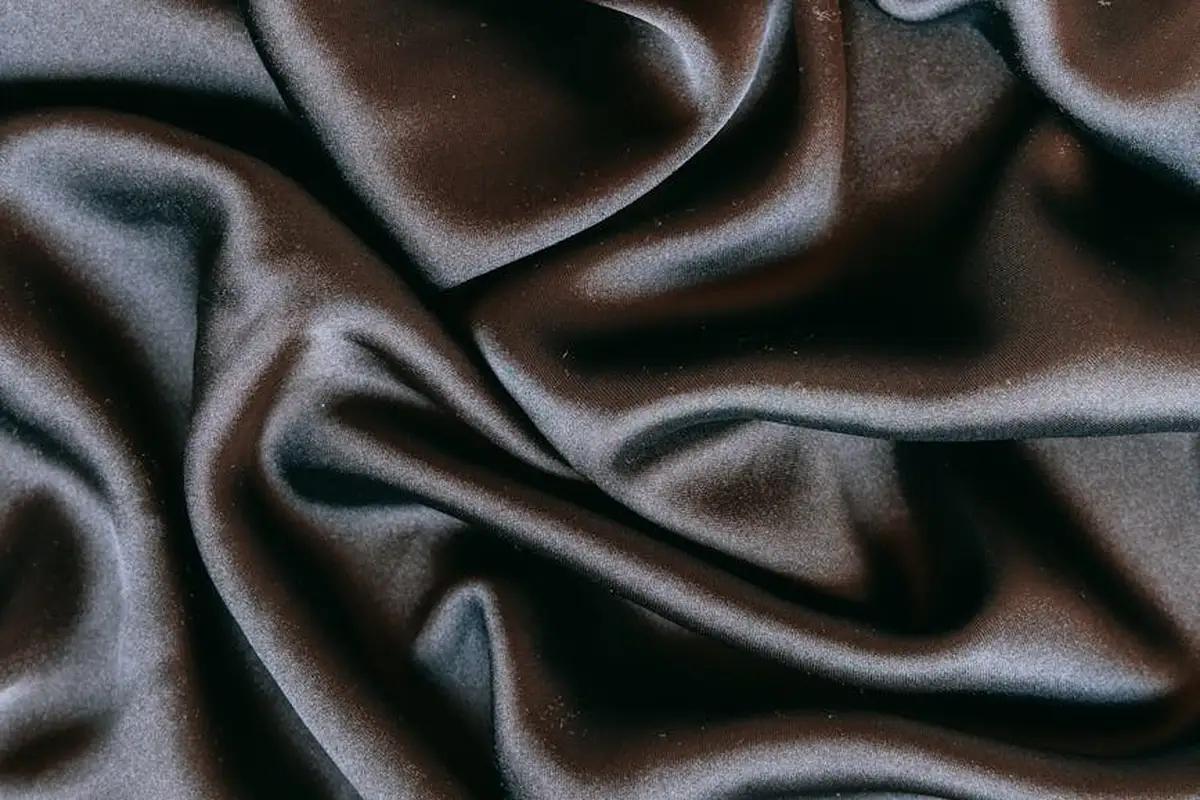
The hand feel of satin is sleek and slippery. It has a high-gloss, reflective surface that catches the light. A polyester satin will feel cooler and more plasticky to the touch than a silk satin, which feels warmer and drier.
Caring for satin depends entirely on its fiber content. Always check the label first. Polyester satin can often be machine washed on gentle in cool water. Silk satin must be hand washed. Iron satin fabrics on a low heat setting inside out to avoid crushing the floats and creating shiny iron marks.
Material Data Table: Silk vs. Satin (Polyester-Based)
| Property | 100% Silk | Polyester Satin |
|---|---|---|
| Breathability | Naturally high; the protein fiber structure allows air and vapor to pass through easily. It feels cool in summer and warm in winter. | Inherently low. The solid polymer filaments trap heat and moisture against the skin, which can feel clammy. |
| Shrinkage Rate | Low with proper cold-water care, but can “shock-shrink” permanently with sudden heat or agitation. I’ve seen a silk blouse shrink a full size in a warm wash. | Extremely low. The fibers are heat-set during manufacturing, locking in their dimensions. You might see 1-2% shrinkage at most. |
| Heat Tolerance (for ironing) | Moderate. Use a cool iron (300°F or Wool setting). Excessive heat scorches the natural proteins, leaving yellow marks that don’t come out. | Low. Use a warm iron (275°F or Synthetic setting). High heat will melt the synthetic fibers, causing a shiny glaze or irreversible holes. |
| Stretch Factor | Minimal inherent stretch, but has graceful drape and recovery. It can stretch out of shape if hung wet. | Virtually none; the fibers are rigid and plastic-like. The fabric holds a crisp shape but can crease permanently along fold lines. |
| Moisture Wicking | Excellent. Silk can absorb up to 30% of its weight in moisture without feeling wet, pulling sweat away from your skin. | Poor. Polyester is hydrophobic (water-repelling). Moisture sits on the surface or gets trapped, which is why it often feels sticky. |
| Common Care Method | Hand-wash in cold water with a pH-neutral soap. Never machine wash or dry. Dry flat away from sun. | Machine wash cold on a gentle cycle is generally safe. Tumble dry on low heat or hang to dry to prevent heat-set wrinkles. |
Care & Handling Protocol: Washing, Drying, Ironing
For 100% Silk: The Gentle Art of Preservation
Treat silk like a delicate heirloom, not everyday laundry. Its beauty is durable, but its care is specific.
- Pre-Test: Always check for colorfastness. Dab a hidden seam with water and a bit of your soap, then blot with a white cloth. If dye transfers, dry clean only.
- Wash: Fill a clean basin with cool or cold water. Add a capful of pH-neutral soap or shampoo (alkaline detergents break down silk fibers). Swirl the garment gently for up to 5 minutes.
- Rinse: Drain the soapy water. Refill the basin with fresh cold water and gently agitate to rinse. Repeat until the water runs clear. Never wring or twist silk, as this breaks threads and causes permanent distortion.
- Dry: Lay a clean, dry towel flat. Place the wet silk garment on top, roll the towel up like a jelly roll, and press gently to absorb excess water. Unroll, reshape the garment, and lay it flat on a fresh towel or drying rack away from direct heat or sunlight.
- Iron: Iron while the fabric is still slightly damp. Use the lowest heat setting (silk/wool). Always place a clean cotton press cloth between the iron and the silk. Never let the iron sit in one spot.
Watch for water spots; they happen when minerals in tap water are deposited on the fiber as a drop evaporates. To prevent, use distilled water for your final rinse or steam the entire garment evenly. For dye bleeds, act fast by rinsing the affected area in cold water, but set your expectations-silk dyes can be fugitive.
For Polyester or Nylon Satin: The Durability Rules
This fabric is far more forgiving, but it has one major enemy: high heat.
- Wash: Turn the garment inside out to protect the satin sheen. Use the washing machine’s cold water setting and a gentle or permanent press cycle. A mild liquid detergent works best; avoid powders that might not fully dissolve and leave residues.
- Dry: For the least risk, hang dry. If you use a dryer, select the lowest heat setting (Tumble Dry Low) and remove the item immediately once dry. High heat will melt the fibers, causing stiff, shiny patches known as “thermoplastic glazing.”
- Iron: If wrinkles persist, use an iron on the “Synthetic” or low setting. A shot of steam helps. Again, too hot an iron will melt the fabric. When in doubt, use a pressing cloth as a buffer.
- Stain Treatment: Avoid chlorine bleach, which can yellow polyester. For oil-based stains, a pre-wash stain remover applied directly works well due to polyester’s oil-attracting nature.
A Note on Silk Satin Blends
If your fabric is a blend (like a silk-polyester satin), you must care for the most delicate fiber present. A 60% polyester, 40% silk blend requires the full gentle hand-wash routine designed for silk. Silk blends offer a balance of durability and softness, and that balance depends on the exact mix and proper care. The silk portion is vulnerable to all the things polyester resists, and it will be the first to fail with rough treatment.
Satin vs. Silk for Bedding, Bonnets, and Clothing
You might be choosing between a silk pillowcase and a satin one. The right pick depends entirely on what you need from the fabric.
For Your Hair and Skin
A silk pillowcase feels like a gentle cloud against your cheek. A polyester satin one feels like a cool, slippery slide. Both reduce friction, which is why they’re popular for preventing sleep creases and frizzy hair. But their effects on your skin and hair differ.
Silk is a natural protein fiber, similar to the keratin in your own hair. This biological kinship means silk is less likely to wick away and absorb your skin’s natural oils, helping it feel less dry over time. Polyester satin is slick, so it minimizes tugging and friction, but it’s a plastic filament. It doesn’t interact with your skin’s moisture at all; it simply slides over it.
Breathability in Nightwear and Dresses
This is where the fiber’s origin matters most. Silk is a temperature regulator. Its structure allows it to wick moisture vapor (like light sweat) away while still feeling warm in cool air. Polyester satin does not breathe well. In a summer nightgown or a lined dress, polyester satin can trap heat and moisture against your skin, leading to that sticky, clammy feeling. Silk keeps you comfortable across seasons.
Addressing Your FAQs
- Pillowcases & Sheets: For temperature regulation and a luxurious feel, choose silk. For a budget-friendly, low-friction option that’s easy to care for, polyester satin works.
- Dresses: Silk drapes beautifully, breathes, and has a rich, subtle sheen. Polyester satin offers a more dramatic, crisp shine and holds structured shapes well, but can be less comfortable for extended wear.
- Bonnets & Scarves: Both protect hair from friction. Silk may be better for maintaining hair moisture. Polyester satin is often more durable for frequent use.
The Price Reality
Silk is an agricultural product requiring sericulture (silkworm farming). I always advocate for sourcing from suppliers committed to ethical practices. This, plus the intensive processing, makes it a luxury fiber. Silk fiber production fabric comes from careful sericulture and skilled weaving. It gives silk its distinct drape and sheen. Polyester satin is a petrochemical product manufactured at high volume, making it very affordable. The price difference directly reflects the raw materials and production processes.
How to Tell Silk from Satin (and Real Silk from Fake)
Labels can be misleading. “Satin” describes a weave, not a fiber. “Silk” describes a fiber, not a weave. Here’s how to be a fabric detective at home. Explore silk fabric types, their properties, and how to care for them.
The Touch and Sight Test
Feel the fabric. Real silk has a soft, warm, and remarkably smooth hand. Its luster is deep and subtle, like a pearl. Polyester satin often feels cooler to the touch initially and has a sharper, more metallic shine. Crumple a section in your hand. Silk will crush softly and release with some wrinkles, while polyester satin often springs back with fewer creases and a distinct synthetic rustle.
The Label Check
This is your first clue. Look for the fiber content label. It must list the percentage of materials. “100% Silk” is what you want. “100% Polyester” (or “Polyester,” “Viscose,” “Acetate”) with a satin weave is not silk. If it says “Satin” without a fiber listing, assume it’s a synthetic blend. Understanding silk vs satin care differences will guide you on washing and handling later. We’ll cover the practical care steps in the next section.
The Burn Test (Proceed with Extreme Caution)
This is a definitive test. Only do this in a safe, well-ventilated area with a bowl of water and a pair of tweezers. Snip a tiny thread from a hidden seam.
- Hold the thread with tweezers and carefully ignite it with a lighter.
- Observe and smell: Real silk burns slowly and will often self-extinguish. It smells distinctly like burnt hair or feathers. The ash is a fine, gray, crushable powder.
- Compare to polyester: A polyester thread will melt as it burns, forming a hard, dark plastic bead. The smell is acrid, like melting plastic or chemicals.
This test works because silk is a protein fiber, while polyester is a thermoplastic. Viscose or rayon (made from cellulose) will burn quickly with a smell similar to burning paper, but it’s still not silk.
Choosing Your Fabric: A Practical Guide
Let’s make this simple. Your project tells you exactly which fabric to pick. I’ll help you listen to it.
For a Breathable, Luxurious Dress for a Summer Wedding
You want a dress that feels like cool air and looks like liquid light. The humidity is high, and you’ll be wearing it for hours.
Choose silk or a silk satin like charmeuse for its unmatched temperature regulation and inherent, luminous beauty.
Silk proteins absorb moisture without feeling damp, pulling sweat away from your skin. A silk satin weave adds that iconic, glossy drape. In addition, silk’s skin-friendly properties can help soothe and maintain healthy skin. Be ready for a higher price tag and more delicate care.
- Care & Troubleshooting: Hand-wash in cool water with a mild, pH-neutral soap. Never wring it out; roll it in a towel to press out water. Iron on a low, synthetic setting while slightly damp, using a pressing cloth. Watch for water spots-they happen when droplets dry unevenly. To fix, lightly mist the entire area with water and let it dry flat.
- Dyeing Note: Silk takes acid dyes and natural dyes beautifully, resulting in vibrant, rich colors. This is a fiber-specific bond.
For Affordable, Low-Wrinkle Lining for a Craft Project
You need something sleek to reduce friction inside a bag or jacket. It has to be budget-friendly, easy to handle, and shouldn’t crease every time you look at it.
Polyester satin is your practical, high-performance workhorse here.
It offers that smooth slip you need at a fraction of the cost. The synthetic fibers are incredibly resistant to wrinkling and hold their shape well. You’ll often find it in a mid-weight, which is easier to sew than very lightweight silks.
- Care & Troubleshooting: It’s machine washable in cool or warm water. Use a gentle cycle and avoid harsh detergents with bleach. Tumble dry on low. The main risk is heat damage-too hot an iron will melt the fibers, creating a shiny, stiff patch. Always iron on a low setting.
- Dyeing Note: Polyester requires disperse dyes and high, sustained heat (often a boiling pot) to color properly. It’s a more involved process than dyeing natural fibers at home.
For a Hair Bonnet that Balances Budget and Friction Reduction
The goal is to minimize breakage by reducing friction while you sleep. You want effectiveness without a luxury price.
A high-quality polyester satin with a dense, tight weave is an excellent, accessible choice.
The satin weave itself provides the smooth surface that reduces friction. The key is fabric density-look for a higher thread count or momme weight. A flimsy, loose weave will snag and won’t last. While silk is superb, a well-made polyester satin performs the core function very well. Differences in fabric weaves and materials affect texture, sheen, and durability. Understanding these differences helps you choose the right option for your needs.
- Care & Troubleshooting: Wash it regularly in a gentle mesh bag to remove oils. The same cool-wash, low-dry rules apply. Check the inside seams for rough edges that could snag hair, and consider stitching a soft cotton bias tape over them if needed.
Clarifying Related Terms: Sateen & Charmeuse
These terms often add to the confusion. Here’s what they really mean.
Sateen refers to a fabric, usually cotton, made with a satin weave structure. It has a lovely, subtle sheen on one side and a duller back. It’s more breathable than polyester satin and has a softer, often heavier hand. You’ll find it in high-quality bed sheets and drapery.
Charmeuse is a specific type of silk fabric. The name describes its finish: it is a lightweight silk satin, remarkably glossy on the front and very dull on the back. It has that iconic, fluid drape used for lingerie, evening wear, and flowing blouses. When people dream of a “silky” fabric, they are often picturing charmeuse.
| Your Need | Best Choice | Key Reason | Handle With Care For |
| Luxury, breathability, natural fiber | Silk or Silk Satin | Moisture-wicking, temperature control | Water spots, sun damage, high heat |
| Budget, durability, easy care | Polyester Satin | Wrinkle-resistant, affordable, strong | High heat (melting), pilling on cheap versions |
| Reducing hair/bedding friction | Dense Polyester Satin | Effective smooth surface, cost-effective | Snagging on rough seams, oil buildup |
| Bedding with a soft sheen | Cotton Sateen | Breathable, soft, durable | Potential shrinkage (pre-wash!) |
Final Fabric Facts
The single most important takeaway is to treat the name on a tag as a starting point, not a full instruction. Always look past the word “satin” to find the fiber content, then let that fiber-be it silk, polyester, or acetate-guide your care, dyeing, and expectations for performance. Knowing the underlying material is the only way to predict how a fabric will behave in the wash, over time, and against your skin.
Every textile, from a crisp cotton poplin to a sleek nylon satin, benefits from considered care that respects its unique properties. Your most sustainable choice is to extend the life of the garments you already own by washing them according to their fiber science, mending small issues, and continuing to learn about the materials in your wardrobe.
Sources and Additional Information
- Silk vs Satin: what’s the difference between silk and satin?
- How to tell silk vs satin : r/curlyhair
- Silk vs Satin Silk – Mayfairsilk
- Satin vs. Silk: What’s the Difference?
- Satin vs. Silk Pillowcases for Hair: What’s the Difference?
- Satin vs. Silk Pillowcase: What’s the Difference?
Written by Florian Ventura. Florian is a high fashion blog writer, fashion and fabric expert and a keen expert in fabric, clothing and materials. She has worked in large textile and fashion houses for over 10+ years, engineering and working with various fabric types and blends. She is an expert when it comes to questions on any and all kinds of fabrics like linen, cotton, silk, jute and many more. She has also traveled around the world studying traditional fabrics and aims to bring them into the modern fashion use.