
How Do You Dye Fabric with Tea, Coffee, Turmeric, and Other Natural Materials?
Worried natural dyeing is too complex or unpredictable? From my years in the dye lab, I can tell you it’s a straightforward way to achieve beautiful, earthy tones safely.
I will guide you through the entire process, covering how fiber content affects color uptake, preparing strong dye baths, step-by-step application for even results, and proven methods to fix and care for your color.
The Natural Dyeing Cheat Sheet: What to Expect
Natural dyeing gives you soft, earthy colors you can’t find in a bottle. Think of the warm beige of a strong tea, the dusty yellow of turmeric, or the grey-brown of black walnuts. These colors are subtle and alive. They change with the fabric, the water, and even the season you gathered your materials. For the best results, you need to start with the right kind of cloth.
I always tell people that natural dyes are a partnership with nature, not a way to get a predictable, solid color. If you want a specific, bright red that looks the same every time, a synthetic dye is the right tool. Natural dyes are for projects where variation is part of the beauty. For a quick natural–synthetic dyes comparison, you can weigh color stability, fading, and care across both approaches. It helps you decide which path fits your project and values.
- Pros: They are eco-friendly and non-toxic for you and your home. You can create beautifully unique, complex hues from kitchen scraps and garden weeds.
- Cons: The colors are generally less colorfast than synthetic dyes and will fade with washing and sunlight. Your results depend heavily on your fiber and your mordant (a fixative). They can also permanently stain your pots and utensils.
This process is ideal for historical reenactment projects, gently antiqueing new linen to look vintage, or personalizing a plain cotton shirt. These ideas extend to dyeing cotton, wool, or synthetic fabrics. Each material takes up dye differently and may need different treatments or temperatures. The chemistry is different from synthetic dyes. Natural dye molecules bond to the fabric with the help of a metal salt called a mordant. Synthetic dyes for polyester, for example, often rely on high heat to force the dye into the plastic-like fibers.
Your Fabric is the Canvas: Picking the Right Material to Dye
Your biggest question is probably, “What fabric works best?” Or, “Can I dye this polyester blend with coffee?” The answer lies in fiber science. Protein fibers like wool and silk have a chemical structure that readily grabs onto natural dye molecules. Plant fibers like cotton and linen are more stubborn and need extra help from a mordant to hold the color well.
Synthetic fibers like polyester and nylon resist most natural dyes completely because their plastic-like surfaces have no natural affinity for organic colorants. You might get a light, temporary stain, but it will wash right out.
Use this quick guide to set your expectations:
| Fabric Type | Natural Dye Affinity | What to Expect |
| Wool | Excellent | Takes rich, deep colors. Handle gently when wet to avoid felting. |
| Silk | Excellent | Yields vibrant, luminous colors. Requires very gentle heat. |
| Cotton | Good (with mordant) | Takes softer, more muted shades. A mordant is essential. |
| Linen | Good (with mordant) | Similar to cotton, often giving a slightly cooler, greyed tone. |
| Polyester/Nylon | Poor | Will not hold dye. You’ll waste your materials. |
| Blends (e.g., 50/50 Cotton-Poly) | Uneven | The cotton part will dye; the polyester part will stay white, creating a speckled or heathery look. |
Before you even think about dye, you must pre-wash your fabric. This removes any factory finishes and, most critically, eliminates residual shrinkage. I’ve seen beautiful hand-dyed cotton shirts ruined because the owner didn’t pre-wash, and the garment shrank a full size after its first real laundry cycle. Wool is especially prone to felting shrinkage in hot, agitated water, so always pre-wash with care.
If you’re working with a blend, accept the uneven result. A cotton-polyester tee dyed with tea will have the cotton fibers turn tan while the polyester fibers remain bright white, giving a overall lighter, textured appearance.
Testing Fiber Content at Home
Not sure what your fabric is? A simple burn test in a safe, well-ventilated area (over a sink) can tell you a lot. Snip a small piece from a hidden seam.
Hold the fabric with tweezers, carefully light it, and observe how it burns and smells. Protein fibers like wool and silk smell like burning hair and leave a crushable black ash. Plant fibers like cotton and linen smell like burning paper and leave a soft, grey ash. Synthetic fibers like polyester or nylon melt, bead up, and smell like chemicals or plastic. They leave a hard, plastic bead.
This quick test saves you time and disappointment. If it melts and beads, it’s a synthetic and a poor candidate for natural dyes. If it burns to ash and smells organic, you have a fiber that can work beautifully with tea, turmeric, or avocado pits.
Non-Negotiable Prep: Scouring and Mordanting Your Fabric
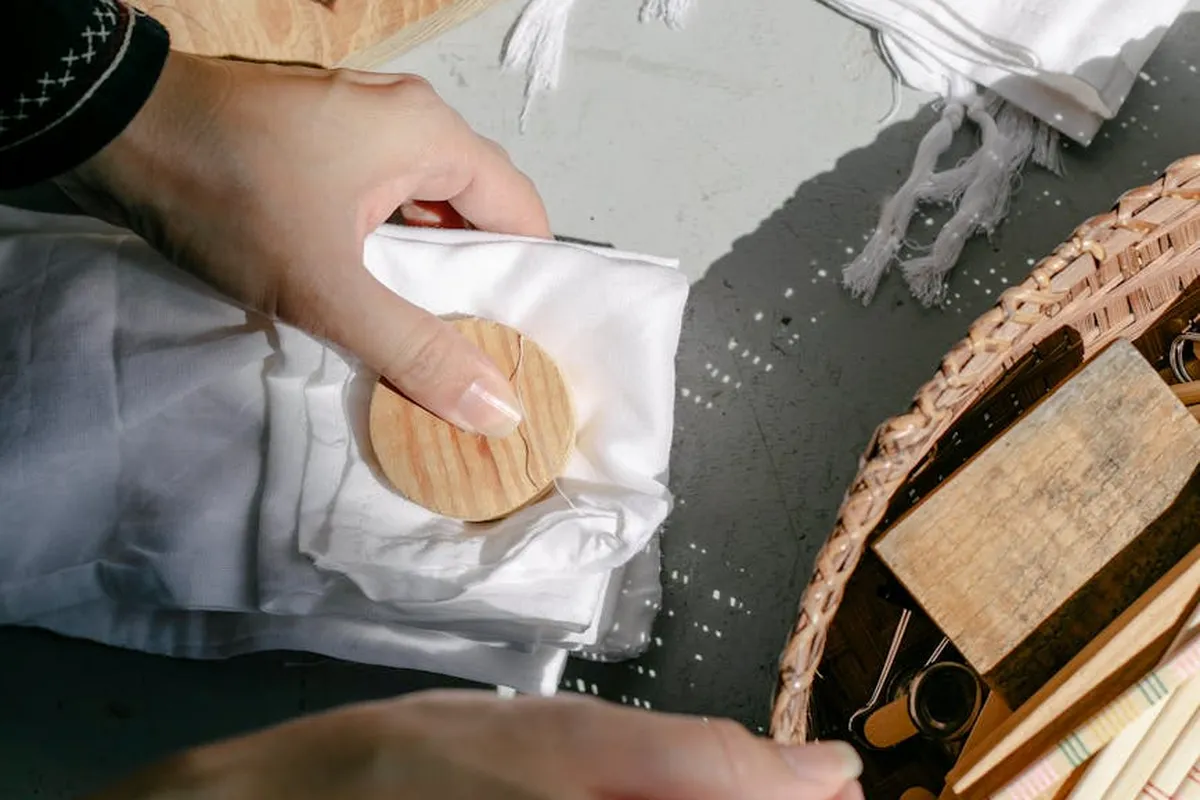
How do you prepare fabric for dyeing? You start by cleaning it deeply, then you build a chemical bridge for the color to grab onto. Skipping these steps is why many home dye projects wash straight out. In the next steps, we’ll cover how to prepare and troubleshoot fabric dyeing to get reliable, lasting color.
First, scour your fabric. This isn’t a regular wash. You need to remove the invisible oils, waxes, and factory finishes that repel dye. For cotton, linen, or rayon, simmer it in a large pot of hot water with a tablespoon of pH-neutral dish soap or synthrapol for about an hour. For animal fibers like wool or silk, use a very gentle wool wash in warm water to avoid felting. Proper scouring opens up the fiber’s surface so the dye can make contact and bond. This prep helps ensure even color uptake when dyeing delicate fabrics. After scouring, follow dyeing guidelines for delicate fibers to protect the fabric.
Now, what is mordanting? A mordant is a metallic salt that forms a bridge between the dye molecule and the fiber. Think of it like a two-sided tape that sticks to both. Without it, most natural dyes just sit on the surface and rinse away. In mordants natural dyeing, this bridge is what helps color stay and resist fading. In the next steps, we’ll explore how different mordants affect fiber compatibility and shade.
- Alum (Potassium Aluminum Sulfate): This is your safe, versatile starter mordant. It’s great for protein fibers (wool, silk) and brightens colors.
- Iron (Ferrous Sulfate): Often called an “after-bath” or modifier. It “saddens” or darkens colors, turning yellows to olive greens or tans to deep grays.
- Tannins: Found in tea, oak galls, and pomegranate rinds. They act as a natural mordant for cellulose fibers like cotton, often used before an alum bath.
Here is a simple, safe mordanting method I use in my workshop. You’ll need a stainless steel pot you will never again use for food.
- For cellulose fibers (cotton, linen, rayon): Use aluminum acetate. Dissolve 1 tablespoon of aluminum acetate in a cup of hot water. Add this to a pot with enough warm water to let your fabric move freely. Add the wet, scoured fabric and simmer for 1 hour. Let it cool in the pot.
- For protein fibers (wool, silk): Use alum. Dissolve 1 tablespoon of alum powder in a cup of hot water. Add it to your pot with enough warm water for the fabric. For better results, also add 1 teaspoon of cream of tartar (it helps the alum bind evenly). Add the wet fabric, heat to a simmer (do not boil silk), and hold for 1 hour. Let it cool.
Always wear gloves, work in a ventilated area, and label your dedicated dyeing utensils clearly to avoid any kitchen confusion. Your mordanted fabric can be dried and stored for later use, so you can do this prep work ahead of a dye day.
Brewing Color: Step-by-Step with Tea, Coffee, and Turmeric
Can you dye fabric with coffee? Absolutely. It gives a soft, warm sepia or tan. Use about 1 cup of used coffee grounds per gallon of water. Fresh grounds can work too, but they’re more acidic. Simmer the grounds for 30 to 60 minutes to extract the color, then strain them out. You now have your dye bath.
Can you dye fabric with tea? Yes, and black tea is the most potent. It provides a range from light beige to a deep, warm brown. The ratio is similar: about 8-10 tea bags per gallon of water. Simmer for 30 minutes, then remove the bags.
Can you dye fabric with turmeric? You can, and it delivers a powerful, vibrant yellow. Turmeric is a direct dye, meaning it has a strong natural affinity for protein fibers like silk and wool even without a mordant, but the color will fade quickly in light and washes if you skip that step. Use 2-4 tablespoons of turmeric powder per gallon of water. Too much can make fabric feel gritty.
The process is similar for all three. Start with a wet, pre-mordanted fabric. This helps it absorb evenly. Gently place it in your strained, warm dye bath.
Heat the bath to a low, steady simmer. A rolling boil can degrade delicate colors and felt wool. Keep the heat low and steady. For tea and coffee, let the fabric simmer and soak for at least an hour, or even overnight once the heat is off for deeper shades. For turmeric, 30 minutes is often enough for a strong yellow; longer simmering can sometimes give a slightly bitter olive tone.
Agitate the fabric gently and occasionally with a stainless steel spoon to prevent splotches. Think of slowly stirring a soup. Uneven dyeing often comes from fabric clumping together.
When you like the color, remove the fabric. Rinse it in cool water until the water runs mostly clear. You’ll always get some color loss-this is normal. Wash it gently with a mild, pH-neutral soap, let it air dry, and admire your work.
What about polyester or nylon? Coffee or tea will only leave a superficial stain on synthetics, not a true dye. The polymer chains in synthetic fibers are non-porous and require disperse dyes and high heat to open up and accept color, which a simple simmer in a plant bath cannot achieve. You’ll get a light tint that will likely wash out.
Experimenting with Other Kitchen Waste
Your kitchen is a color lab. Avocado pits and skins, simmered for an hour or more, can yield a surprise blush pink. Red onion skins give a rich yellow-orange or even a soft green if you modify the bath with an iron after-bath. Soaked black beans can produce pale blues and lavenders on cotton.
The most important rule with these experiments is to embrace the variability. Your water’s mineral content (hard or soft), the specific fabric, the mordant you used, and even the season the plant was grown will shift the final color. Keep notes, and never expect two batches to be perfectly identical. That’s the beautiful, living nature of working with plants.
After the Dye Bath: Setting Color and Washing Care

Your fabric is out of the pot and colored, but the work isn’t done. The next steps lock in the hue and set you up for long-term care.
How to Set Natural Dye Colors?
Setting the color, often called “fixing,” helps the dye molecules bond more permanently to the fabric fibers. For most plant-based dyes like tea or coffee on cotton or linen, a simple acidic rinse does the trick. I use a cup of white vinegar in a gallon of cool water. Soak your rinsed fabric in this for 15-30 minutes, then wring it out. This vinegar bath helps shift the pH, encouraging the dye to form a stronger bond with the plant fiber, improving the permanence of the dye.
For animal fibers like wool or silk, I skip the vinegar. The proteins in these fibers often bind well with natural dyes during the hot dye bath itself. Instead, I let them cool completely in the dye pot and then rinse. A cool, slow air dry away from direct heat is the best fixative here.
Turmeric is a special case. It’s a direct dye that stains powerfully but can fade quickly. After rinsing, try a salt fixative bath (half a cup of salt dissolved in a gallon of water) for an hour. It doesn’t work miracles, but it can help a little.
The Rinsing Process
Always start with a cool water rinse. Hold the fabric under running cool water or swish it in a basin until the water runs mostly clear. This removes the loose, excess dye particles that didn’t bond, which prevents them from staining your hands or other laundry later. Don’t be alarmed if a lot of color comes out; this is normal with natural dyes. These rinses also prepare dyed fabric for stain removal later. The next steps will cover how to remove stains from dyed fabric.
Your First Wash Protocol
After rinsing and fixing, do a dedicated first wash. Use a small amount of gentle, pH-neutral detergent in a basin of cool water. Wash the item alone by hand. This test wash shows you how colorfast your project truly is. If you see significant dye release, you know to always wash it separately.
How Long Can You Expect a Natural Fabric Dye to Last?
Be realistic. Natural dyes age and fade, which is part of their beauty. They create a lived-in, vintage look over time. With proper care, teas and coffees on cotton might last 10-20 washes before fading to a gentle tan. Turmeric on wool, even fixed, may start shifting after a few sun exposures or washes. Think of natural dyes as a seasonal refresh or a way to achieve a soft, non-uniform patina, not a permanent factory color.
Long-Term Care for Naturally Dyed Items
Care is simple but specific. Always wash in cool water with a mild detergent. Never use chlorine bleach or harsh stain removers. Avoid prolonged direct sunlight when drying or storing, as UV light is a major cause of fading.
Compare these two scenarios:
- A Dyed Wool Sweater: Hand wash cold, gently pressing out water. Never wring or twist. Lay flat on a towel to dry, reshaping it. The wool’s structure is delicate when wet.
- A Dyed Cotton Tea Towel: You can use a gentle machine cycle with cold water. Tumble dry on low or, better yet, line dry in the shade. The cotton is more robust but the dye is still vulnerable to heat and sun.
Textile Expert’s Note: Pro-Tips for Even Dye and Lasting Color
These tips come from my own dye vats and mistakes. They bridge the gap between science and a successful project.
Tip 1: Fabric Weight and Weave Matter
The same dye pot will give different results on different fabrics. A tightly woven cotton poplin will yield a solid, even color. A loose, slubby linen will dye unevenly, highlighting the texture—which can be gorgeous. For your first project, use a smooth, medium-weight natural fabric like cotton muslin to see the true color you’ve made. Save textured linens or nubby wools for when you want that artistic variation that textured fabrics provide.
Tip 2: Agitation is Your Best Friend for Even Color
Static fabric creates splotches. Use a pot large enough so the fabric can swim freely. Throughout the simmering time, use a long stainless steel spoon to gently lift, turn, and submerge the fabric every few minutes. This constant, gentle movement prevents fold lines and ensures dye penetrates every fiber cluster evenly.
Tip 3: Keep a Dye Journal
Trust me, you will not remember. Get a small notebook. For each batch, record:
- Fabric type and weight (e.g., “100% cotton broadcloth, 4 oz/sq yd”)
- Mordant used and method (e.g., “soaked in alum solution”)
- Dye material and amount (e.g., “4 cups used black tea leaves”)
- Simmer time and heat level (e.g., “45 min at a bare simmer”)
- Resulting color when wet and dry
This turns a happy accident into a reproducible formula.
Tip 4: For Sewing Projects, Dye the Fabric First
If you plan to sew with your dyed material, always dye the whole yardage first. Cut your pattern pieces from the already-dyed fabric. If you sew with white fabric and then dye the finished garment, the thread (often polyester-coated) and dense seam allowances will resist the dye, creating visible “shadows” and uneven lines. A uniform piece of dyed cloth guarantees a professional look.
When Things Don’t Go as Planned: Troubleshooting Natural Dyes

Even with careful prep, natural dyeing can be unpredictable. That’s part of its charm-and its frustration. Here’s how to diagnose and fix the most common issues I’ve seen in my workshop.
Why Is My Color Patchy or Uneven?
Patchiness usually happens at the very start. The culprit is almost always uneven moisture or grease in the fabric. Think of trying to dye a dry sponge versus a damp one; the dye only sticks to the wet parts.
- Solution: Always, always pre-wet your fabric in clean, warm water before immersing it in the dye bath. Ensure it’s fully submerged and agitated constantly for the first 10-15 minutes. For plant fibers like cotton, proper scouring (a hot wash with detergent) to remove factory finishes is non-negotiable.
A thoroughly scoured and pre-wetted fabric is the single most important step for achieving an even dye result. Allow the fabric to soak in dye for the recommended soaking time to ensure even color uptake.
My Dyed Color is Too Light
You were hoping for a deep ochre from turmeric, but got a pale butter yellow instead. This typically means one of two things: the dye bath was exhausted, or the mordant bond wasn’t strong enough.
- Solution: First, try re-dyeing in a fresh bath. For a stronger bond, you can also re-mordant the fabric (a shorter second bath in your alum solution) and then dye again. Remember, materials like tea give lighter tints-they stain more than they dye.
The Dye Bleeds in the First Wash
Some initial bleeding, especially with strong dyes like turmeric or berries, is normal. A severe bleed means the dye molecules are sitting on the fiber, not bonded to it.
- Solution: After dyeing, rinse the fabric in cool water until it runs mostly clear. Then, do a final rinse with a mild acid like white vinegar (1/4 cup per gallon of water) for plant fibers, or a very mild soap for protein fibers like wool and silk. This helps set the color.
Expect natural dyes to fade and soften with washing and light; this evolution is part of their character. For items that will be washed frequently, like cotton tea towels, dye them a shade darker than your desired final color.
The Fabric Shrank After I Dyed It
This isn’t a dye problem-it’s a fabric prep problem. Heat and agitation during the dye process will trigger any remaining shrinkage, especially in natural fibers.
- Solution: Pre-wash your fabric to completion shrinkage *before* you even mordant it. For cotton or linen, machine wash and dry on the settings you plan to use later. For wool or silk, hand wash in lukewarm water and lay flat to dry. This pre-shrinking is critical.
I pre-treat all my wool for dyeing by washing it in hot water (yes, hot!) with a gentle wool wash. This shocks and felts the fibers just slightly, locking in their dimensions so they won’t shrink further in the dye pot.
How Do I Remove a Natural Dye Stain?
Spilled turmeric dye on your counter? Act fast. Many natural dyes are pH-sensitive.
- For fresh stains on surfaces or skin, a paste of baking soda and water can help lift it.
- For an unfortunate stain on a different, lighter fabric, rinse immediately with cool water. Soak the stained area in a mixture of oxygen-based bleach (like sodium percarbonate) and warm water. Test this on a hidden seam first.
A Crucial Safety Reminder
Not everything natural is safe. Many common garden plants and wild berries are toxic.
Stick to known, food-safe materials for your first projects: black tea, coffee, turmeric, yellow onion skins, red cabbage, avocado pits, and marigolds.
Avoid experimenting with unknown berries, leaves from nightshades (like potato or tomato), oleander, foxglove, or any plant you cannot positively identify. Always wear gloves and work in a well-ventilated area, treating all dye materials with respect.
Last Notes on Natural Dyeing and Fiber Care
The single most reliable step for good results is always testing your dye on a fabric scrap first. This small preview tells you everything about color uptake and how the fiber itself, whether thirsty cotton or delicate silk, will behave before you commit your whole project.
Treating fabric with care extends its life and honors the resources used to create it. Learning how fibers react to dyes, washes, and wear transforms you from a passive consumer into a knowledgeable steward of the textiles you own and love.
Relevant Resources for Further Exploration
- How to Dye Wool Yarn With Coffee, Tea, and Turmeric : 5 Steps (with Pictures) – Instructables
- Dyeing with Turmeric (easy step by step guide) – FiberArtsy.com
- 3 Ways to Dye Your Hair With Tea, Coffee, or Spices – wikiHow
- Dyeing Fabric & Clothes with Turmeric – the Complete Guide
- r/dyeing on Reddit: Turmeric and Coffee dyeing – no mordant?
- How to Dye Easter Eggs With Coffee, Tea, and Turmeric
Florian Ventura
Florian is a high fashion blog writer, fashion and fabric expert and a keen expert in fabric, clothing and materials. She has worked in large textile and fashion houses for over 10+ years, engineering and working with various fabric types and blends. She is an expert when it comes to questions on any and all kinds of fabrics like linen, cotton, silk, jute and many more. She has also traveled around the world studying traditional fabrics and aims to bring them into the modern fashion use.