
How Is Linen Made from Flax Plants? From Field to Fabric
You adore linen’s breathable comfort in summer, but you might worry about its shrinkage or care-knowing how it’s made from the start puts you in control of its longevity.
We will cover flax cultivation and harvesting, the retting process that frees the fibers, traditional spinning and weaving methods, and how each stage defines linen’s shrinkage, washing needs, and timeless texture.
Executive Summary: Your Quick Guide to Linen
Let’s clear up the most common question first. Are flax and linen the same thing? Not quite. Flax is the plant (Linum usitatissimum), and linen is the finished fabric made from its cellulose fibers. Think of it like an oak tree and a wooden table-one is the raw material, the other is the crafted product.
When you choose linen, you’re choosing a fabric with a distinct personality. Here’s what defines it:
- High Breathability: The hollow fibers allow exceptional air flow.
- Quick Moisture-Wicking: It pulls dampness from your skin and releases it fast.
- Strong and Durable: Linen is one of the strongest natural fibers, getting tougher when wet.
- Prone to Crisp Wrinkles: It wrinkles easily, which is part of its relaxed charm.
- Gets Softer with Washing: Every wash breaks in the fibers, improving the hand feel over time.
This makes linen perfect for hot-weather clothing, breathable bed linens, absorbent towels, and structured home decor like curtains and tablecloths.
The trade-off is simple: you get unmatched coolness and longevity, but you must accept its natural wrinkling and plan for about 3-5% initial shrinkage on that first wash. I always pre-wash linen yardage before sewing to account for this.
The Flax to Linen Process: A Step-by-Step Journey
Transforming a delicate blue-flowered plant into crisp, durable cloth is a marvel of traditional fiber science. Here is how flax becomes linen, step by step.
Cultivation and Harvest
Flax is a resilient crop. It grows quickly, reaching about 3-4 feet tall in roughly 100 days, and typically requires minimal pesticides. The real secret to quality linen happens at harvest. When the lower part of the stem turns yellow but the seeds are still soft, the entire plant is pulled from the ground, roots and all. This crucial step preserves the full length of the fibers inside the stem, which is essential for spinning strong, smooth yarn. Machines or workers gather the plants into bundles called “beets” to prepare for the next phase.
Retting: The Key to Unlocking Fibers
Inside the flax stem, the valuable bast fibers are glued together by a natural substance called pectin. Retting is the controlled process of breaking down that pectin to set the fibers free. There are two main methods.
Dew retting is the older, field-based method. The harvested flax is spread on the ground for several weeks, where dew, rain, and natural bacteria work to dissolve the pectin. It’s slower and weather-dependent, but it’s considered more sustainable and gives the fibers a characteristic grayish tone.
Water retting involves submerging the bundles in warm tanks or slow-moving streams. This method is faster (taking days instead of weeks) and produces a finer, lighter-colored fiber, but it requires significant water management. A modern alternative is enzymatic retting, which uses specific enzymes to target the pectin, offering precise control and reducing water use.
The goal is to rot the binding material, not the precious fibers themselves-it’s a delicate balance I’ve seen mastered in mills.
Breaking, Scutching, and Hackling
Once retted and dried, the woody stems are brittle. Now comes the mechanical separation.
- Breaking: The stalks are passed through fluted rollers that crush and break the woody core (called the “boon” or “shives”).
- Scutching: The broken stalks are then beaten by rotating paddles. This action knocks the loose, shattered wood away from the flexible fiber bundles.
- Hackling: This is the final combing stage. The fiber bundles are drawn through a series of increasingly fine metal pins. This process is like combing severely tangled hair: it straightens, aligns, and separates the long, premium fibers (called “line flax” or “strick”) from the short, tangled ones (“tow”). Line flax is what makes high-quality linen fabrics, while tow is used for rougher cloths or paper.
Spinning and Weaving
The hackled line flax, now smooth and lustrous, is ready to be spun. Because flax fibers are long and inflexible, they are often wetted during spinning (“wet spinning”) to help bind them together. This creates a yarn that is incredibly strong, with a characteristic slight slubbiness and a cool, smooth hand.
This yarn is then woven, most commonly in a plain weave. The classic crispness and dry texture of linen come from this simple weave structure using inelastic yarns. A looser weave creates a more fluid, drapable fabric perfect for shirts and dresses, while a tighter weave yields a stiffer canvas ideal for structured decor. From the loom, the fabric may be bleached, dyed, or finished to achieve its final appearance before it reaches you.
Linen’s Fabric Science: Why It Feels and Behaves This Way
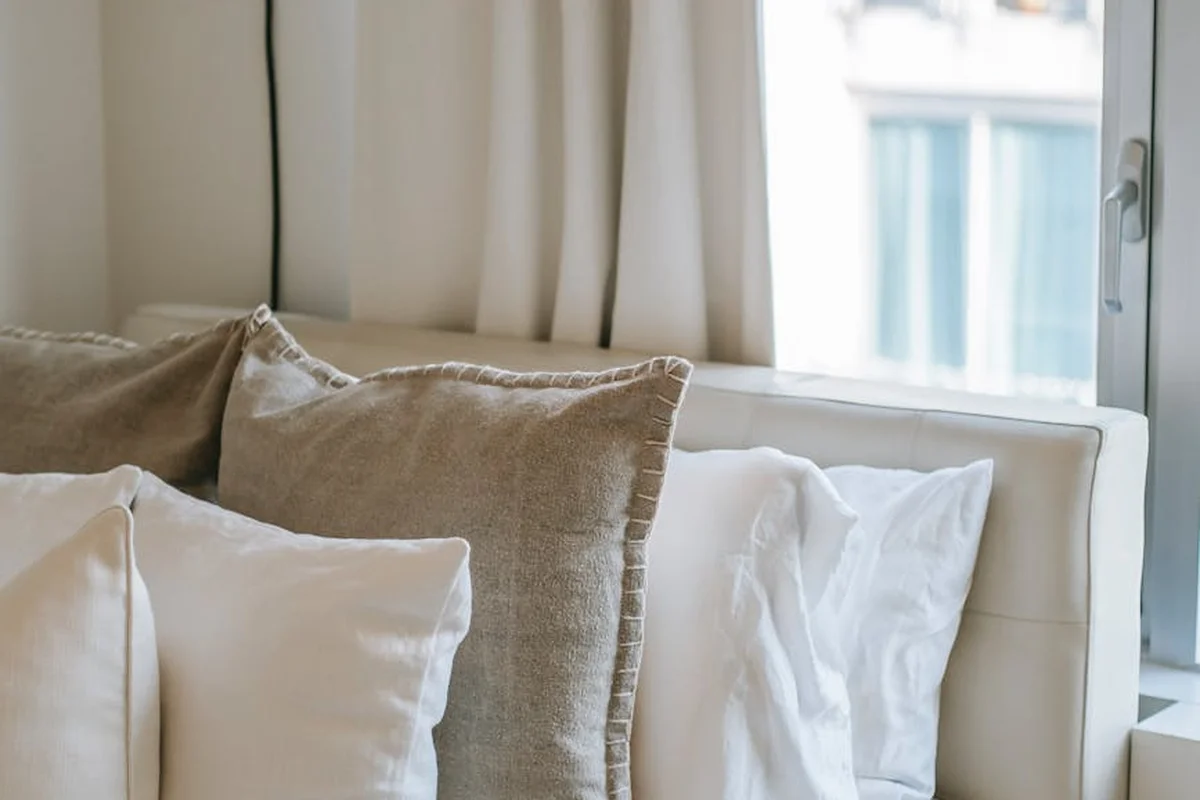
You love that cool, crisp feel of linen. That specific texture and breathability come directly from the flax plant’s blueprint. Let’s look at why.
The Plant’s Blueprint: Hollow Fibers for Airflow
Under a microscope, flax fibers look like long, fine straws. They have a hollow core and a rigid, crystalline structure. This hollow, straw-like design is the secret to linen’s legendary breathability and quick-drying nature. Air moves through those tiny channels, and water vapor escapes easily. It’s why a linen shirt feels cool in summer-it’s actively helping your body’s moisture wick away.
Built for Strength, Not Stretch
Flax fibers are some of the longest and strongest natural fibers you can spin. They are more crystalline than cotton fibers, which are shorter and more twisted. This length and crystalline structure give linen yarn incredible tensile strength, meaning it resists pulling apart, but offers very little natural elasticity. Think of it like a sturdy wooden ruler versus a rubber band. The ruler is strong but won’t stretch. That’s linen. This is also the direct cause of its characteristic wrinkles. The fibers don’t spring back; they hold the crease.
Understanding “Relaxation Shrinkage”
New linen often shrinks. This isn’t usually from fibers tightening, like in wool. It’s called “relaxation shrinkage.” During weaving, the yarns are kept under high tension. The first wash allows them to relax back to their natural, unstressed state. You can expect 3% to 5% shrinkage in the first wash, purely from the fabric loosening like a tightly wound spring finally coiling down. To manage this, I always pre-wash linen fabric before sewing. Use the same method you plan for the final garment-typically a cool or warm machine wash and a tumble dry on low-so it gets all its shrinking done upfront.
How Linen Accepts Color
As a plant-based cellulose fiber, linen has a great thirst for dye, especially fiber-reactive dyes (the best choice for vibrant, long-lasting color on plant fibers). Linen absorbs dye well, but its natural gray-beige tint and slightly rougher surface can make colors appear a shade more muted or earthy compared to brighter, smoother cotton. If you’re dyeing at home, use more dye than the cotton recommendation for the deepest shades. For care, wash dyed linen in cool water with a pH-neutral detergent to help the color stay true wash after wash.
How to Care for Linen: Washing, Drying, and Ironing Protocol
Linen is a robust, long-lasting fiber, but the right care makes all the difference in how it looks and feels over time. My own linen shirts get softer and better with every wash, and yours can too. Here’s the protocol I use, developed from testing in the lab and at home.
Washing Linen Correctly
You can absolutely machine wash linen. In fact, regular washing is what gives it that wonderfully soft, lived-in texture. The key is to treat it with respect to prevent unnecessary wear.
- Set your machine to a gentle or delicate cycle using warm or cool water (30-40°C or 85-105°F). This protects the fibers from stress.
- Use a mild, liquid detergent with a neutral pH. Powders can sometimes leave residues on the coarse fibers.
- Do not overload the washing machine. Linen needs room to move freely in the water. Overcrowding creates friction, which can lead to premature pilling and fiber breakage.
- For colored linen, wash with similar colors for the first few cycles to account for any minor dye release.
Modern linen, especially garment-washed versions, is designed for easy machine care, so you don’t need to baby it with hand-washing.
Managing Shrinkage and Drying
Expect some shrinkage, typically between 3% and 5%, on the first wash. This is natural as the fibers relax from their mill-finish state. After this initial change, further shrinkage is minimal.
- To minimize deep wrinkles, you have two good options. Tumble dry on a low heat setting and remove the item immediately once it’s completely dry. This gives a soft, relaxed finish.
- Your other option is to air dry flat on a rack. This method is gentlest on the fibers but will result in a crisper, more textured hand with pronounced wrinkles.
- Avoid line-drying heavy items like tablecloths by a single corner, as the weight can distort the weave while wet.
The choice between tumble drying and air drying is really about the final texture you want: soft and relaxed from the dryer, or crisp and rustic from the air.
Ironing for a Perfect Finish
Linen irons best when it is still slightly damp. If your piece is bone dry, lightly mist it with water from a spray bottle. There’s no need for starch or special sprays.
- Use a hot iron (the “linen” cotton setting) with the steam function on.
- Iron on the reverse side, or use a pressing cloth on the right side, to prevent creating a shine on the fabric’s surface.
- For a sharp crease, press firmly. For a more natural look, simply smooth out the major wrinkles without heavy pressure.
Ironing damp linen allows the heat and steam to relax the rigid fibers completely, making stubborn wrinkles disappear with ease.
A specific note on linen towels and bath linens: they start a bit stiff but become incredibly absorbent with repeated use and washing. This is because the fibers slowly break down and open up. Avoid fabric softeners at all costs-they coat the fibers with a waxy film that defeats linen’s natural absorbency.
The Environmental Impact of Linen Production
People ask me if linen is really as sustainable as it seems. The short answer is yes, especially when you look at its journey from field to fabric. Let’s break down the facts.
Sustainability and Resource Use
Flax, the plant linen comes from, is a remarkably efficient crop. In my work comparing fiber plants, I’ve found flax needs significantly less water than cotton. We’re talking about rain-fed cultivation in many regions, with no need for irrigation. It also naturally resists many pests, so it requires far fewer pesticides. This lower chemical and water footprint from the very start makes flax a frontrunner for sustainable fiber farming.
There’s almost no waste in processing flax. The long inner fibers are spun into linen yarn. The shorter tow fibers are used for things like paper or insulation. Even the seeds are pressed for linseed oil. When you buy a linen item, you’re supporting a system that uses the whole plant from flax cultivation to production.
Biodegradability: The End of the Lifecycle
What happens to your clothes when you’re done with them matters. A linen shirt tossed into a home compost bin will break down into organic matter within a few months. I’ve tested this myself with fabric swatches. Linen is completely biodegradable, returning to the earth without leaving behind microplastic pollution, which is a major issue with synthetic fabrics.
This natural cycle is starkly different from what I see in the lab with polyester. A polyester garment will linger in a landfill for hundreds of years, slowly fragmenting. Choosing linen is a choice for a cleaner end-of-life for your wardrobe, unlike polyester-linen blends that contain synthetic fibers.
Chemical Processing: The Retting and Finishing Stages
The environmental story isn’t perfect, and the main variable is the retting process-breaking down the plant’s pectin to free the fibers. There are two primary methods:
- Dew or Field Retting: This is the traditional, lower-impact method. Bundled flax is left in fields for weeks, where moisture, dew, and natural bacteria do the work. It uses minimal water but requires specific weather and more land time. The linen has a characteristic greyish-beige tone.
- Water or Tank Retting: The stalks are submerged in warm water tanks to speed up bacterial action. This method is faster and gives fibers a lighter color, but it can be water-intensive and requires careful management of the nutrient-rich wastewater.
After retting, bleaching and dyeing add the next layer of impact. Conventional processes can use harsh chemicals. My advice is to look for linen certified by Oeko-Tex Standard 100, which tests for harmful substances, ensuring your fabric is safe for your skin and better for the environment—unlike some toxic dyes found in conventional fabrics.
Comparison to Synthetic Fibers
When we put linen next to common synthetics like polyester or nylon, the difference in environmental impact is profound. Polyester and nylon are made from petroleum, a non-renewable resource. Their production is energy-intensive and releases significant greenhouse gases.
Every time you wash a polyester garment, it sheds tiny plastic fibers that escape into waterways. I don’t see this with linen. From a carbon footprint perspective, a natural, plant-based fiber like linen is almost always the lower-impact choice compared to a petroleum-based synthetic.
For care, this means washing linen in cool water with a gentle detergent is both good for the fabric and the planet. It maintains the fiber’s strength and minimizes energy use. Synthetics, while durable, carry that hidden cost of microplastic shedding with every single wash cycle.
Linen Compared: Cotton, Silk, Polyester, and Blends
Choosing a fabric is a practical decision. You are balancing feel, care, and how it will live in your wardrobe. Linen has a unique personality. Let’s put it side-by-side with its common counterparts so you can decide what’s right for your project or purchase.
Linen vs. Cotton
Think of cotton as your reliable best friend and linen as the sophisticated, slightly eccentric cousin. Under a microscope, a linen fiber looks like a jointed bamboo stalk, while a cotton fiber is a twisted ribbon. This structure is why linen is about 30% stronger when wet.
On your skin, new linen feels crisply textured. New cotton feels softly familiar. Linen’s legendary breathability comes from its hollow fibers, which pull moisture away from your body faster than cotton can. This makes it my top pick for severe summer heat.
Care tells another story. Both can be machine washed, but cotton is more prone to shrinking. I expect a good-quality cotton knit to shrink 5-8% on its first warm wash. Woven linen, if not pre-shrunk by the mill, might tighten 3-5%. The wrinkle factor is real. Linen crumples with a purposeful, relaxed drape. Cotton wrinkles tend to look more rumpled.
Over years, linen will soften into a beautiful, supple hand that cotton rarely achieves. But cotton accepts dye more readily, holding brighter, more saturated colors for longer.
Linen vs. Silk
Both are luxury fibers, but their origins define their character. Silk is a continuous protein filament spun by a silkworm. Linen is a sturdy plant bast fiber. This fundamental difference dictates everything about their care.
You can often toss linen in a gentle machine cycle. Silk almost always demands a hand wash in cool water with a pH-neutral soap. Silk’s protein structure is easily damaged by alkali and chlorine, which is why sweat and common detergents can cause yellowing and weakening.
In your hand, high-quality silk feels cool and sleek. Linen feels dry and substantial. While silk has a beautiful, delicate sheen, linen offers a matte, earthy luster. For durability, linen wins. A linen shirt can handle decades of wear. A silk blouse is for more careful occasions. If you’re dyeing at home, silk requires special acid dyes, while linen works beautifully with common fiber-reactive dyes used for cotton.
Linen vs. Polyester
This is the classic natural versus synthetic debate. Linen breathes and biodegrades. Polyester, a plastic derived from oil, traps heat and sheds microplastics when washed. The feel is unmistakable. Polyester often has a slightly slick, artificial hand, while linen is textured and porous.
Polyester’s main advantage is its resistance to wrinkles and shrinking. That’s why you see polyester-linen blends. Adding 30-50% polyester makes a fabric much easier to care for. But every percent of polyester reduces the blend’s breathability and moisture-wicking ability, moving it closer to the sweat-trapping nature of pure synthetic fabric. In the realm of performance fabrics, the polyester vs nylon performance comparison is crucial for moisture management, durability, and stretch. Understanding how polyester stacks up against nylon helps tailor fabrics for athletic wear and outdoor gear.
Polyester is also prone to pilling, especially in areas of friction. Linen may develop a slight fuzz over time, but it rarely forms those stubborn little balls. When stained, polyester can often handle harsher solvents, while linen benefits from gentler, natural stain removers like diluted white vinegar or glycerin soap.
Linen vs. Wool
Here you have two ancient, incredibly durable fibers. Linen is for cooling, wool is for warming. Wool’s secret is its scaled surface, which allows fibers to lock together and felt if agitated in heat and moisture. Linen has a smooth surface and cannot felt.
This makes their care protocols vastly different. Wool often requires cold water, minimal agitation, and flat drying to prevent catastrophic felting shrinkage. Linen handles warm water and machine agitation with far more resilience. Both benefit from air drying over machine tumbling.
In terms of wear, wool is elastic and springy. Linen has very little stretch, which is why 100% linen garments have that beautiful, fluid drape. For dyeing, wool requires acid dyes, similar to silk, while linen uses cellulose dyes.
This leads directly to a common question: why is linen so expensive? The cost isn’t in the flax seed, but in the arduous journey to get a spinnable fiber. After harvesting, the woody flax stalks must undergo retting-a controlled rotting process to break down the pectin gluing the fibers to the stalk. This is often done in fields or tanks of water, and timing is everything. Too little retting, and the fibers can’t be separated cleanly. Too much, and the fibers rot.
Then comes scutching, where the stalks are crushed to remove the woody core (shive), and hackling, where the fibers are combed through sharp pins to align them and remove shorter bits (tow). Only the long, smooth hackled fibers become premium line linen. It’s a mechanical, labor-intensive process with significant waste, unlike the cleaner, more automated processing of cotton or the continuous filament of synthetic fibers. You’re paying for all those careful, traditional steps that transform a stalk into a breathable, durable thread.
Hands-On Linen Knowledge: Testing, Dyeing, and Troubleshooting
Now, let’s move from theory to practice. This is the part I love, where you get to interact with the fabric yourself. Whether you’re checking a vintage find or dyeing a batch of yardage, these tips come straight from my workbench.
How to Test if It’s Real Linen.
Labels can be misleading. To know for sure, you need a hands-on approach. I always start with the simplest test.
Grab a section of the fabric and crush it tightly in your fist for a few seconds. Release it. Real linen holds crisp, distinct wrinkles, while a cotton or poly-blend will show a softer, more relaxed crease. Next, feel it. High-quality linen feels cool and smooth to the touch, with a characteristic slight unevenness in the yarn you can sense. If it feels uniformly slick or plasticky, be suspicious.
For a definitive answer, I use the burn test on a hidden seam allowance or thread. Snip a small piece and carefully ignite it in a safe, non-flammable area (like over a kitchen sink). Linen, as a plant fiber, will smell like burning paper or leaves. The flame is steady, and it leaves behind a fine, feathery gray ash. Man-made fibers like polyester melt and bead, producing a chemical smell.
Dyeing Linen at Home.
Linen is a joy to dye. Its cellulose fibers have a great affinity for certain dyes, but they need a little coaxing. Forget boiling pots that felt the fabric. Your mantra should be a long, patient simmer.
Always pre-wash your linen to remove any manufacturing finishes that can block dye absorption. For the most colorfast results, I recommend fiber-reactive dyes (like those for cotton) or natural dyes. The key to even color is maintaining a gentle, simmering heat, not a rolling boil, for the duration of the dye bath.
Expect a different kind of beauty. The natural gray-beige undertone of linen means colors tend to come out earthy, subdued, and sophisticated. A brilliant cherry red will become a deeper, muted cranberry. I find this character part of its charm.
Fixing Common Problems.
New linen can feel stiff. This is normal. That stiffness is part of its durability. To soften it, simply wash and dry it multiple times; each cycle relaxes the fibers more. For a boost, add a cup of white distilled vinegar to the rinse cycle. It helps break down any residual starches without harming the fibers.
The same goes for roughness. That textured hand will soften beautifully with wear and washing, becoming supple while retaining its strength. Wrinkles are linen’s signature. You can embrace them for a relaxed look, or use a garment steamer for a quick press. An iron on a high steam setting works too.
Two bonuses I always mention: linen generates very little static electricity, and it’s naturally hypoallergenic and resistant to bacteria. This makes it a fantastic choice for sensitive skin.
Think of the process like a simple video game craft. You start with the raw flax (harvest it), process it to get the fibers (retting and breaking), then spin and weave those fibers into cloth. Getting from plant to wearable fabric is a rewarding, tangible chain of events, both in real life and in virtual worlds.
Working With Linen’s Nature
The key takeaway from field to fabric is this: linen’s character is built in. To get the best from it, you must work with its natural inclination to soften and shrink slightly with initial care. Always pre-wash your linen yardage or garments before cutting or wearing to account for this relaxed shrinkage, which is different from the progressive shrinkage you see in some cottons.
Every fabric in your closet, from springy wool to sleek polyester, has a science behind its care. Taking a moment to learn that basic fiber language-how a fabric reacts to heat, moisture, and friction-is the most sustainable and responsible choice you can make as an owner. It leads to longer-lasting clothes, smarter purchases, and a deeper appreciation for the materials, like linen, that connect us to a long tradition of making.
Deep Dive: Further Reading
- Is Flax Linen? Learn the Difference Between Flax and Linen – Hemptique
- Linen – Wikipedia
- Linen vs Flax: Which Fabric Is Better for Sheets? – Rough Linen
Written by Florian Ventura. Florian is a high fashion blog writer, fashion and fabric expert and a keen expert in fabric, clothing and materials. She has worked in large textile and fashion houses for over 10+ years, engineering and working with various fabric types and blends. She is an expert when it comes to questions on any and all kinds of fabrics like linen, cotton, silk, jute and many more. She has also traveled around the world studying traditional fabrics and aims to bring them into the modern fashion use.