
How Is Silk Produced from Silkworms and Moths?
You might picture intricate robes when you think of silk, but its true origin is a quiet natural marvel that begins with a humble caterpillar. I want to walk you through how this delicate, shimmering thread is made, from the life cycle of a moth to the fiber on your skin.
We will cover the unique life cycle of the Bombyx mori silkworm, how they spin their precious cocoons, and the methods used to harvest silk, including humane, non-violent practices.
What Exactly is a Silk Fiber?
At its core, silk is a continuous filament of protein. Think of it like a single, incredibly long hair extruded by an insect larva. The technical name for this protein is fibroin.
This is what makes silk so uniquely smooth. Most fibers you know are staples. Cotton grows in fluffy, short bunches. Wool is made of overlapping scales on shorter strands. Silk is different. A single silk filament from one cocoon can be over a thousand meters long, and that unbroken length is the secret to its legendary smoothness and sheen.
When people say “silk from silkworms,” they are almost always talking about cultivated Bombyx mori. This moth has been bred for millennia to produce the finest, most uniform filament. There are also wild or “peace” silks, like Eri or Tussah. These come from other moth species that live in the wild, often on oak or castor leaves, and their fibers are typically shorter, coarser, and have a beautiful, nubby texture.
There is a critical ethical point woven into this process. To harvest that perfect, unbroken filament in conventional silk production, the pupa inside the cocoon is killed. This prevents it from secreting a fluid to dissolve the cocoon and emerge as a moth, which would break the long thread. For those who prioritize animal welfare, alternatives like Ahimsa (“non-violent”) or Peace silk exist, where the moth is allowed to emerge naturally before the broken cocoon threads are collected and spun.
The Lifecycle of a Silkworm: From Egg to Cocoon
The journey to a silk thread follows a clear, natural rhythm: egg, larva (the hungry caterpillar we call a silkworm), pupa (safe inside its cocoon), and finally, the adult moth.
The magic happens during the larval stage. For about a month, the Bombyx mori caterpillar does one thing: eat mulberry leaves. This exclusive diet is non-negotiable. I’ve visited farms where the sound of thousands of caterpillars munching fills the air like gentle rain. What they eat directly shapes the fiber you’ll wear; the pure mulberry diet gives cultivated silk its potential for a brilliant white color and a supremely fine, even diameter.
When ready to pupate, the caterpillar begins spinning. It secretes a liquid fibroin solution through two tiny openings called spinnerets near its mouth. This liquid hardens instantly upon contact with the air, forming a twin filament. The caterpillar simultaneously secretes sericin, a sticky gum-like protein that binds the two filaments together into a single, cohesive thread. It moves its head in a figure-eight pattern for days, wrapping itself in this continuous filament until the cocoon is complete.
Inside that cocoon, the transformation happens. The common cultivated silkmoth, Bombyx mori, cannot fly-it’s a result of selective breeding for maximum fiber production. They are also not dangerous. They do not have functional mouthparts to bite, and their sole purpose as a moth is to mate and lay eggs for the next cycle.
How Silk Thread is Harvested and Reeled
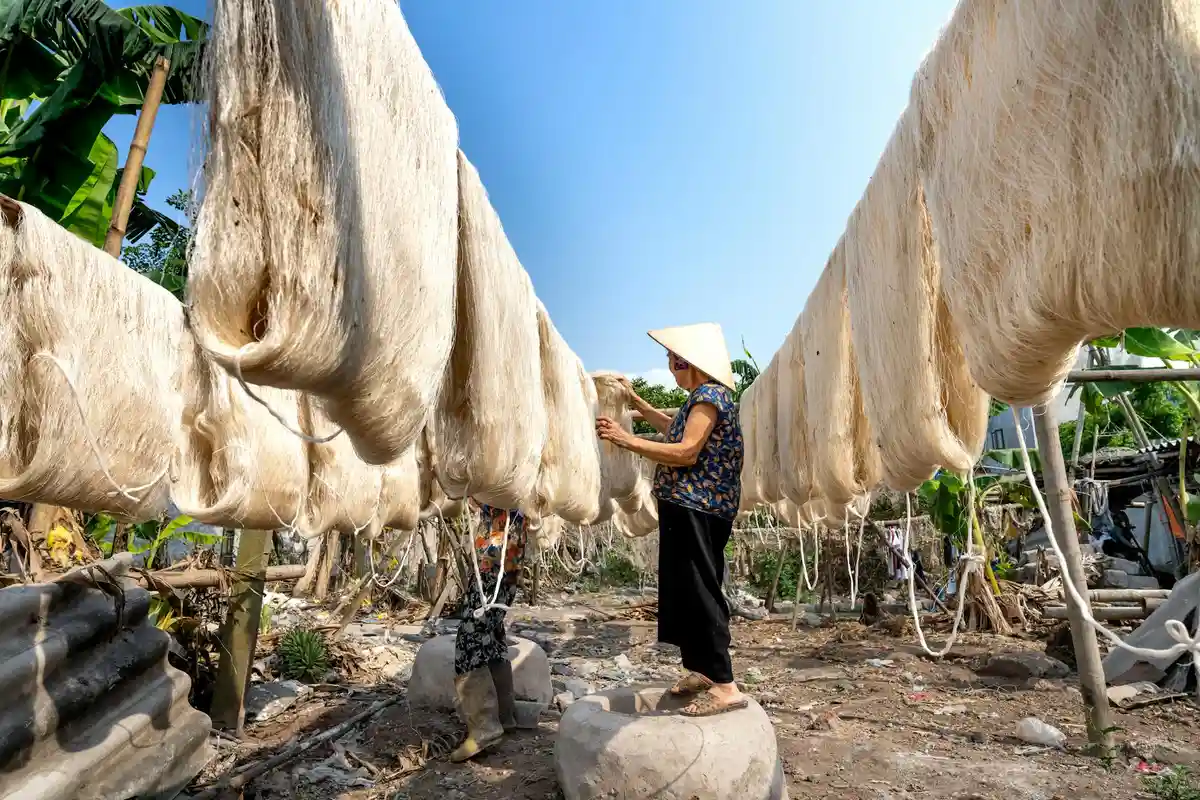
To get that long, luxurious thread, the harvested cocoons must be processed. In conventional production, fresh cocoons are boiled or steamed. This serves two critical purposes. First, the heat softens the sericin, the natural gum that holds the silk filament together. Second, it stops the metamorphosis of the pupa inside.
If the moth were allowed to emerge, it would secrete a fluid to break a hole in the cocoon, cutting the precious continuous filament into hundreds of short pieces. By preventing this, producers preserve the filament’s incredible length, which is the source of silk’s smoothness.
The next step is reeling. Workers find the loose end of the filament from several softened cocoons floating in hot water. These ends are gathered and threaded through a guide, unwinding as one. Because a single filament is too fine for practical use, threads from typically 4 to 8 cocoons are reeled together, their sericin gums acting as a temporary glue to form one cohesive strand known as raw silk.
This process leads to the core question many people have: are silkworms killed to make silk? For conventional mulberry silk, the answer is yes. The pupa is killed during the boiling or steaming of the cocoon.
Alternatives exist, like Ahimsa or “peace silk,” where the moth is allowed to emerge naturally. The broken cocoon pieces are then collected and spun like cotton or wool, resulting in a yarn with a nubbier, more matte texture. Choosing peace silk means accepting a different handfeel-a more rustic, textured fabric-as the trade-off for an animal-friendly process.
Finally, the raw silk undergoes degumming. It is washed in a hot, soapy solution to remove the sericin gum. I’ve done this in the lab; it’s transformative. That transformation also alters the raw silk sericin texture—from a gummy coating to a smooth, even finish. The degummed surface lets the fiber’s natural texture shine through. What comes out is softer, lighter, and reveals the fiber’s famous, luminous shine. The weight of the silk can reduce by up to 25% in this process.
Silk’s Fabric Properties: Why It Feels Like Luxury
The unique production method gives silk its legendary qualities. That single, mile-long filament means there are no fuzzy fiber ends poking out. This results in an incredibly sleek surface, what we call a smooth “hand,” and a reflective quality that creates its natural sheen. It’s why silk feels cool and slippery against the skin.
Don’t let the delicacy fool you. Gram for gram, a dry silk filament has a tensile strength comparable to a steel wire of the same diameter. But this strength has two major caveats. Silk is weak to abrasion-rubbing it constantly against a rough surface will wear it thin. More critically, silk loses up to 20% of its strength when wet. You must handle a wet silk garment with great care, never wringing or pulling it.
Silk is a hygroscopic fiber, meaning it absorbs moisture from your skin and releases it into the air. This wicking action makes it feel cool in summer. In winter, the same process helps trap a layer of warm air close to your body. It’s a natural temperature regulator, which is why silk long underwear and bedding are so effective. This smooth, breathable fabric can also support skin health by reducing friction and helping maintain comfortable moisture levels overnight. For sensitive or irritated skin, silk’s gentle surface is often preferred for sleepwear and bedding.
Silk has very poor elasticity. It will stretch slightly under tension, but it hardly springs back. This is why silk wrinkles easily and why a heavy, wet garment can distort or “grow” permanently if hung to dry. Always dry silk flat in its original shape.
Not all silk feels the same. Cultivated mulberry silk, from domesticated silkworms, gives you that uniform, smooth texture we covet. Tussah or wild silk, from moths that feed on oak leaves, is different. The moths emerge naturally, so the fibers are shorter. The resulting fabric has a nubby, irregular texture, a deeper gold or tan color, and a more earthy, dry hand. It’s beautiful, but in a wholly different way.
The Textile Expert’s Silk Care Protocol
Think of this as my lab notebook for silk. I’ve tested these methods on everything from raw dupioni to delicate charmeuse to keep that luminous sheen and fluid drape intact for years.
Step-by-Step: How to Wash Silk Safely
Hand-washing is the gold standard. It gives you complete control. Here is my exact method.
Fill a clean basin with lukewarm water. Never use hot water. Add a capful of a mild, pH-neutral detergent. A wool wash or a dedicated silk wash is perfect.
Submerge your silk item and swish it gently for a minute. Let it soak for no more than five minutes. Prolonged soaking can weaken the fibers and cause dyes to run.
For machine washing, I consider it a compromise with inherent risk. If you must, use a fine mesh bag. Select the “delicate” or “handwash” cycle with COLD water only. Set the spin cycle to the lowest possible speed.
Heat and agitation are silk’s true enemies. They shock the protein structure. This causes the fibers to contract suddenly and permanently. You get shrinkage, a loss of strength, and a dulled, matte surface.
Drying and Ironing for a Perfect Finish
Never, ever wring out silk. It distorts the weave and can cause creases that are impossible to remove. Instead, lay the garment flat on a clean, dry towel. Roll it up gently to press the water out. Be especially careful when handling silk as water spots can be stubborn and tricky to remove.
Unroll and reshape the silk on a fresh towel or a drying rack. Dry it flat away from direct heat and sunlight. Sunlight and radiators will fade colors and make the fibers brittle over time. This can be especially damaging for delicate vintage silk.
Ironing is easiest when the silk is still slightly damp. Use the lowest heat setting on your iron, often labeled “silk.” Always iron on the reverse side of the fabric. If you must iron the right side, use a clean cotton pressing cloth. This prevents water spots and that unwanted shiny, scorched look. These tips also apply when ironing silk, linen, and other delicate fabrics.
Storing Silk to Prevent Damage
Always store silk clean. Body oils and perfumes attract pests. I once opened a storage box to find a beloved scarf damaged. The culprit? Carpet beetle larvae.
People often ask, “do carpet beetles eat linen?” They prefer protein. Linen is cellulose, but silk and wool are protein feasts for them. Clean storage is non-negotiable.
Use breathable cotton garment bags for storage, never plastic. Plastic traps moisture and can lead to mildew. Fold items carefully to avoid sharp creases. For heirloom pieces, I use acid-free tissue paper.
Handling Pro-Tips: Dyeing, Repair, and Longevity
Silk takes dye beautifully, especially acid dyes. The dye molecules bond strongly to the protein fibers, creating vibrant, colorfast results. This process requires heat and a specific acidic environment, which permanently changes the fiber’s hand and can cause shrinkage.
If you dye silk at home, use separate pots you will never use for food. Wear gloves and a mask. You are performing a chemical modification, not just a color change.
Silk can be repaired. Fine silk thread and a sharp needle allow for nearly invisible darning. Pay close attention to areas weakened by friction and perspiration, like underarms and collars. These are often where failure starts. The same principles apply to repairing rayon silk fabrics. Use careful stitching and match the thread for durable, invisible mends.
Filament degradation is the slow breakdown of the silk proteins. The main causes are sunlight, perspiration, and chlorine bleach. This leads to brittleness and yellowing. I always rinse or wash silk soon after wearing it, especially on a warm day.
Enjoy your silk. Its beauty is functional. When you understand it comes from a biological fiber, caring for it becomes intuitive. That knowledge lets you preserve its elegance for a very long time.
Your Silk’s Journey, From Cocoon to Closet
Treat every silk garment according to its delicate protein structure, which means washing in cool water with a gentle, neutral pH detergent. This simple practice preserves the strength, luster, and hand that make silk unique, preventing the harsh damage that heat and alkalines can cause.
Caring for silk with knowledge is the final act of respect for the resource-intensive process that created it. I encourage you to apply this same curious, science-based approach to all the fabrics in your life, from the hard-wearing nature of cotton to the complex care of modern blends.
Industry References
- Bombyx mori – Wikipedia
- Silkworm moth | Lepidoptera, Bombyx mori, Cocooning | Britannica
- Silk moth, or silk worm | Research Starters | EBSCO Research
Written by Florian Ventura. Florian is a high fashion blog writer, fashion and fabric expert and a keen expert in fabric, clothing and materials. She has worked in large textile and fashion houses for over 10+ years, engineering and working with various fabric types and blends. She is an expert when it comes to questions on any and all kinds of fabrics like linen, cotton, silk, jute and many more. She has also traveled around the world studying traditional fabrics and aims to bring them into the modern fashion use.