
Can Plant Fibers Make Fashion Truly Circular?
You’re right to question if your linen dress or cotton jeans can ever be part of a real solution to textile waste. In my lab, I’ve watched plant fibers decompose and transform, proving their potential is more than just a trend.
This article will explain the science that lets fibers like cotton, hemp, and flax support a reuse model. We will cover their natural life cycle from soil to shirt and back, how proper washing and dyeing affects their recyclability, and the care that keeps them in the loop for years.
What Are the Main Plant Fibers in Your Closet?
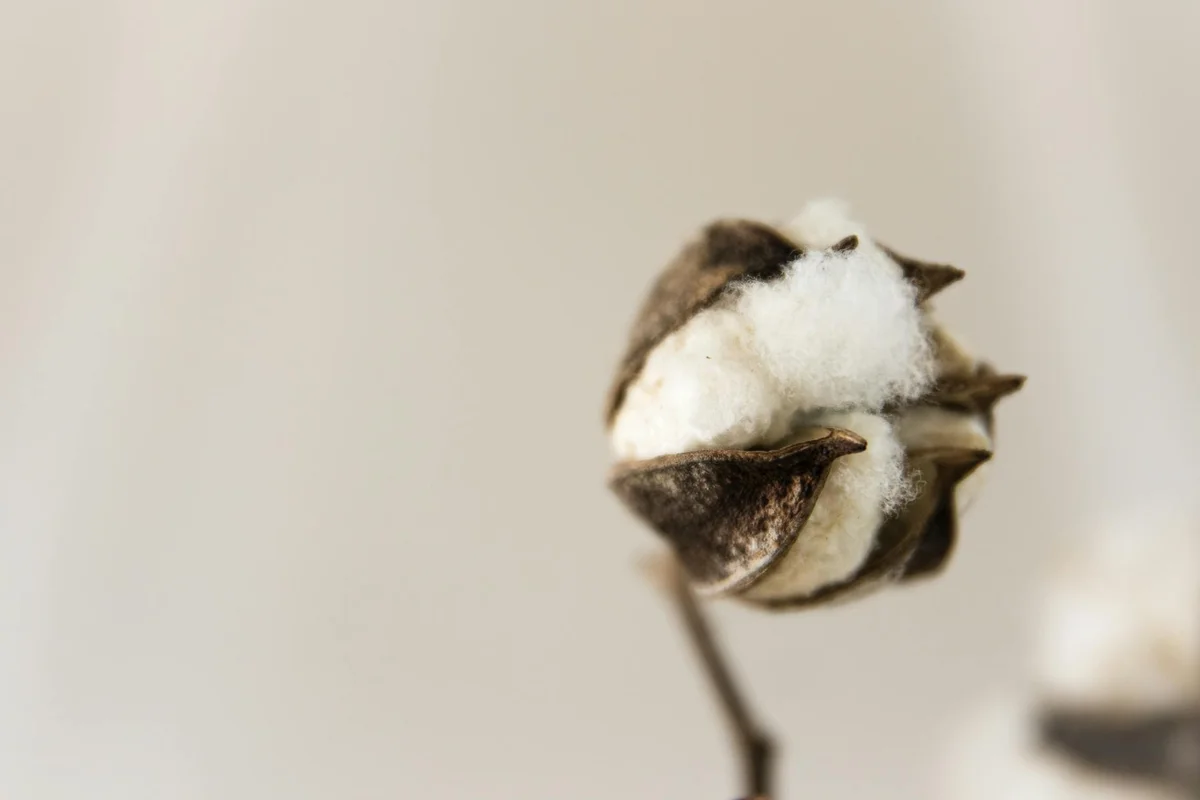
Plant fibers are nature’s building blocks for fabric. They are cellulose based materials we pull from the stems, leaves, or seeds of plants. This cellulose gives them a set of shared traits, like a natural affinity for water and a tendency to wrinkle, that define how we care for them.
You likely have these four major plant fibers hanging in your wardrobe right now.
- Cotton: The everyday champion, prized for its soft, familiar hand and breathability.
- Linen (from the flax plant): Known for its crisp, dry texture and distinctive slubbed, slightly irregular yarns.
- Hemp: Offers a rugged, textured feel and is incredibly durable, often softening beautifully with wear.
- Rayon/Viscose: A man made fiber from regenerated plant cellulose, famous for its sleek, slippery drape that mimics silk.
You might also find lesser known plant based fibers. Ramie is like a stiffer, more brittle linen. Bamboo viscose is another rayon type, often marketed for its softness. Lyocell, often sold as TENCEL™, is a more sustainably processed rayon with a uniquely smooth, fluid drape and incredible strength when wet. These are commonly used in blends, drapey garments, and activewear.
A common question I get is: what are the main types of plant fibers used in sustainable fashion? The core four are cotton, linen, hemp, and lyocell, chosen for their renewable origins and potential for biodegradability.
Plant vs. Synthetic: How Do They Behave and Why Does It Matter for Recycling?
The fundamental difference between plant and synthetic fibers dictates everything from laundry day to the garment’s end of life. Think of plant fibers like sponges and synthetics like plastic wrap.
Plant fibers absorb water, which is why cotton feels cool and why linen wrinkles as water disrupts the hydrogen bonds in its cellulose. Synthetics like polyester repel water. When burned safely in a lab, plant fibers leave behind a fine, soft ash. Synthetics melt, shrink from the flame, and form hard, plastic beads.
This behavior is critical for recycling. This is a key hurdle in building a circular economy for textiles, where recycling synthetic fabrics matters. Mechanical recycling, where fabrics are shredded back to fiber, works poorly with mixed materials. A melted polyester bead can ruin a batch of recycled cotton pulp. Emphasizing compatibility and design for recycling advances the circular economy for synthetic fabrics.
That cellulose structure also dictates care. Cotton shrinks primarily through heat and agitation, often by 3-5% in the first hot wash. Linen can relax and shrink minimally, but its wrinkles are legendary. Hemp is similar to linen but more dimensionally stable.
Dyeing is another key difference. Plant fibers typically use reactive dyes, which require salt and alkali to form a chemical bond with the cellulose. This bond is very strong during washing, which is good for colorfastness, but makes stripping color incredibly difficult in textile-to-textile recycling processes. Synthetic fibers use disperse dyes that essentially melt into the plastic fiber.
When considering the environmental benefits of using plant fibers over synthetic alternatives, three points stand out: they shed biodegradable microfibers (not plastic), they will decompose in soil under the right conditions, and they come from renewable, rather than petroleum based, sources.
Handling Pro Tip: To test if a white fabric is pure cotton or a blend, do a burn test in a safe area. Snip a small swatch, hold it with tweezers over a metal bowl or sink, and ignite it. Pure cotton leaves fine, gray ash that crumbles. A cotton polyester blend will melt, bead, and leave a hard, dark residue, often with a chemical smell.
How is a Cotton T-Shirt Actually Recycled?
When you drop an old cotton tee into a recycling bin, it usually travels one of two roads. I’ve followed garments through both systems, and the journey from rag to new resource is full of surprising turns.
Mechanical Recycling: The Grind and Spin
This is the older, more common method. Think of a massive, industrial fabric shredder. The garments are sorted by color, stripped of zippers and buttons, and then fed into machines that literally tear them apart. These machines pull and shred the woven or knitted cloth back into a fluffy mass of individual fibers, called “shoddy” or “reclaimed fiber.”
But here’s the catch every textile scientist knows: mechanical shredding doesn’t just separate fibers, it brutally shortens them. A pristine cotton fiber might be over an inch long. After being ripped from a yarn and shredded, it’s often half that length or less. Shorter fibers make weaker, hairier yarn. To spin it, recyclers usually have to blend it with a high percentage of virgin fiber. The result is often a lower-quality fabric best suited for things like insulation, stuffing, or industrial wipes.
Color is another huge hurdle. In the lab, we test dye fastness. Those dark blues and blacks you love? Their dye molecules are locked in tight. Mechanical recycling cannot remove dye, so the output fiber’s color is dictated by whatever went into the shredder, often leading to a muddy grey or brown. This limits the recycler’s market and is why many programs ask for white or light-colored items separately.
Chemical Recycling: The Molecular Reset
This newer approach is more like a science experiment. Instead of mechanically shredding, the fabric is dissolved. For plant fibers like cotton, this means breaking the cellulose down into a liquid pulp or dissolving it with a solvent. That purified cellulose solution can then be extruded through fine spinnerets to make brand new, long filament fibers.
You might recognize one version of this process: it’s how lyocell (like Tencel™) is made from wood pulp. Chemical recycling aims to do the same thing with post-consumer cotton. The major advantage is that this process can often strip away dyes and contaminants, resulting in a pure, bright fiber that performs like new. It can also handle certain blends by dissolving only one component. But it’s energy-intensive, requires sophisticated chemical plants, and is still scaling up from pilot projects.
The Blended Fabric Problem
Let’s talk about that 60% cotton / 40% polyester tee. It’s soft, durable, and ubiquitous. For a recycling plant, it’s a nightmare. Mechanically, those fibers are now inseparable-you get a pile of chopped cotton mixed with chopped plastic. This blended “downcycled” material has very limited use. Chemically, it’s a complex puzzle. You’d need to dissolve one polymer without harming the other, then separate and reconstitute both. It’s technically possible in a lab, but economically and logistically daunting at scale. Blends that mix cotton with wool or with polyester are common in garments, balancing comfort and warmth but complicating end-of-life recycling. These cotton-wool-polyester blends illustrate why true circularity remains challenging. For true circularity, the simplest fabrics-100% cotton, 100% wool, 100% polyester-are the easiest to loop back into the system.
FAQs on Recycling Challenges & Innovations
What are the current challenges? Beyond blends and dyes, the big issues are scale, cost, and collection. We lack the infrastructure to collect, sort, and process the volume of textiles we discard. Mechanical recycling degrades quality, and chemical recycling is still expensive. Consistent fiber supply from mixed post-consumer waste is also a major hurdle for manufacturers.
What innovative technologies are being developed? I’m excited by enzymatic recycling, which uses engineered proteins to selectively break down cotton cellulose into sugars for fermentation. Other companies are refining solvent systems to handle cotton-polyester blends more efficiently. There’s also a big push for “design for disassembly,” creating clothes with mono-material compositions and easy-to-remove trims from the start.
Does Biodegradability Help or Hinder Textile Waste?
This is a point I see misunderstood all the time. Just because a fabric can biodegrade, like biodegradable nylon, doesn’t mean it’s a free pass to throw it away.
Biodegradability is a safe, clean end-of-life option, not a substitute for reuse or recycling. In a circular model, we want to keep a garment in use for as long as possible-mending, reselling, remaking. Recycling is the next loop. Letting a usable cotton shirt decompose is the last resort, the final step after all other value is extracted. Biodegradability timelines vary by fiber—linen, cotton, and hemp each break down at different rates under natural conditions. Understanding these timelines helps guide end-of-life decisions beyond reuse and recycling.
Now, let’s say a pure cotton rag reaches its very end. If it goes to a well-managed industrial composting facility with heat, moisture, and oxygen, it will break down into carbon dioxide, water, and biomass within months. This is a good outcome. But if that same rag ends up in a tightly packed landfill buried without oxygen, it will decompose anaerobically and produce methane, a potent greenhouse gas. So, the environment of disposal is everything. In the case of textiles, landfill conditions determine the pace and byproducts of their decomposition. Understanding fabric decomposition in landfills helps inform better waste management choices.
There’s another twist. That “biodegradable” plant fiber shirt might not actually biodegrade. How? Chemical finishes. The water-repellent spray on your rain jacket, the formaldehyde-based resin that keeps chinos crisp, the durable press treatment on a linen blend-these coatings are often plastics or other synthetic polymers. Many common functional finishes can render a natural fabric non-biodegradable by encapsulating the fibers in a synthetic shell. In the lab, we test for this, and the results can be surprising.
FAQ: Biodegradability and Waste Management
How does the biodegradability of plant fibers impact textile waste management? It creates both an opportunity and a complication. The opportunity is a guaranteed, non-toxic end point that doesn’t create microplastic pollution. The complication is that it requires a separate, specific waste stream-industrial composting-to realize that benefit. Tossing biodegradable textiles into a standard mixed-waste bin likely sends them to a methane-producing landfill. Effective management needs clear consumer labeling (“home compostable” vs. “industrial compost only”) and accessible collection systems, which are still rare for textiles. Specifically for cotton fabrics, composting can be a sustainable end-of-life option when the materials are clearly labeled and routed to the appropriate composting stream. This means choosing cotton products that are certified home- or industrial-compostable and ensuring they reach the correct facility to compost cotton fabrics appropriately.
What Can You Do to Support Plant Fiber Circularity?
As someone who’s pulled apart countless shredded textiles in the lab, I can tell you our daily choices have a direct impact. Circularity isn’t just an industry concept. It starts with how we choose, use, and let go of our clothes.
Choose Simpler, Better Quality Items
When you shop, think like a future recycler. A 100% cotton t-shirt is a clear target for mechanical recycling. Its fibers can be shredded, spun into new yarns, and given another life. A shirt made of 60% cotton and 40% polyester is a puzzle. Those synthetic fibers act like plastic cling wrap, tangling and contaminating the cotton pulp during recycling. Opting for high-quality, single-fiber plant items makes the entire recycling process more efficient and successful. Look for labels like “recycled cotton” or “closed-loop” viscose, which signal a product is already part of this cycle. Always check the fiber content tag first.
Care for Them to Last a Lifetime
Extended garment life is the most powerful form of circularity. The longer something stays with you, the less waste is created. Here’s how to treat common plant fibers:
- Cotton: Wash in cool or cold water (around 30°C/86°F). This drastically reduces shrinkage, which can be 5-10% in hot water for untreated cotton. It also locks dyes in. Turn items inside out to protect the surface. Tumble dry on low, or better yet, line dry to prevent heat stress and fading.
- Linen: This fiber gets stronger when wet, but constant agitation can wear it down. Use a gentle cycle. Don’t wring it out violently-roll it in a towel to press out moisture. Iron while damp for the crispest finish.
- Preserving Color: For dark or vibrant plant-dyed items, use a detergent formulated for dark colors. These are typically lower in pH, which helps stabilize dye molecules and prevent them from migrating in the wash water.
Treat care instructions like a recipe for longevity; following them keeps the fabric’s structure and color intact for years.
Learn the Art of Mending
A small hole isn’t the end. It’s an opportunity. Basic mending keeps a garment out of the waste stream entirely. For plant fibers like cotton and linen:
- Darning a Sock: Use a darning needle and cotton thread. Weave over the hole in one direction, then weave back in the opposite direction, creating a new patch of fabric. It’s meditative and practical.
- Patching Knees: Choose a patch fabric of similar weight and fiber content. Turn the garment inside out, place the patch behind the hole, and use a tight zig-zag stitch around the edges. For a visible mend, use a contrasting fabric on the outside.
These skills transform you from a consumer into a custodian of your wardrobe.
Dispose With Intent, Not Hope
When a garment is truly finished, don’t just drop it in a random bin. Many store take-back programs are “downcycling” schemes, where low-grade material may end as insulation or landfill. True textile-to-textile recycling programs are rarer and require you to seek them out. Look for programs that specify their partnerships with mechanical or chemical recyclers. Some brands have clear, closed-loop partnerships. Research before you donate. If in doubt, a natural 100% cotton or linen item in a clothing bank is still a better bet than a synthetic blend, as it will biodegrade if nothing else.
Understand the Labels: GOTS, OCS, FSC
Certifications are your shorthand for ethical and environmental standards. Here’s what they mean for plant fibers:
- GOTS (Global Organic Textile Standard): This is the gold standard. It certifies organic fiber content from harvesting to labeling. It prohibits toxic chemicals, mandates strict wastewater treatment, and ensures safe working conditions and living wages. When you see GOTS, it covers both ecology and social welfare.
- OCS (Organic Content Standard): This label tracks the presence of certified organic material through the supply chain. It’s a content claim, but doesn’t address chemical use or social conditions like GOTS does.
- FSC (Forest Stewardship Council): Crucial for wood-based fibers like viscose, lyocell, and modal. FSC certification ensures the wood pulp comes from responsibly managed forests that protect biodiversity and workers’ rights.
These certifications move the industry away from exploitative and polluting practices, making the “circular” system fair for people and the planet.
Your Questions, Answered
How can consumers genuinely support the shift to circular fashion?
Your power is in the trilogy of Buy, Care, and Return. Buy fewer, higher-quality items made of simple, natural materials. Care for them meticulously using the methods above to extend their life by years. Finally, return worn-out 100% plant fiber items to verified textile-to-textile recycling programs. This creates a clear market signal and supply of clean material for recyclers.
What role do certifications and standards play for the average shopper?
They do the detective work for you. In a complex global supply chain, you can’t visit every cotton farm or viscose mill. Certifications like GOTS and FSC are verified audits. They assure you that the environmental harm was minimized and the people who made your clothes were treated fairly. Choosing certified items supports the farms and factories doing things right, encouraging others to follow. It’s how you vote for a better system with your wallet.
Weaving Fabric Care Into a Circular Habit
Start treating your plant-fiber clothes with the same gentle respect you’d give silk or wool. Washing cotton and linen in cold water on a gentle cycle is the single best thing you can do to preserve their strength and color, making them last for more cycles of wear and repair.
Think of caring for your fabrics-whether it’s knowing why polyester holds dye differently than cotton or how wool felts-as a fundamental skill for a sustainable wardrobe. Your continued curiosity about how fibers work is what turns the ideal of circular fashion into a practical, daily reality.
Further Reading & Sources
- Regenerative Fibres in Fashion: How Hemp, Flax, and Nettle Are Transforming Sustainable Textiles – Fibre2Fashion
- Circular Fibres Initiative Impacts Sustainability in Fashion
- How Do Clothes Come From Plants? A Complete Guide to Plant Fibers and Fabric – Yu-City Industrial Co., LTD.
Florian is a high fashion blog writer, fashion and fabric expert and a keen expert in fabric, clothing and materials. She has worked in large textile and fashion houses for over 10+ years, engineering and working with various fabric types and blends. She is an expert when it comes to questions on any and all kinds of fabrics like linen, cotton, silk, jute and many more. She has also traveled around the world studying traditional fabrics and aims to bring them into the modern fashion use.