Poplin vs. Broadcloth: Which Shirt Weave Should You Buy?
If you’ve ever felt two dress shirts side-by-side and wondered why one feels crisper while the other feels softer, you’re noticing the weave. I can tell you from years in the textile lab that this small detail makes a big difference in how your shirt wears, washes, and lasts.
This guide will explain the defining weave structures, how they affect breathability and hand feel, their specific shrinkage behaviors, safe washing and dyeing methods, and tailored care instructions for longevity.
Executive Summary: Your Quick-Reference Guide
Let’s get straight to the facts you need to choose the right fabric.
| Property | Poplin | Broadcloth |
|---|---|---|
| Breathability | High. The slightly open, crisp weave allows excellent air flow. | Moderate to High. The tight weave can slightly reduce air flow compared to poplin, but 100% cotton versions are still very breathable. |
| Shrinkage Rate (100% Cotton) | 3-5% is typical after the first warm wash and dry. Pre-washing is your best friend here. | 2-4%. The tight weave can slightly restrict fiber movement, sometimes leading to marginally less shrinkage than a comparable cotton poplin. |
| Heat Tolerance (for ironing) | High. Use a hot iron with steam. The crisp weave holds a sharp crease beautifully. | High. Also tolerates a hot iron well. Its smooth surface makes ironing fast. |
| Stretch Factor | Very Low. A true plain weave has almost no inherent stretch across or along the fabric. | Very Low. Same as poplin. Any “give” in a shirt usually comes from cut or blended fibers like lycra, not the weave itself. |
The simplest way to tell them apart is by feel: poplin has a crisp, dry hand with faint ridges, while broadcloth feels smoother, denser, and often softer against the skin. Remember, the fiber content-whether it’s 100% cotton, a cotton-polyester blend, or something else-dictates every care step you’ll take, from washing temperature to dyeing methods.
Best Uses for Each Weave
- Poplin: My top pick for formal office wear, structured blouses, dress shirts, and summer suits where crispness and durability are key. It also handles embroidery and detailed top-stitching superbly.
- Broadcloth: The champion for soft everyday button-downs, comfortable blouses, lightweight jackets, and quilting. Its opacity and smooth finish make it a favorite for craft projects where a flat, even surface is needed.
Weave Mechanics: How Structure Defines Feel
Both poplin and broadcloth start with the same basic blueprint: the plain weave. Picture the threads on a loom. The plain weave simply passes one weft thread over and under one warp thread, like a perfect, tight checkerboard. This structure is strong, simple, and forms the foundation for countless fabrics. But from this same starting point, they diverge dramatically in their material and weaving techniques.
Poplin’s signature is a clever trick with yarn size, creating its characteristic fine, tactile ridges known as a “cross-rib.” In the lab, we see one set of threads (usually the warp) is a finer, tighter yarn, while the crossing threads are a thicker, rounder yarn. This size difference makes the thicker yarns sit up slightly, forming those consistent, subtle ribs you can see and feel. It’s this texture that gives poplin its crisp “body” and distinct rustle. Think of the feel of high-quality, lightly textured stationery paper. These yarn-size differences are a central thread in the broader topic of fabric textile yarn differences. Different yarn counts, twists, and fiber types across fabrics shift texture, hand, and performance in subtle, noticeable ways.
Modern shirt broadcloth takes a different path. It uses yarns of the same size but packs them together incredibly tightly in that plain weave pattern. The goal is maximum thread count per square inch, resulting in a fabric that is remarkably smooth, flat, and opaque for its weight. The surface has almost no texture, just a dense, uniform feel. A good analogy is a smooth, heavy sheet of printer paper-no ridges, just solid, even surface.
Here’s a point that causes endless confusion: historical broadcloth was a heavyweight, felted wool. The modern “broadcloth” you buy for shirts is not that. Today’s broadcloth is almost always a tightly woven plain weave in cotton, a cotton-polyester blend, or other fibers, prized for its soft hand and smoothness, not its weight. When you see “broadcloth” on a shirt tag today, think tight weave, not heavy wool.
The Tactile Comparison: Weight, Drape, and Wear
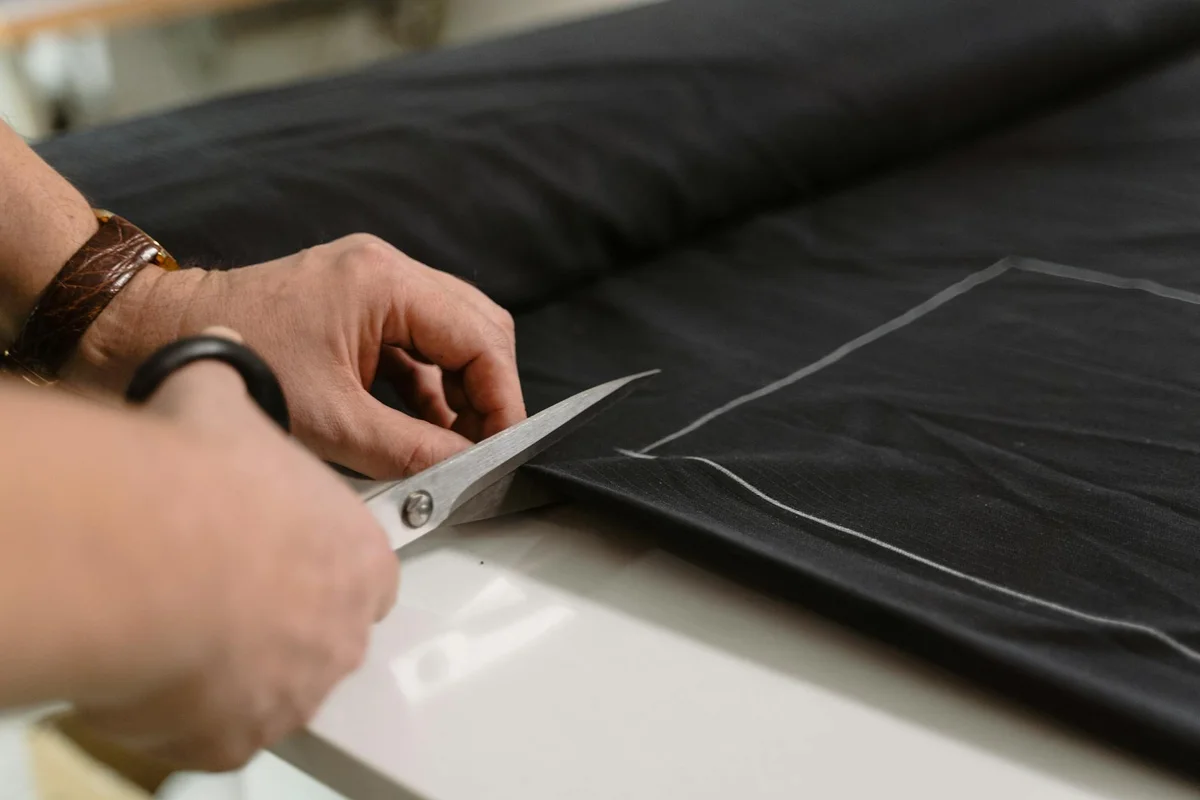
Think of weight as the fabric’s personality. Broadcloth is often the lighter option, typically falling between 100 and 130 grams per square meter (gsm). Poplin usually feels a bit more substantial, from 110 gsm up to 140 gsm or more. That slight difference changes everything.
A lighter broadcloth can be beautifully sheer and is a classic for warm-weather blouses. A heavier poplin has more opacity and body, making it a year-round choice for structured shirts. The weight tells you what season the fabric was born for.
Drape is how the fabric falls from your shoulders. Poplin, with its fine rib, has a crisp hand. It holds a sharp crease and stands away from the body just a little, giving you that clean, polished silhouette. Broadcloth feels softer from the first touch. It drapes with a fluid, gentle flow that rests smoothly against your skin.
Poplin offers architecture; broadcloth offers softness. Your preference here decides the shirt’s character.
Many assume a tighter weave means less breathability. That’s not the full story. Breathability depends more on the fiber and the thread count than the weave pattern itself. A high-thread-count cotton broadcloth, woven from very fine yarns packed tightly together, can trap more air and feel warmer than a standard poplin made with good, mid-weight yarns. I always check the fiber label first. A 100% cotton poplin will breathe better than a polyester-rich broadcloth every time.
Over time, you’ll see a durability split. Poplin’s ribbed texture is inherently more resistant to abrasion. The little ridges absorb friction. The flawlessly smooth surface of a fine broadcloth, while luxurious, can be more prone to developing a subtle fuzz or even pilling under constant rubbing, like from a bag strap or desk edge. For a shirt that will face daily wear, poplin’s structure often wins on longevity.
Where does oxford cloth fit in? It’s the casual cousin in this family. Its basketweave is looser and heavier, giving it a more textured, rugged feel. Oxford is less formal than a sleek broadcloth or a crisp poplin, but it’s incredibly forgiving and comfortable right out of the wash.
The Care Protocol: Washing, Drying, and Ironing Based on Fiber
Your care routine must follow the fiber, not the weave name on the tag. A polyester poplin and a cotton broadcloth need completely different handling.
Step-by-Step Pre-Wash Check
First, read the label. If it’s missing or says “unknown,” a burn test is your best friend. Snip a tiny thread from a hidden seam.
- 100% Cotton: Burns quickly with a yellow flame, smells like burning paper, and leaves a fine, gray ash.
- Polyester/Cotton Blend: Burns with a sputtering, smoky flame, smells acrid (like chemicals), and leaves a hard, dark bead.
Identifying the fiber is the single most important step for preventing laundry disasters.
Step-by-Step Washing
For 100% Cotton Poplin or Broadcloth:
- Use cold water, ideally below 30°C (86°F). Heat and agitation are cotton’s enemies.
- Choose a gentle, neutral pH detergent. Avoid heavy enzymatic cleaners for dark or bright colors.
- Wash on a gentle or delicate cycle to reduce mechanical action.
For Polyester Blends:
- You can use warmer water, around 40°C (104°F), to better remove body oils and stains.
- A standard detergent is fine. The polyester fibers are much less fragile.
Why does cotton shrink? The fibers swell when wet, and the agitation of the wash cycle pushes and compacts the yarns closer together in the weave, especially for fabrics like cotton and linen. It’s like a sponge that gets squeezed and never fully springs back to its original size.
My universal warning: skip the fabric softener. It leaves a waxy coating on fibers that clogs the natural pores in cotton, destroying the breathability you paid for. For softness, add a quarter cup of white vinegar to the rinse cycle instead.
Step-by-Step Drying & Ironing
Drying is where you lock in shrinkage or avoid it.
- Air-drying flat or on a line is always safest for shape and fiber life.
- If you must use a dryer, choose the lowest heat setting (Tumble Dry Low) and remove the shirt while it is still slightly damp.
All woven cotton shrinks; the goal is to control how much. Expect 2-5% shrinkage in length and width after the first wash with proper cold care, which is usually accounted for in pattern drafting.
Ironing is easiest when the fabric is just barely damp. For 100% cotton, use a hot iron (cotton/Linen setting). For polyester or blends, use a medium to low heat (Synthetic setting) to avoid melting or glazing the fibers. The crispness of poplin comes alive with a good steam. For broadcloth, a slightly lower heat can preserve its soft hand.
Dyeing and Color: What You Can Change at Home
Both poplin and broadcloth take dye beautifully because of their tight, uniform weave. That same density can be a hurdle, though. If the fabric isn’t prepared correctly, dye might only coat the surface and wash out, affecting the permanence of the dye.
The dye you need depends entirely on the fiber. You cannot use the same dye for a 100% cotton shirt, a viscose blend, or a 65% polyester, 35% cotton blend.
For 100% cotton broadcloth or poplin, use fiber-reactive dyes (like Procion MX). These dyes form a chemical bond with the cotton fiber. The process needs salt to push the dye onto the fabric and soda ash to trigger the permanent bond. I get vibrant, wash-fast colors this way every time, unlike when you dye synthetic or wool fabrics which can be more challenging.
For shirts containing polyester, you need disperse dyes. These dyes require very high heat-near boiling-to work. The dye essentially melts into the polyester fiber. You cannot dye polyester with cotton dyes, or vice-versa.
Before you even think about dye, your first step is always a scouring wash. New fabrics, and even some pre-washed ones, have invisible finishes like starch or softeners that block dye. Wash the shirt in hot water with a dedicated scouring agent like Synthrapol or a heavy dose of a dye-friendly detergent. This cleans the fibers so dye can penetrate evenly, especially when you dye delicate fabrics.
Set up safely. Use stainless steel or enamel pots you will never use for food again. Wear gloves and a mask when handling dye powder. Protect your workspace with plastic.
One final note on appearance. When you dye a ribbed fabric like poplin, the tiny ridges can catch the dye slightly differently, creating a subtle, beautiful tone-on-tone effect. Broadcloth’s perfectly flat surface gives a more solid, uniform color field. Neither is wrong-it’s just the character of the weave showing through.
Troubleshooting: Shrinkage, Wrinkles, and Wear
Shrinkage worries everyone. Here’s how to measure it accurately before you cut into fabric or after you buy a shirt. For ongoing tips, see our fabric shrinkage care guide.
- Lay the item flat and smooth.
- Use a ruler or tape measure to mark and note the width and length in several spots.
- Wash and dry it using the method you plan to use forever (e.g., warm wash, medium tumble dry).
- Measure the same spots again while the item is still slightly damp.
Calculate the percentage. If a 20-inch width becomes 19 inches after washing, that’s a 1-inch loss. (1 ÷ 20) x 100 = 5% shrinkage. For 100% cotton, expect 3-5% shrinkage; a cotton-polyester blend might shrink only 1-2%.
Can you un-shrink a cotton shirt? Sometimes, a little. Soak it in lukewarm water with a generous amount of hair conditioner for 15 minutes. The conditioner relaxes the fibers. Gently squeeze out water (don’t rinse) and start stretching the fabric back to shape on a flat surface. Pin it in place and let it air dry. This won’t fully reverse severe shrinkage, but it can recover a half-size with patience.
Why does my broadcloth shirt look wrinkled straight from the dryer? Its very smooth, fine surface acts like a blank canvas for creases. Poplin’s textured rib hides minor wrinkles a bit better. Blends are your friend here; even 20% polyester significantly improves wrinkle resistance by adding a synthetic memory that cotton lacks, especially when compared to wrinkle-free and wrinkle-resistant fabrics.
You might find small pills on a well-worn broadcloth shirt, often under the arms or where a bag strap rubs. This is from abrasion loosening short surface fibers that then tangle. Use a fabric shaver. Hold the fabric taut and glide the shaver lightly in one direction. Never press down hard or go over the same spot repeatedly, as you can cut the base fabric.
So, which is more durable? It’s the combination of weave and fiber. A tightly woven cotton poplin is very strong. A broadcloth of the same quality is equally strong. But if we’re talking about maximum everyday resilience, a cotton-polyester poplin is the standout. You get the strength of the tight one-over-one-under weave combined with the abrasion resistance and recovery of polyester. For a work shirt you live in, that’s the combo I recommend.
Making Your Choice in the Fabric Aisle
The biggest takeaway is this: always check the care label before you buy. For both poplin and broadcloth, look for garments labeled ‘preshrunk’ or ‘sanforized’ to manage your expectations for cotton’s inevitable shrinkage. When washing, a cold, gentle cycle and line drying will preserve the crisp hand and vibrant color of your shirt for years.
Treating your clothes with care is a simple act of sustainability. Rotate your garments, mend a loose button, and learn the specific needs of each fiber in your wardrobe, from the protein structure of silk to the synthetic resilience of polyester.
Further Reading & Sources
- Why Poplin Is the Best and Worst Shirt Fabric [And My Favorite] – Menswear Musings
- What Is Poplin Fabric? A Complete Guide to This Versatile Textile
- Shirt Fabric Guide
- Dress Shirt Fabrics, Shirting Fabrics – Proper Cloth Reference
- Difference between Poplin and Broadcloth | Fabrics.net Fabrics.net
- A Rant about Cheap Poplin
Florian Ventura
Florian is a high fashion blog writer, fashion and fabric expert and a keen expert in fabric, clothing and materials. She has worked in large textile and fashion houses for over 10+ years, engineering and working with various fabric types and blends. She is an expert when it comes to questions on any and all kinds of fabrics like linen, cotton, silk, jute and many more. She has also traveled around the world studying traditional fabrics and aims to bring them into the modern fashion use.