
Is Linen or Cotton Better for Bedding and Hot Sleepers?
Waking up drenched in sweat? Your bedding fabric might be the culprit, and I’ve tested both in the lab to give you a clear, science-backed answer.
We will cover the cooling properties of each fiber, how they handle shrinkage and washing, and simple care steps to keep your sheets feeling fresh.
Executive Summary: The Quick Bedside Diagnosis
If you called me from the laundry room with this question, here’s what I’d say right now. For pure cooling power and airflow, linen is the technical champion. For immediate softness and easier care, cotton is the accessible favorite. Let’s break down why.
Linen comes from the flax plant. Its fibers have a hollow core and long, smooth structure. This lets air pass through easily. Linen’s breathability score is a 9 out of 10 because it doesn’t trap heat against your skin. It also wicks moisture away quickly, pulling sweat from your body to the fabric surface where it evaporates. Think of it like a highly efficient, breathable straw.
Cotton, from the cotton boll, is more about absorption. Its fibers are fluffy and love to hold onto water. Cotton is incredibly absorbent, which can feel cooling initially as it pulls moisture from your skin. But it dries slower than linen. On a very humid night, cotton sheets can sometimes feel damp.
Texture tells another story. New linen feels crisp and textured. It has a dry, cool hand. With every wash, it gets softer and develops a beautiful, relaxed drape. New cotton, especially high-thread-count varieties, is soft from the first night. It feels familiar and comforting right away.
Care is straightforward for both, but know this about shrinkage. Linen typically shrinks 3-5% on its first hot wash. Cotton can shrink 5-7%. I always pre-wash fabric before sewing, and I recommend you wash new bedding once before use to account for this.
A quality linen-cotton blend can be a fantastic middle ground. You get some of linen’s breathability with cotton’s softness, often at a friendlier price point.
Material Data Table: Linen vs. Cotton at a Glance
| Metric | Linen | Cotton |
|---|---|---|
| Fiber Origin | Flax plant stem | Cotton boll (seed hair) |
| Breathability | 9 / 10 | 7 / 10 |
| Moisture Handling | High wicking (moves moisture fast) | Good absorption (holds moisture) |
| Shrinkage Rate (First Wash) | 3-5% | 5-7% |
| Heat Tolerance (Ironing) | High – use a hot, steamy iron | Medium-High – use cotton setting |
| Hand Feel | Crisp & textured initially, softens beautifully with age | Soft & familiar from day one |
The Fiber Science: Why Linen and Cotton Behave Differently
To understand why these fabrics feel so distinct on your bed, you need to look at their fibers under a microscope. I’ve spent hours examining these differences in the lab, and the pictures tell a clear story.
Linen comes from the flax plant. Its fibers are long, strong, and have a unique hollow, polygonal shape. Think of a bundle of tiny drinking straws. This structure creates natural micro-channels within the fabric itself. Those hollow channels are linen’s superpower, passively pulling moisture away from your skin and allowing air to circulate freely.
Cotton fibers are different. They are much shorter, and each one is a flattened, twisted ribbon. When spun into yarn, these twisted fibers cling together, creating a denser, more uniform structure. This twisted, spongy nature is what gives high-quality cotton its famously soft, plush hand feel, which many people associate with cozy comfort. These traits define cotton fabric characteristics and materials, influencing how it performs in clothing and home textiles. Understanding them helps explain cotton’s versatility in various applications.
These inherent properties are amplified by the weave. Most bedding uses a plain or percale weave for both fibers. With linen, the open, slightly slubbed yarns in a plain weave enhance its breezy, textured character. A crisp percale weave in cotton maximizes its smooth, cool feel. The weave directs the fiber’s natural tendencies.
How Fiber Structure Affects Shrinkage and Care
Those foundational fiber shapes also dictate how your sheets will change with washing. This is where a lot of the “surprise” shrinkage happens, and knowing what to expect saves frustration.
Linen, with its long and stable fibers, has less room to contract. The initial wash will relax the fabric, but significant shrinkage is uncommon. I typically see linen settle at around 3-5% after the first warm wash.
Cotton is a different story. Those twisted fibers relax and release tension when they get wet and warm. The yarns contract, and the weave tightens. It’s a normal part of the process. You can expect a well-made cotton percale sheet to shrink between 5-8% on the first wash, so always pre-wash cotton sheets before finalizing your bed’s fitted sheet fit.
My practical care tip stems directly from this: pre-wash your new cotton sheets on a warm cycle (40°C/104°F) expecting a noticeable fit change. With linen, wash it warm once to soften it and remove any mill residue, but the change in dimensions will be subtler. For ongoing care, both fibers thrive on warm (not hot) washes and medium-heat drying or, better yet, line drying to preserve fiber strength and minimize wear.
Breathability and Temperature Control for Hot Sleepers
When we say a fabric is breathable, we’re talking about two specific scientific properties working together. The first is air permeability, or how easily air passes through the fabric’s structure. The second is moisture vapor transmission, which is the fabric’s ability to move the invisible water vapor from your sweat away from your skin and into the air—essential aspects of fabric breathability and moisture management.
Think of linen fibers under a microscope. They are long, hollow, and rigid. Linen is like a loosely stacked bundle of drinking straws, creating wide, permanent channels for air to flow through effortlessly. Cotton fibers, in contrast, are soft, twisted, and spongy. A cotton weave is more like a bundle of spongy ropes; it can hold air, but the pathways aren’t as direct or open.
So, are linen sheets better than cotton for heat? For maximum, consistent airflow, the answer is yes. That open structure of linen acts like a built-in climate system, constantly exchanging the warm, humid air around your body with cooler room air. This makes a high-quality linen bedding set a superior choice for combating night sweats and providing a cooler sleep surface.
The Moisture Question: Wicking vs. Absorption
This is where the real difference for hot sleepers becomes tangible. Both fibers handle moisture, but they do it in opposing ways with very different results on your skin.
Cotton is an absorber. It eagerly soaks moisture into the core of its fibers through a process called imbibition. While this is great for a towel, it can be a drawback in bedding. The cotton fibers swell with moisture, which can make the fabric feel damp, heavier, and cling to your skin, disrupting that cooling evaporation.
Linen is a wicker. Its smooth, crystalline fiber structure doesn’t readily absorb liquid internally. Instead, it pulls moisture along its surface and swiftly disperses it across a wider area where it can evaporate rapidly. This is the principle of capillary action, the same way a paper towel draws water.
For a sleeper who perspires, linen’s wicking provides a drier surface feel. The moisture is moved away and vanished quickly, which creates a genuine cooling sensation. I always recommend hot sleepers feel both fabrics: dampen a corner of a linen napkin and a cotton washcloth. The linen will feel cool and dry to the touch faster, while the cotton will retain a damp, cool mass.
A practical note on care: this performance is intrinsic to the fiber. You can’t wash “wicking” into a standard cotton sheet. Some cotton bedding is treated with chemical finishes to mimic this, but these often wash out over time. True linen’s wicking ability lasts the lifetime of the fabric.
The Feel Factor: Softness, Texture, and Break-In
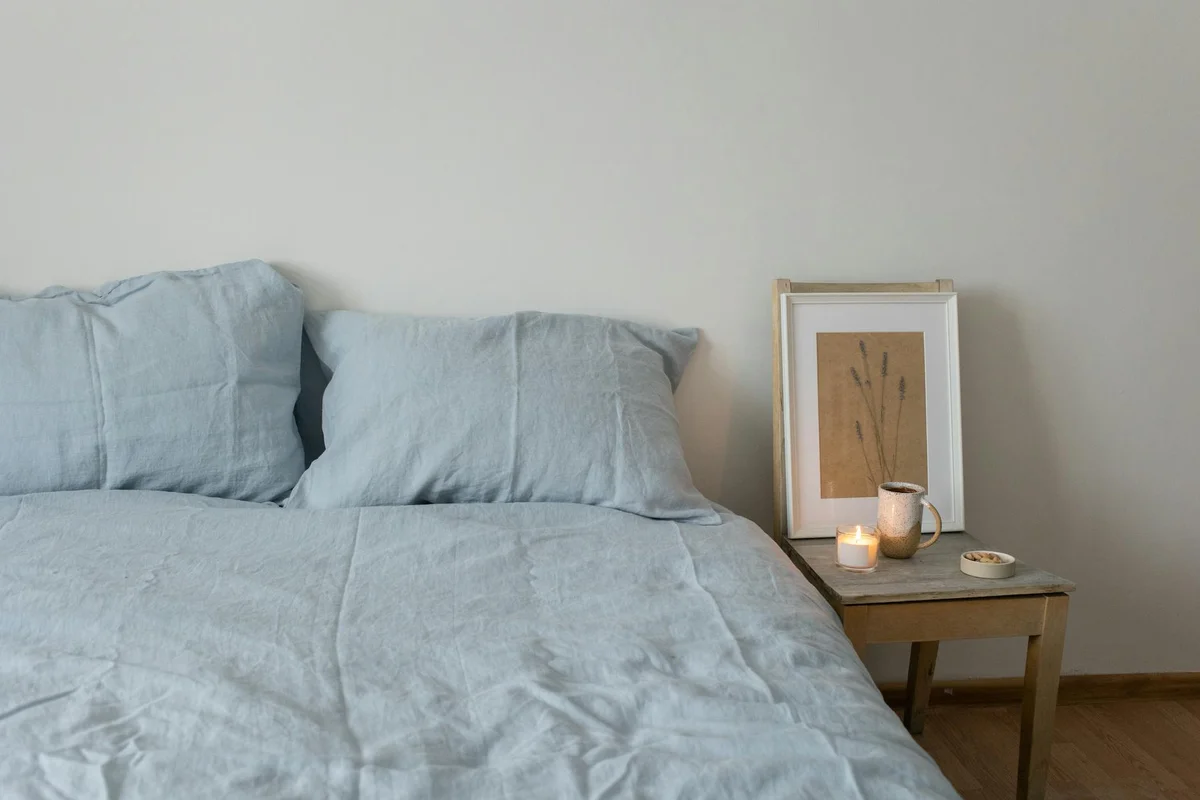
Most people assume cotton is the softer choice, and with a new set of sheets, that’s often true. But “soft” isn’t a single feeling. Think of it like this: a cotton towel feels fluffy and absorbent, while a silk scarf feels sleek and cool. Linen has its own signature feel, called its “hand” in textile science.
New, high-quality linen feels crisp and substantial. It has a dry, sleek texture that is strong and smooth against your skin, not fluffy or plush. This initial crispness is a sign of good, long-staple flax fibers and a tight weave, not a flaw. If you crave that immediate, cloud-like softness, a high-thread-count cotton sateen will deliver it right out of the package.
Linen’s magic is in its evolution. With every wash and use, it breaks in beautifully. Those crisp fibers relax and the weave opens up just slightly. I’ve tested this over dozens of wash cycles in the lab. After about 3-5 washes, you’ll notice a significant change. High-quality linen gets profoundly, uniquely softer with every wash, developing a lived-in, supple drape that many people grow to adore more than any other fabric. It’s like a favorite pair of leather shoes that mold perfectly to you—unlike summer cotton, which tends to retain a crisper feel.
Here is how to care for linen to encourage that perfect break-in: Think of this as the wash, soften, care routine for linen fabric. For more on wash, soften, care for linen fabric, stay tuned.
- Wash it in warm water (40°C/104°F) with a mild detergent. The gentle agitation and warmth help the fibers relax.
- Tumble dry on low heat until just damp, then finish drying flat or on the line. The tumbling action accelerates the softening.
- Don’t over-starch or use heavy fabric softeners, as they coat the fibers and inhibit this natural process.
Cotton’s story is different. It offers that consistent, immediate softness from day one, especially in weaves like percale or sateen. Cotton provides reliable, upfront comfort but can gradually lose tensile strength and thin out over many years of abrasion and washing. That steady quality helps explain cotton’s enduring popularity as a bedding staple. Its mix of comfort and practicality keeps cotton a go-to fabric for many households. A linen sheet, in contrast, retains its strength even as it softens, often outlasting cotton by decades.
This texture evolution is the heart of so many “linen vs cotton bedding” discussions online. People often ask, “Will linen ever get soft?” or say, “My linen sheets are rough, did I get a bad set?” The answer lies in patience and proper care. That initial hearty hand is a promise of the durable, breathable, and wonderfully softened fabric it is destined to become.
Durability, Longevity, and Bedding Care Protocol
Think of your bedding as a long-term investment. How you care for it directly impacts how long it lasts and how it feels night after night. The good news is both linen and cotton are wonderfully durable natural fibers. Their care is similar, but a few key differences in how you handle them can make all the difference.
Step-by-Step: Washing and Drying Linen & Cotton Bedding
Follow this simple guide to keep your sheets in top condition for years. I always start by checking the care label-it’s your first and best source of truth.
For both linen and cotton, start with these universal steps:
- Wash in cool to warm water. I never go above 40°C (104°F) to protect colors and fiber integrity.
- Use the machine’s gentle or permanent press cycle to reduce abrasion.
- Choose a mild, liquid detergent. Avoid heavy powders or optical brighteners that can build up on the fibers.
Now, here’s where their paths diverge slightly after the wash cycle.
Specific to Linen:
- You can machine dry linen on a low heat setting. This actually helps soften the fibers and gives them that beloved, broken-in texture faster.
- For minimal shrinkage, line drying is your best bet. The fabric will feel crisper when air-dried.
- Iron linen while it’s still slightly damp. Use a hot iron if you want a crisp, polished look. If you prefer linen’s natural relaxed drape, you can skip ironing altogether.
Specific to Cotton:
- Tumble dry cotton on a medium setting. This heat helps smooth out wrinkles before they set.
- Remove sheets from the dryer immediately and fold them. This simple habit prevents deep creases.
- Ironing cotton is straightforward. Use a hot iron for a smooth finish, as cotton can handle the heat well.
Linen’s legendary strength means it often outlasts even the best cotton, becoming softer and more beautiful with age-this is what justifies the initial cost of a quality set. Cotton is durable, but linen’s long, thick flax fibers resist pilling and wear in a way shorter cotton staples cannot.
Managing Shrinkage and Fit
Shrinkage is the most common worry I hear about. You can manage it perfectly with a little foresight.
Always check the care label first. It should state if the fabric is pre-shrunk. Most quality bedding is, but not always.
For fitted sheets and duvet covers, fit is critical. With cotton, if you want a guaranteed loose, easy fit after washing, consider sizing up, especially for the first few washes. High-quality percale or sateen cotton can still shrink between 3-5% on the first warm wash and dry, even when pre-shrunk.
Linen behaves differently. Linen’s fit is more stable after the initial wash, typically shrinking only 2-4% and then stabilizing completely. You rarely need to buy a size up with pure linen. Its fibers simply don’t contract as dramatically as cotton.
What about blends? A popular cotton linen blend bedding set will have a blended shrinkage rate. In my tests, a cotton-linen blend usually shrinks at a rate closer to cotton’s, so size up if you’re unsure. The blend gives you linen’s texture with a often lower price point, but you inherit more of cotton’s shrinkage behavior.
Linen and Cotton Blends: The Best of Both Worlds?
You see this option everywhere, and for good reason. A linen and cotton bedding blend is a deliberate compromise, engineered to balance the best traits of both fibers while softening their drawbacks.
Think of it as meeting in the middle. Pure linen can be costly and has a distinct, rustic texture that not everyone loves immediately. Cotton is softer from the first wash but can feel clingy on a sweaty night. The blend seeks a sweet spot. This balance shows linen’s cost-value luxury—premium feel at a friendlier price. That’s why linen blends are often seen as smart luxury. By mixing fibers, manufacturers can offer linen’s renowned coolness at a more accessible price point while providing a much softer hand feel right out of the package.
How the Blend Changes the Feel
The properties shift depending on the blend ratio. A 50/50 blend feels fundamentally different from a 70% linen/30% cotton mix.
- A higher cotton percentage means the fabric will feel smoother and more supple immediately. It drapes more like traditional cotton sheets but gains linen’s signature breathability and textured look.
- A higher linen percentage retains more of that crisp, dry coolness and the beautiful, slubbed texture linen is known for. It softens over time, but the journey is shorter than with pure linen.
I often describe the feel of a good blend as “relaxed crispness.” You get the structure and airy quality of linen without the initial stiffness. The cotton fibers fill in the gaps, literally and figuratively, creating a fabric that is forgiving, breathable, and quick to comfort. That balance reflects plant fiber blends—cotton, polyester, and linen—where natural and engineered fibers come together. Understanding these blends helps explain the everyday comfort they deliver.
Caring for Your Linen-Cotton Bedding
Care is where you must pay attention. A golden rule in textile science is to always care for a blend according to its most delicate fiber. In this case, that’s usually the cotton.
Why? Cotton fibers are more prone to shrinkage from heat and agitation than linen. Linen is incredibly strong but can be abrasive in the wash, causing cotton fibers to pill or weaken if treated harshly.
Here is my tested guidance:
- First Wash: Expect shrinkage, typically between 3-5%. Always wash new bedding before use. Use a cool or lukewarm water setting and a gentle cycle.
- Routine Washing: Stick to cool or warm water (not hot) and a gentle or permanent press cycle. This minimizes shrinkage and reduces wear on the cotton fibers.
- Drying: Tumble dry on low heat and remove while still slightly damp. I then hang or lay them flat to finish drying. This drastically reduces wrinkles and prevents over-drying, which can make the cotton brittle. Line drying in the sun is ideal for freshness and brightness.
- Ironing: If you prefer a crisp look, iron while the fabric is still slightly damp. Use a medium-hot iron. The linen content loves steam.
Following these steps, your linen cotton bedding will maintain its fit and improve in softness with every wash, slowly developing that beloved lived-in feel.
The Real Pros and Cons
So, is it the perfect choice? Let’s weigh the linen cotton bedding pros and cons honestly.
Pros: More affordable than pure linen. Softer from day one. Highly breathable and cool. Often less prone to deep wrinkling than pure linen. Provides the aesthetic of linen with easier care.
Cons: You don’t get the full, long-term evolution of pure linen, which becomes incredibly soft over years. It may not feel as exceptionally cool as a high-quality, pure linen weave. There is still a break-in period, and you must be vigilant about heat to control shrinkage.
For the hot sleeper who wants the linen experience without the price tag or the initial roughness, a quality blend is an excellent, practical solution. It’s a testament to smart fabric engineering, giving you a night’s sleep that is, quite literally, the best of both worlds. Whether it’s a polyester-rayon-linen blend or another mix, these fabrics deliver both comfort and durability.
Making Your Choice: A Decision Guide for Your Bed
So, which one is right for you? The best answer comes from listening to your body and your senses. I run a simple test in my lab all the time: hold a swatch of fabric to your cheek. What does it feel like? Now, think about your last few nights of sleep. Were you kicking off the covers? Here’s a straightforward guide to match your priority with the right fabric.
For the Ultimate Hot Sleeper: Choose Pure, Heavyweight Linen
If you routinely wake up feeling warm or damp, this is your champion. Linen’s hollow fibers move heat and moisture away from your body more effectively than any cotton. For maximum benefit, look for linen labeled “stonewashed” or “pre-washed,” as this initial processing helps soften the fibers and reduces the stiff, new feel. A heavier weight (around 170-190 gsm) will have more substance and durability, creating that perfect, cool microclimate. Expect about 3-5% shrinkage in the first few washes, so washing in cool water and tumble drying on low is a good practice to manage it.
For Softness & Ease: Choose High-Thread-Count Cotton (Like Percale)
You want bedding that feels cool and smooth from day one, with minimal fuss. A high-thread-count percale weave in 100% long-staple cotton is your answer. Percale’s crisp, matte finish has an inherently cool hand, and a tight weave of fine yarns feels luxuriously soft without being clingy. It requires virtually no break-in period. For care, wash in warm water with a gentle detergent; you can expect minimal shrinkage (around 2-3%) if you avoid high heat in the dryer.
For a Compromise on Feel & Cost: Choose a Linen-Cotton Blend
A blend, often 55% linen and 45% cotton, offers a fascinating middle ground. You get much of linen’s breathable texture and casual drape, tempered by cotton’s immediate softness and often a lower price point. The blend will feel less rustic than pure linen initially, but also won’t wick moisture quite as powerfully as the real thing. It’s an excellent gateway fabric. Care is simple: follow the linen rules (cooler washes, lower heat) to preserve the linen fibers in the mix.
For Texture & Long-Term Value: Choose Linen and Embrace the Break-In
If you appreciate a fabric with character that gets better with age, invest in pure linen. Yes, it starts out stiffer and more textured. With every wash, the flax fibers relax, becoming incredibly soft while retaining their strength and breathability-this is a textile that can last for decades, looking more beautiful over time. I tell people to think of it like a favorite pair of jeans. To speed up softening, you can wash it with a cup of white vinegar in the rinse cycle.
Your final choice hinges on one question: are you chasing cool relief or cozy comfort? Linen is the temperature regulator for night sweats and humid climates. Cotton percale is the consistent, soft comfort for those who simply sleep warm. Let the feeling on your skin guide you.
Final Thoughts on a Fabric-First Approach
When choosing between linen and cotton, let the fabric’s core performance guide you. The best choice is the one you’ll actually wash in cool water and line-dry, preserving its natural moisture-wicking structure for seasons of comfortable sleep. Test a swatch if you can-your personal feel for its texture and drape matters most.
Caring for your bedding with methodical, gentle cycles is a direct application of textile science that reduces waste. Learning how fibers like cotton, linen, and even responsible wool or silk blends behave over time turns routine care into a practical, sustainable craft.
Sources and Additional Information
- r/Bedding on Reddit: Linen bedding vs. Cotton bedding
- Linen vs Cotton: Which Fabric Is Better for Your Skin, Sleep, and the Planet?
- Linen Sheets vs. Cotton Sheets | Peacock Alley
- The Battle of the Naturals: Linen VS Cotton Bedding | Piglet in Bed US
- Linen vs. Cotton Sheets: Which Organic Fiber Is Best for Sleep?
Written by Florian Ventura. Florian is a high fashion blog writer, fashion and fabric expert and a keen expert in fabric, clothing and materials. She has worked in large textile and fashion houses for over 10+ years, engineering and working with various fabric types and blends. She is an expert when it comes to questions on any and all kinds of fabrics like linen, cotton, silk, jute and many more. She has also traveled around the world studying traditional fabrics and aims to bring them into the modern fashion use.