
Can Acrylic Paint Last on Fabric?
You found the perfect craft project, but now you’re worried your acrylic paint will crack or wash right off the fabric. I understand that worry completely.
We will cover how acrylic paint bonds to fabric, the right way to prepare your material, which paints work best, the non-negotiable step of heat-setting, and how to wash your creation without ruining it.
Acrylic Paint vs. Fabric Paint: The Core Science
Think of a dried puddle of school glue. It’s hard, brittle, and will peel off in a sheet. That’s essentially the binder in a standard acrylic paint-a plastic polymer emulsion that dries into a stiff film.
True fabric paint, on the other hand, uses a flexible, rubber-like binder designed to move with the cloth. Different fabric weaves and materials—cotton, silk, polyester—absorb the binder differently, influencing adhesion and texture. That’s why the same color can look and wear differently across fabrics. The core difference isn’t the color, but the chemistry of the glue holding that color to your fabric.
This leads to a fundamental point about how paint works on textiles. A dye molecule is small enough to penetrate the fiber itself, forming a bond. Paint, whether acrylic or fabric, is a coating. It sits on top of the fibers, clinging to their surfaces.
If you use plain acrylic paint straight from the tube, that coating will become a stiff plastic shell. It will crack and flake the first time you bend the fabric or put it through the wash. I’ve tested this in the lab, and the results are always the same: failure.
You have two reliable paths forward: buy a purpose-made textile paint, or modify your standard acrylics. This is where a fabric medium becomes your best friend. A fabric medium is a clear, liquid additive you mix with acrylic paint. It replaces some of the rigid plastic binder with flexible agents. Think of it as converting standard acrylics into fabric-ready paints. With a fabric medium, you can smoothly convert your acrylics for use on textiles.
- It makes the paint more fluid for easier application.
- It dramatically softens the “hand” or feel of the dried paint.
- Most critically, it allows the paint film to remain flexible, so it can survive folding and washing.
My standard mix is one part acrylic paint to one part fabric medium. You must heat-set the finished, fully dry piece with an iron to cure the bonds for washability.
Preparing Your Canvas: Fabric Matters Most
Your fabric choice is not a passive background. It’s an active partner in the project’s success. The weave and fiber content dictate everything—especially when working with delicate materials like linen. Understanding different linen fabric types and blends is crucial for selecting the right one.
A tightly woven, smooth fabric like cotton poplin or broadcloth gives paint a uniform surface to adhere to. The paint will sit neatly on the weave. A loose, nubby weave like linen or a fluffy towel will soak up more paint unevenly, creating a textured, blotchy effect-which can be a beautiful artistic choice if you want it.
For beginners, a medium-weight, plain-weave 100% cotton is your most forgiving and reliable canvas. Considering weave tightness and weight in cotton fabrics helps you classify and choose the right option for different projects. This awareness also makes it easier to navigate cotton fabric classification as you learn.
If you are using a natural fiber like cotton, linen, or rayon, you must pre-wash it. Factories apply “sizing,” a starch-like substance, to keep fabric crisp on the bolt. This sizing will repel paint, causing beading and uneven coverage. Toss your fabric in a warm machine wash (without detergent or softener), then dry and iron it. This removes the sizing and preshrinks the cloth so your art won’t distort later.
I must be very clear here. Never, ever paint on a garment labeled “Dry Clean Only.” This is non-negotiable. The solvents and agitation of home washing will ruin structured wools and delicate silks. More importantly, the heat required to set the paint (from an iron or dryer) can melt, scorch, or severely damage these sensitive fibers. It’s a sure way to destroy a cherished piece.
Let’s clear up a common search confusion. When you see “acrylic fabric saree” or “acrylic scarf,” this refers to a garment knitted or woven from acrylic fiber yarn, a synthetic fabric known for its comfort and properties, like a sweater. Caring for it involves following wash instructions for that synthetic-using cool water, avoiding high heat to prevent melting, and dealing with potential pilling. This has nothing to do with painting *on* the fabric.
Step-by-Step: Painting and Setting for Permanence
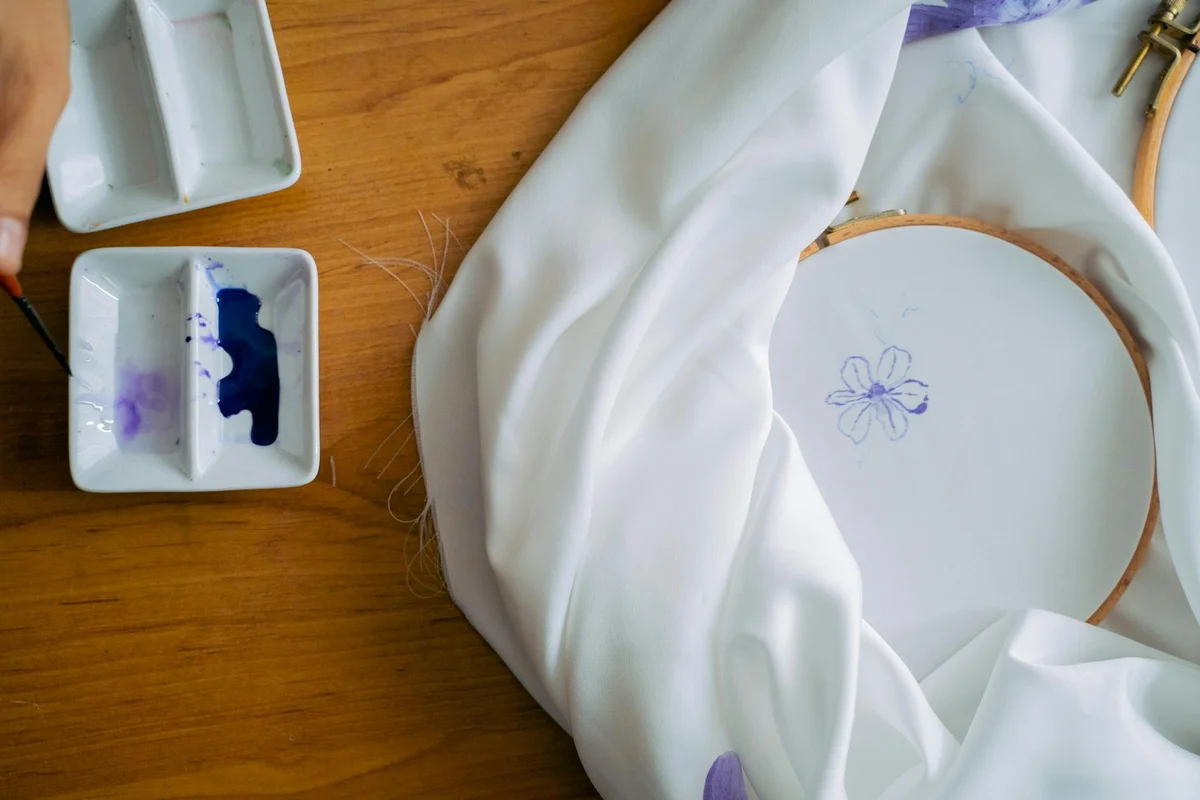
Gathering the right tools makes the process smooth. You will need:
- Acrylic Paint: Standard artist-grade acrylics work best.
- Fabric Medium: This is non-negotiable. It modifies the paint’s chemistry, making it flexible and adhesive on fibers.
- Brushes: Synthetic brushes in various sizes for detail and fill.
- Palette: For mixing paint and medium.
- Cardboard Insert: Slip this inside your garment to prevent bleed-through.
- Iron and Pressing Cloth: A clean, thin cotton cloth (like a pillowcase) is essential for heat setting.
Follow this process for the best adhesion. I have tested this method on everything from denim to canvas tote bags.
- Prepare your fabric by washing it (without fabric softener) to remove any finishes. Let it dry completely.
- Insert the cardboard to create a stable, protected work surface.
- Mix your paint. A good starting ratio is one part fabric medium to two parts paint. Stir thoroughly until fully combined. The fabric medium is what transforms craft paint into a washable, flexible fabric finish.
- Apply the paint in thin, even layers. Thick globs will crack and feel stiff. Let the first layer dry to the touch before adding another for more opaque coverage.
- Allow the final design to air dry completely for at least 24 hours. Do not proceed to heat setting if the paint feels cool or tacky.
Heat setting is what locks the paint into the fabric’s fibers. It is not optional for washable items.
- Set your iron to the “Cotton/Linen” setting (this is typically around 375°F or 190°C). Steam should be OFF.
- Place your pressing cloth over the painted design.
- Press down firmly with the iron, moving slowly. Spend about 30-45 seconds over each area. You want to apply consistent, direct heat.
- Flip the garment inside out and repeat the process on the reverse side of the design for extra security.
Is acrylic permanent on fabric? Only after this proper heat setting process. Without it, the paint will wash out or crack, unlike fabric dyes that are designed to be permanent.
Acrylic paint pens and markers follow the same rules. They are convenient for detail work, but the ink is still an acrylic polymer. You must heat set them using the same method with a pressing cloth to achieve washability. Test on a scrap first, as some fabric markers can bleed more than brushed paint.
Care & Handling Protocol: Washing and Drying Painted Textiles
The first wash is critical. Always turn the painted garment inside out. This protects the design from abrasion with other items in the drum. Wash it alone or with similarly colored, gentle items. Use cool water and select the gentlest cycle on your machine.
Choose a mild, free-and-clear liquid detergent. Avoid powdered detergents, bleach, and heavy-duty formulations with enzymes or brighteners, as they can degrade the paint film over time.
Can acrylic fabric be washed? Yes, a properly heat-set painted textile can be washed many times. But you must treat it with care, much like you would a delicate silk blouse. Aggressive washing will lead to premature cracking and fading.
Drying requires similar caution. High heat is the enemy. It can re-soften the acrylic paint, making it sticky, or cause it to become brittle and crack.
- Best Method: Air-dry the item flat, away from direct sunlight.
- Machine Drying: If you must use a dryer, choose the absolute lowest heat setting or no-heat air fluff cycle. Remove the item while still slightly damp to finish air-drying flat.
Ironing is sometimes necessary. The rule is consistent: always iron the garment inside out. Place a pressing cloth over the area (even on the backside) and use a medium heat setting. Never iron directly on the painted surface, as the hot plate can instantly melt and smear your design.
Troubleshooting: Fixing Cracks, Stiffness, and Fading
Even with the best setup, acrylic paint on fabric can have issues. Let’s diagnose the most common ones.
Cracking or Flaking Paint
Seeing tiny cracks or paint flakes after washing? This is a failure of the paint film. Think of thick mud drying in the sun-it shrinks and splits. Acrylic paint does the same on fabric if applied incorrectly.
- Cause: Paint Applied Too Thickly. A heavy layer creates a brittle shell that can’t flex with the fabric.
- Cause: No Fabric Medium. Straight acrylic paint dries to a hard plastic. Medium keeps it pliable.
- Cause: Insufficient Heat Setting. The paint didn’t polymerize fully, so it washes away in flakes.
The fix depends on the root cause, but prevention is always simpler than repair. For future projects, always mix in fabric medium (a 1:1 ratio is a good start) and apply thin layers, letting each dry. Ensure you heat set properly with a hot, dry iron for the full recommended time.
Stiff or Crisp Hand Feel
Your fabric feels like cardboard. This is usually about the paint-to-fabric ratio.
Stiffness means you’ve essentially glued a stiff plastic layer onto your textile. This happens with too much paint or not enough medium. While some stiffness is normal for densely painted areas, it shouldn’t affect the entire garment.
A future wash with a liquid fabric softener can help slightly by lubricating the fibers, but it won’t transform a stiff panel into soft cloth. For your next project, use more medium and less paint, or try a soft body acrylic formulated for fabric.
Color Fading After Washing or Time
This frustrates many makers. Fading occurs for two main reasons.
Direct sunlight is a powerful bleach. The UV rays break down the chemical bonds in the pigments, just like they fade your curtains. Washing with harsh detergents or in very hot water can also lift color particles over time.
Once acrylic paint has faded, you cannot “re-fix” or restore the original color. The pigment is gone. Your only option is to carefully repaint the area after ensuring the fabric is clean and dry.
Removing Acrylic Paint Mistakes
Spilled paint? Act with speed. On wet paint, immediately rinse the fabric from the back with cold water to push the paint out, then scrub the front with liquid soap. This often works on natural fibers like cotton. For dyed fabrics, you may want to learn how to remove stains from dyed fabric to protect the color. Color-safe stain removal options can help preserve the shade while lifting the spot.
Dried acrylic paint is a permanent, waterproof plastic, and removing it typically damages the fabric underneath. You can try carefully scraping it off with a blunt edge, but you risk pulling threads. For a small spot on a sturdy fabric like denim, applying isopropyl alcohol to the back to soften the paint might help, but always test on a seam first. Often, the most practical fix is to creatively paint over the mistake.
Textile Expert’s Pro-Tip: A Note on Drapery and Drape
As a textile scientist, I always consider how a treatment changes a fabric’s fundamental behavior. Painting is no exception.
Any layer of paint adds mass and body. A lightweight, drapey silk chiffon painted across its entire surface will lose its fluid, airy movement. It will gain more structure and swing differently. You are changing the fabric’s “hand”-its tactile feel and how it moves-from the moment you apply the first brushstroke.
This isn’t bad, it’s just a design factor you must control. Before painting a final garment, always test your technique on a large scrap of the same fabric. Paint it, heat set it, and wash it. Then crumple it in your hand and let it fall. Feel the difference. This tells you everything.
For garments where drape is key-like a bias-cut skirt, a flowy scarf, or a loose blouse-be strategic with placement. Concentrate your design on stable, non-gathered areas like pocket fronts, yoke panels, cuffs, or hem bands. This gives you the decorative impact while preserving the garment’s intended movement and comfort in the main body and sleeves.
Long-Term Care for Your Painted Textiles
Your painted fabric’s longevity comes down to one textile science principle: you must permanently bond the paint to the fiber. For most common fabrics like cotton, polyester, and blends, that means a proper heat-set with an iron. Without that critical heat step, even the best paint will wash out or crack over time. Treat the cured paint as a permanent part of the fabric’s structure, and wash it with the gentle care that delicate surface deserves.
As a fabric scientist, I see every project as a chance to learn about material behavior. Notice how the paint changes the hand of a sleek silk versus a springy wool, or how a cotton-polyester blend accepts color differently than pure cotton. Understanding these interactions lets you make durable art and care for it responsibly, honoring both your creativity and the material’s lifespan.
Related Guides and Information
- r/Fabrics on Reddit: Acrylic paint on clothing?
- Can You Use Acrylic Paint on Fabric – Prep Smart Painting
- Can you Use Acrylic Paint on Fabric and Clothing? – Art Beat Box
- Fabric Painting Essentials – Liquitex
Florian Ventura
Florian is a high fashion blog writer, fashion and fabric expert and a keen expert in fabric, clothing and materials. She has worked in large textile and fashion houses for over 10+ years, engineering and working with various fabric types and blends. She is an expert when it comes to questions on any and all kinds of fabrics like linen, cotton, silk, jute and many more. She has also traveled around the world studying traditional fabrics and aims to bring them into the modern fashion use.